
Do you remember the last time you heard some good news? If you can’t, there are a few reasons — beyond the fact that there hasn’t been any in more than a minute. As news organizations found out a long time ago, it’s far more lucrative to feed you bad news, to make you resent, rage, and most importantly, react. This is compounded by the fact that it’s also difficult to remember any kind of news anymore. It’s a conspiracy between your media and your mind.

One of the definitive aspects of the media spectacle is its lack of any sense of memory. As McKenzie Wark tells me, “As Guy Debord used to argue, the triumph of the spectacle is in the defeat of history and the installation of ‘spectacular time’, which is purely cyclical.”1 In his 1967 book Society of the Spectacle, Debord wrote,
The lack of general historical life also means that individual life as yet has no history. The pseudo-events that vie for attention in spectacular dramatisations have not been lived by those who are informed about them; and in any case they are soon forgotten due to their increasingly frenetic replacement at every pulsation of the spectacular machinery.2
As our experience is more and more mediated and less lived through, the spectacle functions to make us passive observers rather than active participants. It diminishes the idea of memory by reducing lived moments to their image, removing us from our selves and any genuine connection to our world. Now we have bespoke spectacles, individualized, each to their own churn. We exist in an isolated simultaneity, not quite solipsistic, yet fully mediated.
“Whatever was true now was true from everlasting to everlasting. It was quite simple. All that was needed was an unending series of victories over your own memory.” — from George Orwell’s Nineteen Eighty-Four
If life in Debord’s spectacle sounds awful, it was supposed to, but these days the idea of not remembering sounds better than the brutality of the everyday. Call the remedy tactical forgetting or strategic amnesia. Illuminating the idea in Octavia E. Butler’s Parable of the Talents (Seven Stories Press, 1998), Shari Evans writes, “Strategic amnesia gives us the critical distance to remember ethically rather than vengefully. This strategic amnesia in which Butler’s last novel situates us, then, leads, past forgetting, to the justice of remembering on a historic and cultural scale.”3 Justice, as much as it might be as a human as invention as history, matters. If any of this matters, it does.
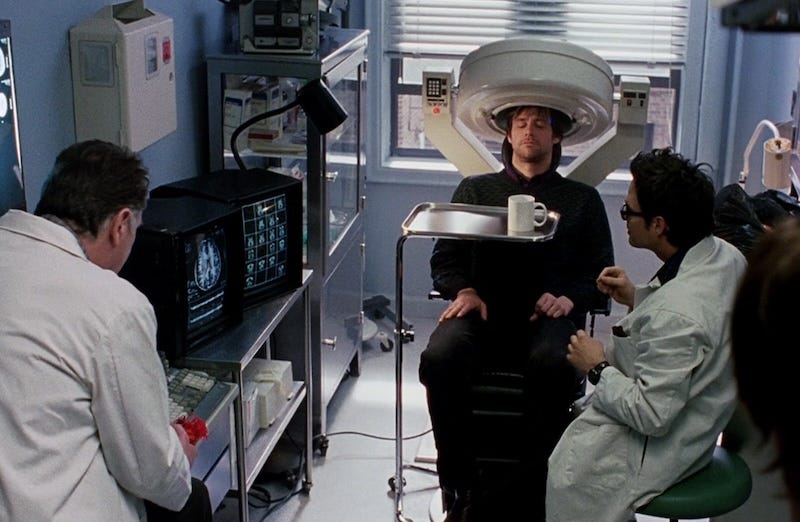
If only it were so easy for us as individuals to forget and remember on command. The world would look very different if we could. In the 2004 film Eternal Sunshine of the Spotless Mind, screenwriter Charlie Kaufman and director Michel Gondry go to such great lengths to show that not only is it not easy, it’s not possible. In the movie, a medical firm called Lacuna offers a surgical procedure that removes painful memories from an individual’s brain. In this case, painful memories of a lost love, but one can imagine removing unwanted memories of traumatic events of any kind.
Conversely, sometimes memory is latent in the environment, just waiting to be activated. Have you ever learned a new word and then started seeing it everywhere? The literary theorist Kenneth Burke attributed this to what he called terministic screens.4 Burke would say that the word was always there, but you were filtering it out, obscuring it with ignorance. Once it became a part of your terministic screen, only then did you start seeing it. But you can’t unsee it once it’s a part of the screen you use to filter reality. Once you learn something new, you’re stuck with it.
So, we can’t forget on command or remember at will, but our minds filter out and fill in all kinds of words and details and facts every day. As the author Grace Paley once said, “Any story told twice is fiction.”5 In a speech at BAFTA in 2011, Charlie Kaufman says, “If you consider a traumatic event in your life, consider it as you experienced it. Now think about how you told it to someone a year later. Now think about how you told it for the one hundredth time. It’s not the same thing.” One thing that intervenes, he says, is perspective, which we tend to think of as a good thing. “The problem is that this perspective is a misrepresentation of the incident; it’s a reconstruction with meaning and as such bears very little resemblance to the event.” He continues,
The other thing that happens in storytelling is the process of adjustment for the audience over time. You find out which part of the story works, which parts to embellish, which parts to jettison. You fashion it. Your goal, your reasons for telling it are to be entertaining, to garner sympathy. This is true for a story told at a dinner party, and it’s true for stories told in movies.
Sometimes we change the story inadvertently, and sometimes we do it as a matter of survival.
To survive,
Know the past.
Let it touch you.
Then let
The past
Go.
— from “Earthseed: The Book of the Living” by Lauren Oya Olamina
in Octavia E. Butler’s Parable of the Talents
Moreover, our collective memory, and especially our mediated memory (or communicative memory6), suit their own needs, sanity for the former, capital for the latter, selectively remembering and revising as they go. In “The ‘Yizkor’ Book of 1911 – A Note on National Myths in the Second Aliyah.” Jonathan Frankel writes:
Legends and national myths — which so enchant the group’s psyche, the collective subconscious — have become a source of inspiration to the faith and devotion which these imported ideologies [modern nationalism, socialism] could foster only partially and through constant adaptation.7
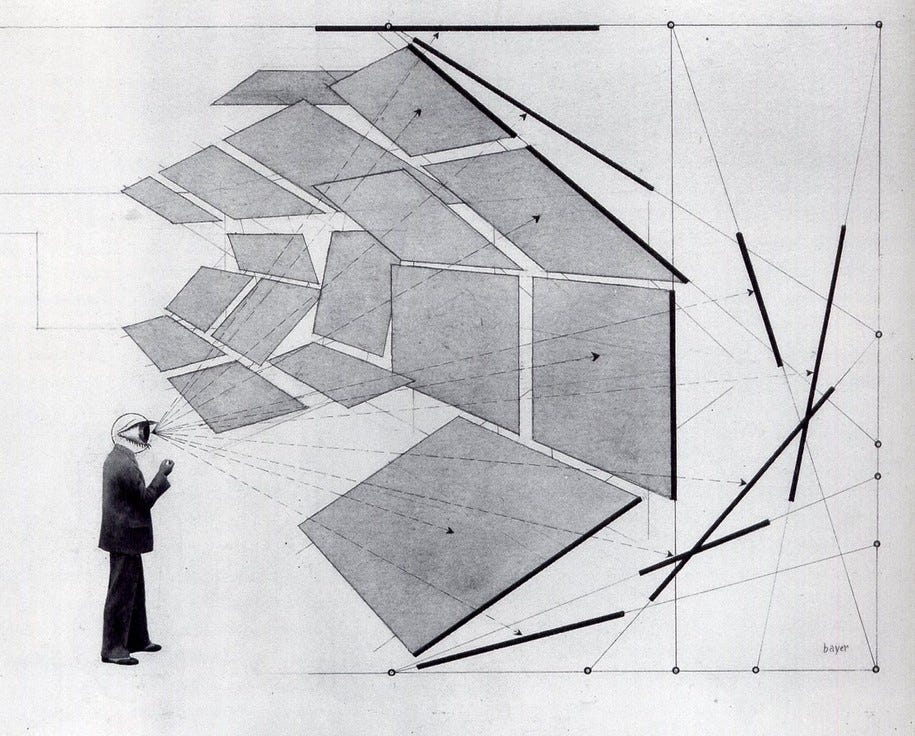
We watch this constant adaptation as short-scale history scrolls by in our daily diet of genocide, racism, gun violence, domestic terrorism, the global degradation of democracy, climate catastrophe, culture wars, and cat videos. History at any scale is always already a construct that cannot include all of the minutia of humankind, so the writers, editors, and adapters of that history choose to emphasize some things and leave other things out. If we ever want to break out of our now-individualized spectacle, and if we ever want any semblance of history or of justice, we need to care more about those decisions and who makes them for us.8
NOTES:
1 Quoted in Roy Christopher, “McKenzie Wark: To the Vector the Spoils,” in Roy Christopher (ed.), Follow for Now: Interviews with Friends and Heroes (pp. 131-136), Seattle, WA: Well-Red Bear, 2007, 134.
2 Guy Debord, Society of the Spectacle, Detroit, MI: Red & Black, 1970, 90.
3 Shari Evans, “From ‘Hierarchical Behavior’ to Strategic Amnesia: Structures of Memory and Forgetting in Octavia Bulter’s Fledgling,” in Rebecca J. Holden & Nisi Shawl (eds.), Strange Matings: Science Fiction, Feminism, African American Voices, and Octavia E. Butler (237-262), Seattle, WA: Aqueduct Press, 2013, 256; See also adrienne maree brown, Emergent Strategy: Shaping Change, Changing Worlds, Chico, CA: AK Press, 2017.
4 Kenneth Burke, Language as Symbolic Action, Cambridge, UK: Cambridge University Press, 1966, 45.
5 Quoted in Jacqueline Taylor, Grace Paley: Illuminating the Dark Lives, Austin, TX: University of Texas Press, 1990.
6 I particularly like this term; See Jan Assmann & John Czaplicka, “Collective Memory and Cultural Identity,” New German Critique, Spring – Summer, 1995, No. 65, pp. 125-133.
7 Yahadut Zemanenu 4 (1987): 67-96 (in Hebrew).
8 The title of this post and the title of Eternal Sunshine of the Spotless Mind both come from Alexander Pope’s poem “Eloisa to Abelard” (1717).



 is exhibit D in the case that finds him guilty as charged. The undeniable pop core in these songs wears a dark veil of distorted guitar waves created entirely by Laner and his guitar.