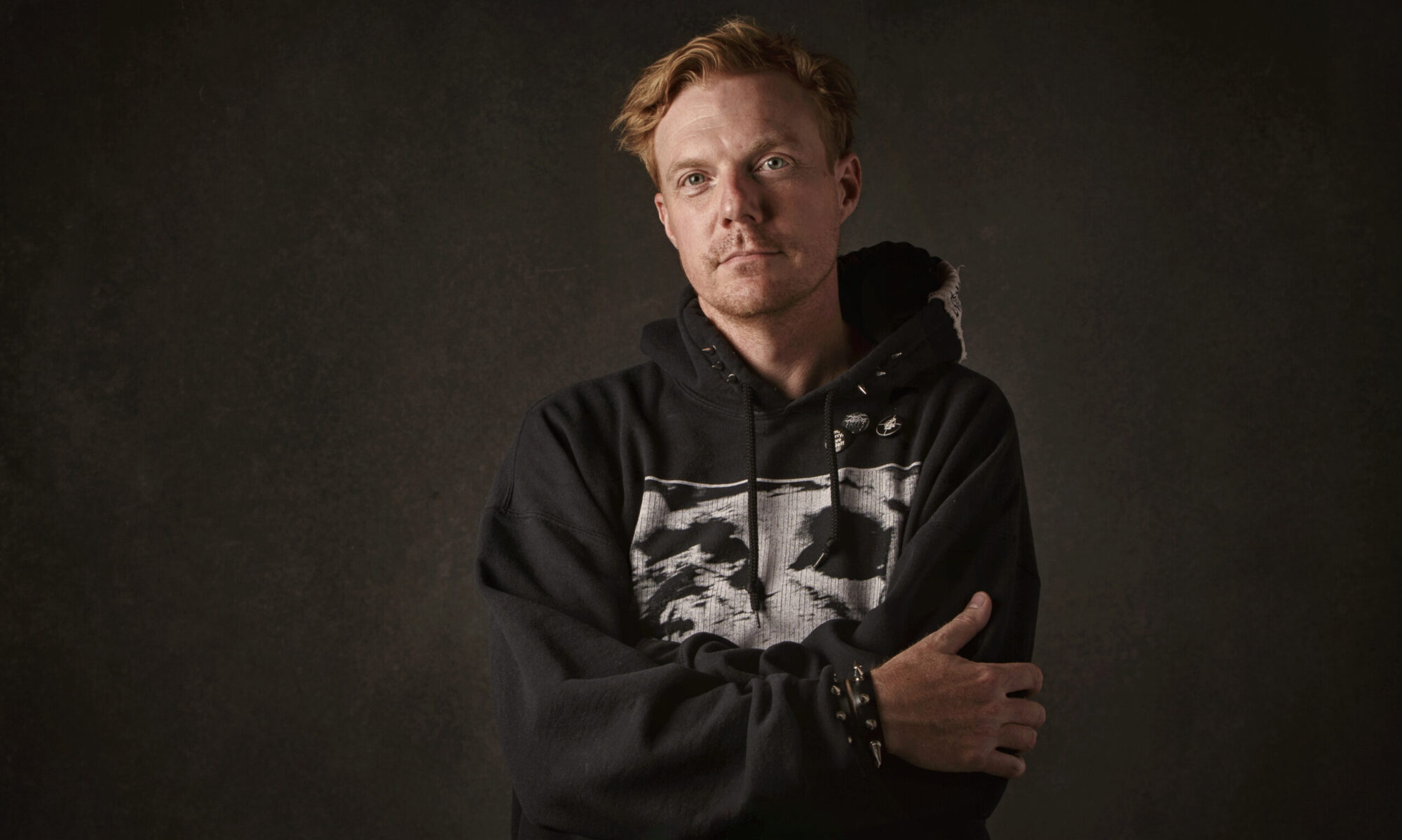

My friend and colleague Paul D. Miller a.k.a DJ Spooky is going to Antarctica for the holidays. Well, he’ll be there for the holidays, but the trip is not exactly holiday-related. He’s going there to make a film. Continue reading “DJ Spooky: Holiday in Antarctica”
El-P: Wake Up. Time to Die.
I’m a child of the 80s when, as emcee/producer/label-owner El-Producto puts it, every Hip-hop record that came out was that new sound, that next shit. As you all know, I’m still a huge Hip-hop fan, but those new styles just don’t drop that often, much less with every new release. Now typically someone hits it big with a style and others scramble to sound the same. Not so with El-P. His musical M.O. is from that previous era where you had to innovate or you fell off, and biting was not allowed or tolerated under any circumstances.

Also reared on 80s music and culture, El’s apocalyptic boom-bap bounces between the frenetic cut-and-paste of the early Bomb Squad and the off-world synths and sounds of The Art of Noise — perhaps taking its initial cues from a collision of Nation of Millions and In Visible Silence. From there, only one thing is guaranteed: The drums will be bangin’. All other bets are hedged.
Therefore, it’s no surprise that the drums on his new record, I’ll Sleep When You’re Dead, are bangin’, but the guests along for the ride might surprise some people. In the mix are friends and fellow travelers Trent Reznor, Chan Marshall, members of TV on the Radio, The Mars Volta, and Yo La Tengo, as well as Def Jux fam Aesop Rock and Cage with cuts by the mighty Mr. Dibbs and DJ Big Wiz (Special, special shouts to Wiz: Our thoughts are with you, brother.). Don’t let the names overwhelm you though. This is El’s record from jump to stop.
It’s been four years since we’ve gotten an El-P LP proper, but to be fair, El has been busy behind the boards producing and remixing for the likes of Del the Funky Homosapien, Prefuse73, TV on the Radio, Nine Inch Nails, Slow Suicide Stimulus, and fellow Def Jukies Cage Kennylz, Mr. Lif, S.A. Smash, and others. Oh sure, there was his future-jazz Blue Series Continuum record, High Water (Thirsty Ear, 2004), which, along with the Blue Series Continuum crew of Matthew Shipp, Guillermo E. Brown, William Parker, Daniel Carter, Steve Swell, and Roy Campbell, featured his dad Harry Keys on one song. Then there was the eclectic, but consistent compilation Collecting the Kid (Def Jux, 2004), which brought together stray pieces from his soundtrack work on the graff flick Bomb the System (Palm Pictures, 2002) with unreleased tracks from his group with Camu Tao, Central Services, among other odds and ends. Aside from a few guest appearances (El has shared tracks with fellow wordsmiths Aesop Rock, The Weathermen, Del, Ghostface Killah, C-Rayz Walz, and Cage), El’s fingers have been on the knobs, keys, and buttons — as opposed to the mic — since 2002.
Production credits notwithstanding, El-P is a monster of an emcee. His presence, power, and lyrical prowess on the mic are unmatched. Where other lyricists just bring their next release, he brings the fucking State of the Union. He’s Rick Deckard to all of the microphone Replicants out looking for life-extension. There’s a reason their lifespans are limited, and El-P proves it in spades.
Admittedly, I’m more of a fan than a critic, and more of a nerd than a thug, but those tensions are evident in El-P as well. He lives and loves Hip-hop, but will quickly call bullshit on wackness. He’s also smart as fuck and loves science fiction, but won’t hesitate to bust you in your shit.
From his days in the germinal 90s Hip-hop crew, Company Flow, to his current assault on the ears of the jaded, El-Producto is always bringing it rough and rugged. The future is now.
Roy Christopher: You’re approaching Hip-hop from a different angle than anyone else. What’s your take on what you’re bringing to it that makes that difference?
El-Producto: Originality… Style… I don’t delude myself into thinking that this shit sounds like all the other Hip-hop out there. Basically, I pride myself on the fact that it doesn’t, but it all comes from a Brooklyn kid who grew up on all the classics, and all of those things are just layered in it. Honestly, if I had to think about it, I’d say I’m bringing some decently-needed style to the whole picture. I think that’s the cornerstone of my whole shit and that’s why I always look at it as raw Hip-hop because that to me is the ultimate purpose.
I grew up learning about Hip-hop from writers, break dancers, and really being involved in the culture and the whole shit was about style and having your own twist on it. If you come out sounding like what everyone else is sounding like then you’re a toy. So, I filled in from a lot of the traditional shit that I grew up on and the era that I came up in, and underneath it all, underneath the trippy sound is my Ced G influence and my Scott La Rock influence and my Bomb Squad influence. When different cats listen to the record, whatever their background is, a lot of them pick out different things from it. People who are familiar with that and grew up listening to the same stuff I did have an easier time hearing that.
RC: It’s like you’ve said before about that era, whenever a new record came out that was the new shit, the new sound.
EP: Yeah, and somewhere along the line people have grown into this malaise that they’ve applied to themselves philosophically, and I think it’s just that they’ve stopped being moved by music. I think it’s an excuse for people to justify the fact that they’ve stopped craving to be thrilled. I think it’s cynical, and I can’t be cynical in my approach to music. I have to always be throwing myself down a flight of stairs hoping that at the bottom of the stairs is what I’m looking for. I don’t have that thing in me that tells me to preserve myself and to stop going where I feel I want to go and what I want to hear. I don’t have that thing in me that tells me that there’s a rule to apply to making a great record — a part from a few things: The drums have to bang. That’s the number one, and for what it’s worth, I think I’ve got that part down.
RC: No doubt. Ryan Kidwell once said that playing it safe is not interesting.
EP: Yeah, you start to wonder who you’re playing it safe for. The same people who would have you play it safe are the same people who don’t want to hear it when you do. The audience and the critical community don’t enter into my creative process because I feel like I’m a pretty good representation of a music fan. So, I just go where I have to go. The thing about it is that I know who I am. I was born and raised in New York City and grew up on some ill B-boy shit, and so this is me. Everything that emanates from me is an extension of that — it’s built in. I believe in reference, but I don’t believe in imitation. I don’t hold on to too much nostalgia because I don’t have to.
 RC: Word. You have a lot of guests on this record. Where others just pile ’em on to see who they can fuck with and what names they can get on their record, your guest spots make sense. How much chance was involved in who showed up on the record and how much was fully planned?
EP: It was a combination of elements. If you write down all of the names who appear even in the most minor way on the record it looks like it could be some crazy collaboration-style record. The reaction I’m getting from people when they listen to it is that they couldn’t necessarily tell who was on the record. Most of the time it’s me making songs and trying to come up with some idea and at any given time I might feel that someone that I know or that I’m cool with or in contact with or who’s in my circle — friends or peers — I hear their voice somewhere and think that they might be able to add to it, and that’s usually when I reach out. The idea is there first, the music is there first, and what I’m trying to do is there first. On this record there was nothing that I did that was created specifically for anyone else to come on, except the song with Cage because we sat down and wrote it together, and the song with Aesop, but that’s just on some family rap shit. With all the other guys, I had talked to some of them about the idea — to have the Mars Volta guys, Trent, and Cat Power — about the possibility of me including them. Just so that they would be open if I heard it. And it happened that I really did feel that there were moments that would work with them, and I tried to do it tastefully. I tried to make it so it wasn’t some heavy-handed rock-rap style thing.
RC: I got the advance and there’s no information about who’s on what song, and I couldn’t tell at first, except for Cage and Aes ’cause I know those guys.
EP: Well, you can tell that there are certain parts where it’s probably not me. [laughs]
RC: Yeah, but the overall experience is that it’s your fucking record.
EP: Well, good ’cause that was important to me. That’s what it was about. This has to be my record. There are moments where there are other voices, but it’s almost like I’m sampling. I’m sampling from experience and putting it in at the right time. I think one of the mistakes you can make when you have access to work with some of the guys that you admire is the temptation to use them as much as possible, and that just wasn’t what is was about for me.
RC: It was fun to read about your progress while working on the record. What prompted your doing the blog?
EP: It was kind of a spontaneous thing. I was sitting around and happened to be looking at different sites on the internet and started bouncing around on some of the random blogs. I started to realize that the majority of these things — really all of them, as different as they all seem to be — they’re really all critical blogs. You know, a guy who listens to some music, maybe recommends some of it, and maybe hates some of it. Or film or whatever, but all connected to the critical community, and it doesn’t seem like it’s connected to the creative community yet — at all. Is there another use for this? It’s just a medium that you write things on, why is everyone writing the same things?
So, I just signed up to get my own blog. I’ve seen how much fans enjoy the interaction being let in to a degree on MySpace, message boards, things like that where you can communicate to a degree, but even that is kinda cold. When artists attempt to communicate directly with them on message boards it comes off a little wack because you’re always floating in like some sort of other entity, saying things, and then running away. I figured fuck it, why not create an artist’s view of the artistic process and let it be public. It will let people in a little bit and see how they dig it. Something that was attached to the creative process as opposed to a critical process or the sum result of gathering up a bunch of people’s art and saying something about it. I didn’t know how people would respond to it, but the response was crazy. It was overwhelming, and I kinda feel bad that I stopped doing it, but I’m not a blogger. I’m an artist.
Maybe I’ll start it up again. It’ll stick around. I was really shocked how much people were into it, but it’s kinda like if I were to stumble upon one of my favorite artist’s collection of notebooks, all their scribblings and little pictures they’d cut out and put in there, all of that great shit that goes on when artists are in that mode. It’s always fun to me. It’s always ill to see those things, and I’ll even flip through my friend’s stuff just because it’s interesting to me.
That was the only reason. It wasn’t any grand plan. It was just kind of an idea. It just seemed like a natural thing. I’m surprised more people haven’t done it.
RC: Me too, and you and Dibbs had a lot of fun with it, and so did all of us who were reading it.
EP: I think we’ll probably start it up again for the tour.
RC: I was going to ask you about that next. Who are you going out with first?
EP: We’re working on it right now. On the main tour it looks like I’m going to be rolling out with Hangar 18 as my opening act. Anyone who hasn’t seen Hangar 18 perform should definitely come out.
RC: Definitely. They stayed with me the last time they came out here. Those are my boys.
EP: Oh, word. No doubt. No doubt.
Basically, I’m just trying to go out there with a tight crew of cats and put together a cool set with interesting set design, interesting lighting, and do something a little bit different than what we normally do.
RC: I’m a big Alexander Calder fan, so ever since seeing the bird in the art on Fantastic Damage, I’ve wanted to hear the Calder story.
EP: The details are a little hazy, but basically the story goes that my mother in the 70s — late 70s perhaps, maybe 78 or 79 — worked with him. She was working in advertising back then, and she worked with him on some project. She was a big fan of his, and she asked him to draw something for her baby, and I was maybe one or two, maybe three, I don’t know. He drew this bird for me on this toy wooden airplane that she had bought for me. It’s just something that’s always been around all my life.
 My mother and my father back in the day were highly into art. They were kinda scenesters. They hung out with Robert Crumb. They were into all of that and they were big fans of Calder. So I’ve had this thing lying around all my life, it’s just always been there. It’s maybe one thing I still have from my childhood — this drawing on this toy airplane drawn in pencil by this fucking legendary guy. It started to represent me for myself. It’s the oldest thing that someone had drawn for me. The more I learned about who he was as I got older the more interesting it was to me as opposed to being just this thing that I had, but it’s old, it’s in pencil, it’s on wood, and it’s fading and eventually it’s probably not going to be visible anymore. I figured I’d put it on my body somewhere. I figure if I’m ever super poor I can always lop off my arm, put it in formaldehyde, and auction it off [laughs]. So, it’s just become a representation of who I am. It’s just been there all my life and it’s symbolism that doesn’t represent anything else except my life. I like to think of it as some ancient archetypal symbol that represents me.
RC: Is there anything I didn’t bring up that I didn’t talk about here?
EP: It’s on you. I’m not chomping at the bit! [laughs]
RC: Well, don’t wait another four years to give us another record.
EP: No doubt.
Sadat X: My Protocol is Know-it-all
 Sadat X is a certified Hip-hop legend. The God has been blessing mics since Hip-hop’s so-called “heyday” with the group Brand Nubian (one of the first groups to bring 5% knowledge to the masses), and he’s still doing his thing (a little bid isn’t going to slow him down). His first solo outing, Wild Cowboys (Elektra, 1996), proved he could hold his own, Experience & Education (Female Fun, 2005) showed he had grown and matured as a man and as an emcee, and his latest, Black October (Female Fun/Riverside Drive, 2006), might just be his most consistent, personal, and important record to date. Continue reading “Sadat X: My Protocol is Know-it-all”
Not Bad Meaning Bad, but Bad Meaning Good
While I don’t agree with everything in Steven Johnson’s semi-recent book, Everything Bad is Good for You, it does present an interesting lens through which to reexamine pop culture. In a theory he calls “The Sleeper Curve,” Johnson states that pop culture is getting more cognitively demanding, not less, as is conventionally assumed. Johnson bolsters his theory with examples from video games, television, and film. Though he doesn’t mention it, where hip-hop is concerned, I couldn’t agree with him more. Continue reading “Not Bad Meaning Bad, but Bad Meaning Good”
Sean Walling: My Mind Spray
 Okay, I’ve been sitting on this one for way too long. Originally slated for my zine-in-progress, “Fractal Pterodactyl,” this interview with my man Sean Walling (a.k.a. SIR ONE) is over a year old. What it lacks in timeliness it makes up for in pretty pictures. Continue reading “Sean Walling: My Mind Spray”
Cage Kennylz: G.R.O.W.N.A.S.S.M.A.N.
Being active in Hip-hop, which is typically thought of as strictly a “youth culture,” doesn’t age well. Growing up is weird enough as it is, but trying to grow up, stay fly, stay true, and stay striving is downright daunting.
Well, Cage Kennylz has grown up in this culture, and unlike those who look silly rocking the mic into their thirties, Cage is growing up and pulling Hip-hop up with him.
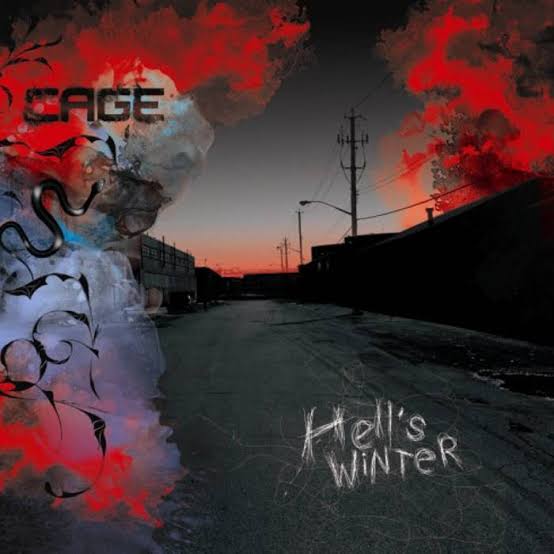
And it’s been an upward battle to be sure. Coming up in a broken home riddled with addiction and strife, Cage found refuge in drugs and raps. Fortunately for all of us, the latter won out. His latest outing — and first for El-P‘s Definitive Jux label — Hell’s Winter, tells the tales. With no detail left in the distance and an experienced voice combing the crevices, it’s a dark ride through Cage’s crazy past and how he became the man he is today.
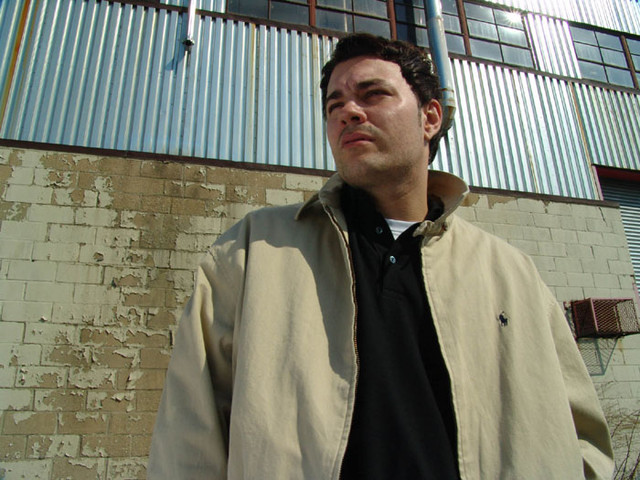
Roy Christopher: One thing I’ve noticed from hanging out with stand-up comedians lately is that they can be practicing their trade for, say, fourteen years, then when they break into the mainstream, it’s like they’re new to a lot of people when they’re not really new. Have you been getting any of that now that you’re on Def Jux?
Cage Kennylz: Maybe from some people who never listened to me before, but I’m also running around with rock bands and shit like that, so their crowd might not know who I am. So, I’m getting a lot of new fans who are going back and checking all the old shit, so it’s kinda cool.
I just shot a huge green-screen video for MTV2, so we’ll see what kind of backlash I get from that… We’ll see what happens.
RC: How’d you get started in this rap shit in the first place?
CK: I got started as a little kid listening to rap music. I grew up listening to rap, rock, and punk rock, and just started writing and battling kids. It wasn’t until I met Bobbito and Pete Nice that I started to look at this like a career move, like I could live off this stuff. And then when the Columbia records thing fell apart, I just went on this drug binge hiatus for like two years, and then Bobbito’s like, ‘Yo, man, I’m starting my own record label, and I want you to do a record.’ And the rest is kinda history.
RC: So, what’s the goal?
CK: My goal is, well, since I’m already living off this, my goal is to polly this into something else. Ultimately, music is my life right now, and I’ve just recently started to take it really serious with the release of this record on Jux, finally looking at it like this is a real career. When I was on EC, I didn’t take it too serious, and I was was fucked-up all the time, and had a lot of days with Eastern Conference pretty much in an incoherent state. And I didn’t really care what the records did because I knew what the ceiling was with EC. I knew what they would spend, I knew where it was going to go, and that got to a point where they were selling records without spending any money, and I could do that myself. It was either A: put the records out myself and do those numbers, or B: go to the next level. I was on that level for way too long, but I had this ridiculous five-album deal, which is nuts. With Jux, I signed a two-album deal…
Ultimately, I’m not taking life that serious. Music is fun and it’s what I do. Fortunately, I can live off of it and have for a while. But now I feel responsibility for the music. I feel like I want to say more than what I’ve said in the past. I’d like to be remembered for something more substantial than what I’ve said in the past whether it was just some belligerent misogyny… I don’t want to be remembered for that shit. I did that already, and maybe kids want to pigeonhole me in that box, but I don’t want to be in that box anymore. I clawed my way out of it.
Me and El spoke for about a year before we even recorded a song, just conceptualizing the whole album. Just talking for a year, which was a new approach for both of us. Just talking about the record, like ‘we should do this… this would be interesting…” I’d never done that before. Eventually the concept turned into, what if the concept is me trying to fix my life? Me trying to not be a scumbag, or a drug addict, and be more direct, and make a record where I’m actually saying something. In the past, the majority of the records I would make would be about only one percent of my life – of like real shit in my life. The rest was like fantasy or memories – always focused on the foul or fucked-up shit that I’d ever done. Basically every record that I made before this album on Jux was like little kid tantrums, kind of like the angry, abused child in me at the helm all the time
RC: And that’s only one aspect of who you are.
CK: Right, it’s only one aspect. So, the whole idea of this album is the making of Cage, to clue you into why I am the way I am. And, more importantly, me trying to figure things out as I’m going along, and putting it out there. There are a lot of risks we took on this record, and I’m sure I’ll lose a shitload of fans. Who knows? We’re rolling the dice with this. Everyone that’s heard the record so far has had nothing but good shit to say, but I’m paranoid. I never really cared what anyone said about my music in the past, critics, fans… I didn’t give a shit. Now, for the first time, I do care, because I care about the music now, so it’s a whole different thing. It’s definitely a different ride this time around.
RC: Everything’s up a notch.
CK: Everything is just a lot different now. It’s been this entire transformation with making this record. This record changed my life, so regardless of what the record does, it did what I sought out to do, and if it can work for me, and there’s anyone out there who can relate to the record… It’s the first time that I’ve made a record where I’m sharing a bunch of painful shit that happened to me in my life, so if a hundred kids relate to the record and are affected by it and take something positive from it, then it’s a success. I wouldn’t say that the record is a positive record, but it’s not a negative record. It definitely touches on a lot of issues. There’s some political shit on it, there’s some fucked-up story shit on it…
RC: So, it’s just a more well-rounded record.
CK: Yeah, definitely. It’s not just one thing over and over again.
RC: What about sound-wise?
CK: El-P produced a good half of the record, RJ, Camu Tao, Blockhead did three joints, Shadow did a song, Jello Biafra is on the Shadow-produced song doing George Bush quotes, which is ridiculous. As far as like sonically and as far as production and the way it sounds, it sounds leaps and bounds more professional. It just sounds so much bigger. Some of the music is really intense, over-the-top sounding shit. I tried not to go too hardcore in one direction. Like every time I felt that I was getting too much on one direction, I would pull back a little bit and work in another direction. Going into the record, I knew I had to have a couple of songs saying ‘this,’ I have to say ‘this,’ I have to say ‘this,’ I have to touch on the childhood, I have to touch on the spousal abuse between my mother and my father, the child abuse, the drug addiction, just everything. This is a real record. Some people will dig it, other people might not like it. That’s the whole thing about just trying to take it to that next level, doing something different. I’ve never made a record like this before. With that, it was exciting for me and El, because we’ve never done a record like this – either one of us. It’s also the first record, since the Can Ox record, that El’s had such a hand in. He didn’t just produce half the record. It was like we were there constantly changing things. On the title track, El changed the beat like six times. It was like six really, great beats, so I hope somebody uses the other beats! But I like the version now. El goes crazy on the strings… It’s a really different record for me, and it’s exciting to get it out.
There’s this one song on the record called ‘The Subtle Art of the Breakup Song,’ and it’s a song about a breakup, but it’s a metaphor for the breakup. Basically, it’s my girlfriend’s birthday, and I take her out, and during the whole drive, I’m pulling over at rest stops and sniffing K and doing drugs, and we end up crashing, and she dies in the car crash. It’s really super dramatic. There’s a lot of really dramatic shit on the record. I’m fucking very dramatic, whether or it’s a relationship or what-have-you, I’ve heard my entire life, ‘Oh, you’re so dramatic.’ So, I’ve applied that to the music, and decided to be really dramatic on this record. My father was a junkie, so it touches on heroin abuse. It touches on so much shit. There’s a song called ‘Peeranoia’ which it about my peers, and the people around me, and me being susceptible to eat every drug that I can. I’m struggling with that. I feel bad that I got so many kids to smoke dust, honestly. At this point in my life, I’m like, ‘What the fuck am I doing?’ At this point in my life that’s not something that I would do. When I didn’t care, and I was ready to walk in front of a bus on a head full of dust, I didn’t care about these kids — they can like me or hate me or whatever. And that was a part of what people liked was that I didn’t give a fuck. Here’s this basket-case, self-destructive, misogynist asshole, and you don’t wanna look up to that. How many guys have already been ‘that guy’?
I could’ve done the same kind of thing. I could have done an extension of Movies for the Blind with tighter beats and tighter patterns, but that’s where I was stuck. When I made Movies for the Blind, there were songs on that record that were really old that I’d written a long time ago that I brought in and adjusted to fit. I tried to make that record more like ‘Agent Orange.’ I tried to make it so that ‘Agent Orange’ didn’t just seem like an old-ass song on there because I felt I had a story to tell that I hadn’t told. So Movies for the Blind was a way for me to say that I don’t give a fuck, I do drugs, I’ve been in mental institutions, etc. It was a few little glimpses of what really happened, but most of it was focusing on after being Cage. On this one, I felt that I couldn’t keep making records for the same, small group of people. If this group of people who are buying all my music are as fucked-up as I am, then there comes a point in your life where you don’t want to do that anymore.
There comes a point in your life where you no longer want to dress like a thirteen year old and listen to rappers in your Rocawear. You grow up. You’re not going to do that your whole life. Some people are stuck in that, some people are stuck in the nineties, and that’s not me.
RC: Slick Rick said you can’t talk to your mom the way you talk to your boys. You have to grow up. You can’t me like, ‘Yo, Ma Dukes’ all the time. Eventually, you’ve got to be a grown-ass man.
CK: And who I am today is definitely not who I was a year ago, or who I was five years ago. And the listener is not the same person either, but people twenty-five and up aren’t really buying that many CDs. Some are, but not as much as, say, fifteen-to-twenty-five are, which is the market that the major corporations have in a stranglehold. Unfortunately, and this is the part that I hate, the business, which is where I have to take that into consideration. I just want to make the music and put it out, but I have to think about image, and photo-shoots, and artwork, and packaging…
RC: …and sitting here talking to me.
CK: …sitting here talking to you, and everything else that goes along with it. I don’t mind the interview thing because you gotta explain what’s going on, but packaging, artwork – I hate doing all of that. I just want to make the music, tour the music, do the interviews, and that’s it. I don’t want to read the magazines that the interviews are in; I don’t want to read the websites that the interviews are on. I say what I have to say and I’m being real about everything, and that’s that. If the kids who were into my previous music were similar to me, and that’s what they related to, if they’re not ready to move on, then fuck ‘em. Honestly, if they can’t get with what I’m doing now, then fuck ‘em. Live in your fucking box. That’s not for me. I broke out of that box and there’s this whole world out here, and that’s how I’m looking at shit. I’ve already started working on the next record — I’ve already started writing it – and that’s going to be different from Hell’s Winter. I wanted Hell’s Winter to be a record where, once that is ingested and people take that in, then that sets me up to basically do whatever the fuck I wanna do. So the next leap, if it’s further than the leap that I’ve taken from Movies for the Blind to Hell’s Winter, then there’s not going to be much that people can say… Or maybe they will. Maybe everyone will hate the record and I’ll fail miserably.
RC: Mike Ladd says that he loses as many fans as he gains with every record.
CK: Well, that’s the art of war isn’t it? That’s what the United States government says, that we’ll sacrifice thousands to save millions. If a Cage fan is such a diehard fan, and he doesn’t want to take this leap with me to the next record, or she doesn’t want to take this leap with me to the next record, then they’re sacrificed for the five or ten that I might have been excluding before by not exploring all these other aspects [of myself].
——
Here’s a video from Hell’s Winter — “Shoot Frank” (runtime: 4:05) featuring Daryl Palumbo:
Bomb the System Directed by Adam Bhala Lough
With its focus on graffiti and a lackluster storyline, Bomb the System (Palm Pictures) can be described fairly accurately as an update of the 80s graffiti classic Wild Style, which also rode a thin plot through the streets and walls of New York City. Its real value is in the visuals. From the nighttime shots of The City to the many pieces themselves, Bomb the System is a beautiful film. In spite of the story itself, BTS also manages to capture a sense of the energy involved in outlaw street art, a sense of the camaraderie of the crews that do it, and a sense of why they do it. Continue reading “Bomb the System Directed by Adam Bhala Lough”
Brian Coleman: Nostalgia is Def
 “Why the hell didn’t hip-hop albums ever have liner notes?!!??” quoth journalist Brian Coleman, “Hip-hop fans have been robbed of context and background when buying and enjoying classic albums from the Golden Age: the 1980s.” With his self-published book, Rakim Told Me (Waxfacts, 2005), Coleman set out to fix that problem and to fill a void in the written history of hip-hop. That, and where a lot of writers who acknowledge the influence and importance of hip-hop tend to focus on its sociological implications, Coleman stays with the music, how it was made, and where these artists were in the process. He brings a breath of fresh air to the study of hip-hop, just by dint of focusing on the music itself. Continue reading “Brian Coleman: Nostalgia is Def”
Mike Ladd: Rebel Without a Pause
 Several years ago, my friend Greg Sundin gave me Mike Ladd’s Welcome to the Afterfuture (Ozone, 2000). I was instantly hooked. Ladd’s spaced-out beats and intelligent wordplay push the limits of hip-hop until they break into noisy splinters. Genre distinctions can’t hold the man. He’s been performing in every possible way since age thirteen, but his body of work reflects the very best that hip-hop can be. After digesting Afterfuture, I simply had to hear more.
Knowing that this would be the case, Greg explained that Ladd’s first record (Easy Listening 4 Armageddon [Mercury, 1997]), during which a lot of the stuff for Afterfuture was recorded) was difficult to find due to record label bullshit. Finding it became a personal mission that was finally accomplished a few years, a few states, and many record stores later (and it was well worth it). Ladd hasn’t made things much easier on me since. His records have come out on several different labels and often under one-off group names (e.g., the conceptual pair The Infesticons’ Gun Hill Road [Big Dada, 2000] and The Majesticons’ Beauty Party (Big Dada, 2003) — I wish I had the space here to tell you this story), but they’re always worth the search.

His latest outings include a collaboration with pianist Vijay Iyer called In What Language? (Pi Recordings, 2003), Nostalgialator (!K7, 2004), and Negrophilia (Thirsty Ear, 2005). Where In What Language? and Negrophilia are collaborative avant-jazz explorations (the latter includes the Blue Series Continuum, as well as Vijay Iyer), Nostalgialator is more like Ladd’s older stuff: straight ahead hip-hop, but twisted with his cerebral, poetic bent.
That said, all of Ladd’s music runs along a spectrum from head-nodding to mind-expanding, and it often sits dead in the middle, bringing your dome the best of both. Whether it’s grimy boom-bap, heady jazz, or whatever else he decides to explore next, Mike Ladd always brings it rugged and rough.
Roy Christopher: Tell me about Negrophilia. What were your aims with this record and how did it all come together?
 Mike Ladd: The concept has been with me for a long time. I think in a way, all of my records have touched on this topic, especially when you are a Black artist doing stuff that doesn’t make the mainstream or is esoteric, and you have to contend with a large portion of your audience being white (especially when that wasn’t your primary intended audience). That said, when Petrine Archer-Straw’s book came around, I had to read it, and it touched on at least some of the origins of the Negrophilia phenomenon, a phenomenon that has grown beyond Elvis and is as bizarre as Michael Jackson, Eminem, and Condoleezza Rice having tea and smoking stems in a drum circle in Norway.
RC: Why is that? Why is it that when Black artists create challenging Black music, their audience ends up being mostly white folks?
ML: The answer is actually pretty easy and is more of a class issue than a race issue. “Experimental music,” alternative music, underground, whatever you want to call it — music that doesn’t sell, sometimes on purpose — is hard to access. It’s hard to find at retailers and in the media — even the internet. It takes time to find it, and it usually takes a certain amount of effort to fully enjoy it. Generally speaking the people who can afford the time to pursue music this adamantly are often middle class or richer (poor, working-class white kids don’t come out in droves to see our shit either, and there is often a proportionate amount of middle-class kids of color at the shows).
 For most people sitting and listening to music — especially music that takes time — is a luxury they either can’t afford or choose not to. If you bust your ass all day like most of the world does (even if you’re a yuppie who used to dig the occasional weird shit, but now has a job and a kid and has lost touch with his art friends), the last thing you want to do is come home and listen to some music that’s gonna make your head work more. What you’re making doesn’t have to be that esoteric either: With so much shit out there being pushed, it’s work for the average person to digest great music in an unclear package. On top of that, pop is further propagated by a culture that respects capital return over content in general. The culture that appreciates art that pushes boundaries is relegated to mostly bourgeois institutions, universities, etc.
That said, however, I would like to point out the gratifying experience of meeting someone at every show I have ever played that does not fit the demographic I just described, that is from the audience I love to access; it’s just that they are in small pockets spread out all over the world. It’s like a secret army.
But I don’t think you can make music these days without a deep respect for pop and the people who listen to it (I don’t care if you see it as understanding your adversary or knowing your global terrain). I actively ignored pop all through high school and college. I discovered absolutely amazing music in the process, but I missed out on some basic sensibilities that took me time to understand.
RC: Negrophilia followed pretty closely on the heels of Nostalgialator, yet these records are very different. How did you approach these different projects?
ML: I approached them in totally different mindsets, but I can’t really explain the shit. Nostalgialator was mostly written on the road touring, and recorded in Brooklyn. I did a bunch of Negrophilia at the same time with Guillermo Brown, who is instrumental in this record — this record is as much his as it is mine. At the bidding of the record label (for reasons I still don’t know), I finished Negrophilia alone in my apartment in Paris, which was a completely different environment than I had been used to. I think the difference can really be attributed to the great players on the record: Roy Cambel, Andrew Lamb, Bruce Grant, Vijay Iyer, and my niece, Marguerite Ladd. With Guillermo as coproducer, the collaboration helped it sound so different.
The short answer is that Nostalgialator is a “Pop” record, and Negrophilia is a “Music” record.
RC: You’ve jumped around with different sounds and styles throughout your work. Do you ever wonder or worry that you make it difficult for your fans to keep up with you?
ML: Yes, I’m broke because of it. I think I probably lose fans with every record, but hopefully gain new ones too. As long as some people stick with me, I’m going to keep exploring as many facets of myself and my interests as possible.
In 2005, I think it’s pretty naive for any American to think of themselves as culturally one-dimensional. Clearly our president does, and look at how he acts. Then again, look at the skin tones of his family and it’s all shifting quickly. The racial paradoxes in Bush are predictable and Machiavellian, but they still fascinate me, and I’m interested in how they will affect the world.
Okay, that’s off the point of the question, but maybe another answer to the problem you are presenting. The thing is, if I am the package and everything you hear from me is a coherent part of that package, I am simply regurgitating the influence and experiences that have informed me for a very long time. Eight records in, I am deeply grateful to the fans that have stuck with me, for real.
RC: Is there anything you’re working on that you’d like to mention here?
ML: Doing a new band called Father Divine for ROIR Records. Very happy with the way it’s coming along. Shout out to Reg in Colorado and DJ Jun.
Underground Sounds
“Big wheel, big spin, big money, no whammies
Don’t save me a seat when you get to the Grammys” — nomadboy
So, against my better judgment, I watched the Grammys the other night. This viewing experiment reminded me both of how much I love music and how far away my tastes are from “Grammy material.” I made a quick trip to Lou’s Records in Encinitas, California prior to the show, and my purchases there should prove more than my point. Continue reading “Underground Sounds”