The third annual Literary Indulgence Book Festival was a blast and a blessing! I participated in a “Voices from the Classroom” panel with with Sherna Spearman-Lott and PeTika Tave. We talked about teaching and technology and read bits from our books. Below is a short clip of me reading a bit called “Nomads and Monads” about the affordances of different screens from Chapter 4: Time of the Signs.
Thanks to Sherna, PeTika, Marie Morton, and everyone who came out to share and support reading, writing, and learning.
An interview with me by R.U. Sirius for Mindplex Magazine.
Originally published on Mindplex Magazine, this wide-ranging interview starts with my two newest books and then goes much deeper into their origins, my research, and my writing in general. Many thanks to R.U. Sirius, luminary of the liminal and co-founder of Mondo 2000 Magazine, for the thorough read and thoughtful questions and to Mindplex Magazine for publishing the results.
Read on!
Image by Tesfu Assefa for Mindplex Magazine.
Roy Christopher is, in his own words , “an aging BMX and skateboarding zine kid,” with a history of writing and publishing about life, music, film, and everything else from a perspective that might be best labeled post-punk, although no label quite captures his restless textual extravagances and insights. Christopher has two books currently in circulation and both of them chart the post-everything mad bad dangerous and intriguing zeitgeist we’re all experiencing in the delirious 21st century.
Book one: The Medium Picture is a cogent Post-McLuhan romp through the mediums of the late 20th and early 21st centuries and the speedy subcultures that emerge, conjugate and mutate as young people find the others using style, tools (well… skateboards) and (dare we mention?) content. In the words of technoculture writer Howard Rheingold, “Roy Christopher is old enough to recall vinyl, punk, and zines — social media before TikTok and smartphones. The Medium Picture deftly illuminates the connections between post-punk music critique, the increasing virtualization of culture, the history of formal media theory, the liminal zones of analog vs digital, pop vs high culture, capitalism vs anarchy.” Yes, all that.
Book two is a stranger animal. The title — Post-Self: Journeys Beyond the Human Body — might lead my Mindplex readers to assume that this will be another exploration of the obsession manifested amongst various stripes of transhumanism and singularitarianism with escaping or transcending “the meat” and, surely, about the cyberpunk genre’s dark-but-fascinated critique of this same pursuit. And yes, that’s part of it. But the main title here is post-self not post-body — so where does that take us?
You might be thinking of AI — the project fantasized by some fanatics that would have us giving up the human self — giving up consciousness of selfhood by sacrificing it to our technological betters. That’s not what’s driving the book. There are stranger and more original multivalent narrative impulses at work here.
And I’m not herein referring to the pursuit of transcendence of the self via drugs, technology and mind tricks as practiced by the likes of John Lilly, although that too is part of the rumination.
But here’s where we finally land — the book at first and at last takes up the desire to end the self by the only method known to work… by dying. And, as it transpires, possibly by taking all the other humans along. It’s a dark trip for our dark moment, navigated partly via references to that master of understated deadpan text revealing 20th century western human perversity, J.G. Ballard. It doesn’t stop there. Christoper brings the pain with an emotive exploration of black metal. Here, aside from Christopher himself, our guide in this trek through the darkness of black metal leading you to varied visions of absolute pain and annihilation is Justin Broadrick, founding member of Godflesh and a central figure in extreme metal and hardcore industrial music.
I interviewed Christopher via email and began by discussing The Medium Picture.
Image by Tesfu Assefa for Mindplex Magazine.
R.U. Sirius:The Medium Picture doesn’t just present a coherent narrative of how the mediums have been the message — how they’ve altered how we share and receive mediated communication and creative work — it indicates a kind of firehose or changing medias — all piling up upon each other, all pretty much remaining present in some form however diluted in popularity. And this got me thinking about Napster which happened just after the magazine’s dissolution and seemed the final proving point that digitalization was changing everything.
But the other weird thing is that Apple, with the iPod, engineered a kind of retrenchment. The salability of recorded music seemed broken, and the convenience and reliability of Apple Music brought it partly back from the dead… but just barely. In any case, what would you say about the not-so-straight line of alleged progress in medias and how we relate to them?
Roy Christopher: By analogy, I have been taking an evolutionary view of media technology. Darwin saw genes as waves of possibilities, passing from species to species in random configurations. The species themselves weren’t the point, they were mere collections of genes interacting with each other in their environment, assemblages of traits and trivia. Species are organizing principles, much in the way that media platforms are. An LP is around 45 minutes long—23 minutes per side. A CD is over an hour (80 minutes). That’s why a release by a band in the 1960s is typically shorter than one from the 1990s. The technological limits not only determine the shape, size, and duration of the artifact but also our expectations of it.
RU: I did a search for artificial intelligence in the book. It’s scarce. So, what’s the addendum to The Medium Picture. Is AI … or what they’re calling AI… becoming the all-in-one app? Or will it be a great diversifier?… or just some clusterfuck where anything useful, artful or fun goes to turn into slop?
RC: I’d like to think one can apply the archaeological and ecological approaches to media in The Medium Picture to emerging media as well. What passes for AI will be like the other epochal changes we’ve seen in media. Remember in the 1960s when television was going to kill movie theaters? Remember in the 1990s when the internet was going to kill the book? None of these changes happen as fast as we think they will. Theaters are still around, and books are doing fine. MP3 trading and streaming haven’t prevented vinyl records from selling more now than when they were the primary format for music—even at four times the price! So, yeah, AI will eventually change almost everything, but it will take longer than we think.
RU: I was pleased to see Malcolm McLaren’s subversive take on new media possibilities (audio taping particularly) acknowledged in The Medium Picture. Reading the book, it almost feels like punk as a culture literally had to happen. So much of the semiotics (skateboarding particularly) around the use or misuse of new technology feels like punk.
Is there an inevitability of young people finding their own use for technology… with attitude? (Hip hop/rap included) Or did punk save us from an intolerable dullness by some acts of will?
RC: There’s something inherently punk about youth, and young people are always at least two steps ahead of the co-opting capitalist marketing machine. Taking what’s there and making it your own is the very spirit of punk, from the repurposing of turntables in hip-hop to the affordance mining of skateboarding to any other intentional coloring outside the lines.
RU: You spoke to, read and studied a lot of writers and thinkers about mediation and the impact it’s had on humans recently and in the past. Of all the people you came across or spoke to in your research, is there one that really blew up or illuminated your sense of the medium picture?
RC: In the Preface to TMP, I write that if I were to follow through with the book’s cover image, inspired by Douglas Hofstadter’s Pulitzer Prize-winning first book, Gödel, Escher, Bach, and name TMP after the three people who shaped it, it would be called Gibson, Eno, McLuhan. William Gibson’s thought hangs heavy over a lot of my work. Nearly every time I come up with a way to theorize and think about the process of technological mediation or cultural evolution, I find Gibson got there first. Brian Eno’s thinking on music and media is both vast and deep, and I’ve been yammering about his idea of edge culture for years. He kindly granted me permission to explore and expand on it further in TMP. I can only hope I did his thought and gesture justice. And anyone who tries to do what I attempt to do has to contend with Marshall McLuhan, whose name and thought are evident in all of my work. If you want to study media and mediation, he’s the starting point.
But to answer your question more directly, it was talking to Ian MacKaye that not only helped make some of the connections stronger but provided new ones as well. MacKaye is the cofounder of Dischord Records and the bands Minor Threat and Fugazi, two of my all-time favorites, among others. His views on the importance of independence, keeping personal archives, punk’s reliance on paper, and more aligned with and realigned the arguments in the book. I am proud that he became a larger part of it than I’d imagined at the beginning.
RU: The coming of “AI” accounts for some of the apocalypticism of the current zeitgeist. But you apparently believe AI as a media is still part of the continuum of mediated formats. So how would you relate the issues and questions and possibilities raised by The Medium Picture to what I read as the apocalyptic spirit of the newer book? Is there a “medium picture” connection to Post-Self?
RC: They are definitely connected beyond by my being the author of both. There was even a time when I tried to put them together as one book. That exercise convinced me definitively that they were separate statements.
If The Medium Picture is about how we mediate our worlds with our technologies, then Post-Self is about all the ways in which we wish we could leave our frail human bodies behind for the mediated world we’ve created. If one is about mediated ontology, the other is about escaping into it.
RU: Moving into your book Post-Self, there seem to be two peculiar narratives running through here. One is the posthumanity that was, in some ways, popular during the cyberpunk/transhumanoid 90s, and then this very dark exploration of what Mark Dery in his intro calls the Misanthropocene. This kind of captures dual au current moods, given that the earlier version of posthumanity — transcending the meat via technology lingers and even accelerates with the enthusiasms of billionaires and tech bros — and then, by the end of the book, it seems as though Post-Self suggests a satisfactory solution might be to end embodied existence by classical means … by killing everyone in a giant black metal apocalypse. Have I got that right?
RC: That’s a blunt summary, yes.
Post-Self is a survey of the escape routes out of our human bodies, an exploration of all the ways we attempt to expand or evade the limits of our corporeal cages (e.g., machines, drugs, rapture, death). By ending with death and extinction, it concludes that we can’t. There is no escape. This is not an exit.
In the Afterword, I tried to bring it all back to a positive note, pointing out that though we can’t escape, at least we have each other. We’re all in this together.
RU: It’s a wild ride.
Let’s start with the meat as it was understood by both dystopian cyberpunk novelists and by cyber-transhumanist enthusiasts. There are various states of rapture we can experience — from the intellectual pleasures of abstract thinking to the pleasures of psychedelic or meditative altered states. The body, in this context, can be a drag. Pain, incapacitation, ad infinitum interrupts or stops the rapture. Softening or ending the tribulations involved in embodiment seems like a reasonable pursuit.
So where do we draw the line? Do we not cure diseases? Not triage an ER visitor?
RC: Some people wanting to escape their body via any means doesn’t mean some others don’t mind taking their chances. Every day someone makes decisions in answer to your questions. The line is drawn by a multitude of contingencies—legal, ethical, economic, religious—and they’re all sliding scales.
RU: Okay, what do you think are the boundaries regarding offering relief or escape from aspects of messy embodiment?
RC: We all do what we can with what we have, right? Isn’t that the burden of the body in one tidy cliché? The same goes for the augmentation, which means the rich always have more. And that’s where the contingencies come back in. Augment to each their own unto their economic status.
I think everyone should do whatever they want with their own bodies as long as it doesn’t impinge on the limits of the next body over.
RU: You jump fairly quickly into a discussion of Ballard’s Crash and Cronenberg’s film version of the book. What are the resonances with the current moment?
RC: Ballard’s brilliant satire of our technological death-drive mixed with our sex-drive—the “drive” part being literal as the car is a special case—can be mapped onto most technologies since. Look at the contemporary conversations around smartphones, social media, and AI. If you invented something that killed as many people daily as the car, you wouldn’t be able to manufacture and sell it, yet the impact of these technologies is still a net loss for us. Ballard (and Cronenberg) illustrated this using the simplest analogy and most widespread technology.
RU: Also, in terms of Cronenbergian body horror, many narratives revolve around pursuing enhancements and alterations. Horror and fascination seem intertwined with a kind of ambiguous desire for a less prosaic future. It’s all in some ways experienced by many contemporary people as aesthetically pleasing.
RC: The cyberpunks looked to prosthetics as inspiration for future elective extensions to the body—extensions as a matter of want instead of need. Benjamin Bratton points out that insurance companies are the real designers of cars. It’s a spectrum that runs from augmentation for its own sake to risk assessment as speculative design, from risking it for the hell of it to “designing the risk away,” as Bruce Sterling puts it. The only available path to the future is through a loophole.
RU: So, black metal. It seems to be made almost exclusively by white people. One guy quoted in the book rants about wanting to see not just mass death but maximum misery and suffering. Of course, the first dumped off steerage in civilization collapse are the poorest people with the darkest skin. They already see a lot of misery and suffering. Do you think apocalypse desiring coming from, for example, Norway has an intrinsically racist component? The rants do rather remind me of some of the misanthropy associated with Boyd Rice and other American freaks who play along the edges of naziism.
RC: You don’t have to look very far to find a racist component in so-called True Norwegian Black Metal. One of the genre’s founders, Varg Vikernes (Count Grishnackh) of the bands Burzum and Mayhem, is proudly racist, homophobic, and boasts of familial ties to nazis.
The destruction of all of humankind is one of the aspects of black metal that I apply in Post-Self—not the destruction of some of us or certain kinds of us—all of us. The withdrawing into oneself and the return to simpler times closer to the earth are two others, discussed primarily via the American black metal of Deafheaven and Wolves in the Throne Room. I do not condone the racist aspects of black metal, but I also don’t give them any attention in the book. The “giant black metal apocalypse” you mention doesn’t care about race.
RU: When you conceived of Post-Self, did you start by thinking about the various ways that people profess or plan to transcend the meat while preserving consciousness or did you start by thinking about the wish for annihilation or was it the congruence between those two pursuits that made you want to explore the topic?
RC: I started by wanting to write a book about Godflesh’s first full-length record, Streetcleaner. I had been penciled in a couple of times to write entries in the 33 1/3 Series, where each book is about a record. After typing out a straight-forward proposal, I tried to approach the record from an angle that would give me more to work with creatively. I thought of it as an ancient artifact, unearthed by some future civilization. As I tried to interpret the record through those eyes from the future, connections started to emerge.
For one, the cover art is a screen-cap from a hallucination sequence from Ken Russell’s 1980 movie Altered States. The story is about psychedelic drugs and sensory deprivation tanks and a scientist trying to escape their body through their mind. It’s loosely based on Dr. John C. Lilly who did a lot of experiments with ketamine and sensory deprivation tanks and trying to trying to explore the universe through his mind and through these drugs. So, the novel and screenplay—both written by Paddy Chayevsky—is loosely based on him. Anyway, there’s one string of connections: escaping the human body through the mind via drugs.
At the beginning of the title track, “Streetcleaner,” there’s a sample of an interview with the serial killer Henry Lee Lucas discussing his motivations: “I didn’t hear voices. It was a conscious decision on my part. It was a power thing. I simply acted on my fantasies.” In addition, there’s a serial killer from England known as the Yorkshire Ripper, Peter Sutcliffe. When he was active, he sent poems to local papers, signed “The Streetcleaner.” Sutcliffe and Lucas killed sex workers, believing they were cleaning up the streets. So, there’s another connection: destroying the human body for higher purposes.
The rest followed from there, and eventually I had a whole book of escape routes beyond the limits of the human body.
RU: It seems that young people creating identities out of musical genres might have been a late-20th Century thing (in a way, starting in the 1970s at least in the west) and that this sort-of musical tribalism has passed. Would you agree? And if you do, is there something you would say about that as relates to The Medium Picture?
RC: I don’t think the tribalism has diminished, but the musical genres, like their attendant technologies, have splintered to a point where we share fewer and fewer of them. That is, the tribes align along different interstices. “The media,” which once was “the mass media,” has trickled down from a one-to-many broadcast model to more of a one-to-one, individualized state. If we’re all watching a channel on broadcast television, we’re all seeing the same shows. If we’re all on the same social network, no two of us are seeing the same thing. The limited access to content via broadcast media used to unite us. Now we’re only loosely united via the platform, and the platform itself doesn’t matter. The same goes for genre.
We still need to connect, but less of it happens by dint of genre distinctions. That is, less of the work is done for us simply by categorization. In 1994 Megatrends author John Naisbitt asked which of the cultural movements of the 1990s would become universal and which would remain tribal. I would say far more of them became tribal, but the tribes are smaller and more numerous. It’s the long tail of cliques.
RU: Do you have a final thought in terms of what you hope readers will take away from your books? A throughline or whatever?
RC: I hope my work shows readers that they can do whatever they want to do—in the most punk-rock, DIY sense. I am privileged to write about whatever I want because I don’t rely on my writing for anything else. Dan Hancox at The Guardian described my book, Dead Precedents, as “written with the passion of a zine-publishing fan and the acuity of an academic.” That’s the kind of compliment you hope for, and it comes from pursuing a certain kind of goal.
The desire to tell others about something cool is the core reason I do just about everything I do. It’s the reason I make zines. It’s the reason I make websites. It’s the reason I’m a writer. It’s the reason I’m a teacher. It’s the reason I write books. It’s the reason I’m writing this right now. I don’t do it for my income. I don’t do it in the academic pursuit of tenure. I do it because I want to tell people about this stuff. In content and form, I write about underground enterprises, and I write with that spirit.
On July 18th I’ll be at the Literary Indulgence Book Festival here in Jacksonville! My books and I will be hanging out at Table #14 all day. Come through and get a book, some stickers, and my horrible hand style in one of your books! Indulge yourself!
“How easily we forget how bright the moonlight can be when we spend our nights in the wan glow of artificial light.”
I found the above quotation on page 40 of a book. I don’t know what book. I’m usually more diligent than that about such pertinent details in my notes, but in this case all I have is the quotation and a page number. I’ve done countless searches and asked several librarians, to no avail.
Appropriate, perhaps.
It matters where such quotations were found, and it matters who wrote them—for now. In late 2000, during an especially impoverished period of my adult life, I was going to the Seattle Public Library almost every day. I was reading bits and pieces of so many books. I remember digging deeper into the work of Walter Benjamin, discovering Paul Virilio, and the row of volumes I had lined up against the wall in an almost unfurnished apartment, their spines and call numbers pointed at the ceiling. Due dates and new arrivals kept the books rotating, and at some point, I started having a difficult time keeping up with where I’d read what. So, I started a research journal.
A spread from one of my research journals.
My research journal has always been a sort of commonplace book, an idiosyncratic mix of journal and scrapbook, collecting drawings, diagrams, clips from magazines, lists, and quotes from dreams, friends, films, and books. With the emergence of printed text, its recycling of and relation to other texts were taken as a given. Commonplace books have been used as personal repositories of wit, wisdom, and knowledge at least as far back as the 15th century. As Walter Ong wrote in his 1982 book, Orality and Literacy: The Technologizing of the Word,
Manuscript culture had taken intertextuality for granted. Still tied to the commonplace tradition of the old oral world, it deliberately created texts out of other texts, borrowing, adapting, sharing the common, originally oral, formulas and themes, even though it worked them up into fresh literary forms impossible without writing.1
“We read to inherit the words, but something is always between us and the words.” — Victoria Chang, “Language,” Obit
A memex, as described in Vannevar Bush’s 1945 article “As We May Think.”
Proposed in his 1945 article “As We May Think” published in The Atlantic, Vannevar Bush’s memex (itself a portmanteau of “memory” and “expansion”) was a kind of proto-personal computer, expanding the commonplace idea to a desk-bound apparatus for research. The memex was a dream machine for navigating and researching with the vast stores of information of the time using cameras, microfilm, and print—an annotated analog hypertext system. Bush wrote, “Wholly new forms of encyclopedias will appear, ready-made with a mesh of associative trails running through them, ready to be dropped into the memex and there amplified.”3 Though commonplace books and Paul Otlet’s 1934 Traité de Documentation prefigured Bush’s memex and its “associative trails,” it is a closer analog to our current personal archiving devices (e.g., cloud-storage services, smartphone-camera rolls, social-media posts, and blogs), “a sort of mechanized private file and library,” as he put it.4 We all have just such an archive in our pockets now.
“The fields are cultivated by horse-ploughs while books are written by machinery.” — from George Orwell’s Nineteen Eighty-Four
A robot grinds musical instruments to make canned music. Syracuse Herald, 1930.
As we saw happen to music: As soon as music was replicated as digital information seared onto compact discs, MP3s, peer-to-peer trading, and streaming were inevitable as bandwidth increased to accommodate them. As soon as sampling went digital, music was poised to be parsed into smaller and smaller reassemblable bits, and we’ve taken full advantage of its malleability. As the historian Carla Nappi told me in 2019,
Several years ago, I took a digital DJing course and my first baby steps in learning the craft. I was immediately struck by how similar the art of a DJ was, at least as I was learning and experiencing it, to that of a historian. We amass archives, we tell stories that have a kind of narrative arc, we work with time as a material. Sampling is a kind of quotation. Distortion and other effects are ways of reading a musical text. There are just so many resonances, and I felt that thinking about these crafts together could be a way of informing and inspiring both of them.5
The most original DJ is still playing pieces of other people’s past songs. The most original writer is still using the same linguistic tools to reassemble pieces of the past into a form resembling something new.
“Thou shall not make a machine in the likeness of a human mind.” — Rayna Butler, Orange Catholic Bible (from Frank Herbert’s Dune)
The cognitive scientist Douglas Hofstadter writes of what’s been called the ELIZA effect, after Joseph Weizenbaum’s 1966 therapist chatbot ELIZA, “the most superficial of syntactic tricks convinced some people who interacted with ELIZA that the program actually understood everything that they were saying, sympathized with them, even empathized with them.” Warren Ellis once observed, “If you believe that your thoughts originate inside your brain, do you also believe that television shows are made inside your television set?” You don’t believe that the DJ is playing any of the instruments they sample, so why do you believe the AI is thinking or comprehending any of its responses? It’s a version of the ELIZA effect, but much bigger, deeper, all-encompassing, and disturbing.
A conversation with Joseph Weizenbaum’s 1966 program ELIZA.
As soon as word processing was available, providing the literary fodder for machines, chatbots and large language models were not far to follow. In his book Language Machines, Leif Weatherby writes,“Language models capture language as a cultural system, not as intelligence.”6 That’s a crucial distinction. What passes for AI these days can compose a poem, summarize a novel, or draft an email, but it doesn’t know why. The why is the whole thing. At the risk of oversimplifying a very complex situation, the why is the intelligence. We’ve been steadily removing the human—what Weatherby calls “remainder humanity”—from creative processes, offloading and outsourcing more and more of them to machines and computers. That’s fine, but we’re devaluing, defunding, or demonetizing a lot of the fun part(s).
“It’s much harder to neglect words when they are coming out of your mouth.” — Owen King, The New Yorker
What happens when writing is just prompting? When a library is just a giant generative machine that turns texts into another medium of your choice? Just as musicians became “recording artists,” writers will become something else, perhaps “prompt engineers,” until the machines no longer need prompts, until they no longer need human input at all. Until the wan glow of their artificial light is all the light that’s left.
“I’m just sitting here Watching the past dim And the future disappear.” — WNGWLKR
Though I don’t mention allusions anywhere in it, this piece is a rough extension of the research for my book The Grand Allusion. If anyone has any ideas about who might publish it, let me know.
NOTES:
1 Walter J. Ong, Orality and Literacy, New York: Routledge, 1982, 131.
Do you remember the last time you heard some good news? If you can’t, there are a few reasons — beyond the fact that there hasn’t been any in more than a minute. As news organizations found out a long time ago, it’s far more lucrative to feed you bad news, to make you resent, rage, and most importantly, react. This is compounded by the fact that it’s also difficult to remember any kind of news anymore. It’s a conspiracy between your media and your mind.
We see everything in two dimensions.
One of the definitive aspects of the media spectacle is its lack of any sense of memory. As McKenzie Wark tells me, “As Guy Debord used to argue, the triumph of the spectacle is in the defeat of history and the installation of ‘spectacular time’, which is purely cyclical.”1 In his 1967 book Society of the Spectacle, Debord wrote,
The lack of general historical life also means that individual life as yet has no history. The pseudo-events that vie for attention in spectacular dramatisations have not been lived by those who are informed about them; and in any case they are soon forgotten due to their increasingly frenetic replacement at every pulsation of the spectacular machinery.2
As our experience is more and more mediated and less lived through, the spectacle functions to make us passive observers rather than active participants. It diminishes the idea of memory by reducing lived moments to their image, removing us from our selves and any genuine connection to our world. Now we have bespoke spectacles, individualized, each to their own churn. We exist in an isolated simultaneity, not quite solipsistic, yet fully mediated.
“Whatever was true now was true from everlasting to everlasting. It was quite simple. All that was needed was an unending series of victories over your own memory.” — from George Orwell’s Nineteen Eighty-Four
If life in Debord’s spectacle sounds awful, it was supposed to, but these days the idea of not remembering sounds better than the brutality of the everyday. Call the remedy tactical forgetting or strategic amnesia. Illuminating the idea in Octavia E. Butler’s Parable of the Talents (Seven Stories Press, 1998), Shari Evans writes, “Strategic amnesia gives us the critical distance to remember ethically rather than vengefully. This strategic amnesia in which Butler’s last novel situates us, then, leads, past forgetting, to the justice of remembering on a historic and cultural scale.”3 Justice, as much as it might be as a human as invention as history, matters. If any of this matters, it does.
Tom Wilkinson, Jim Carrey, and Mark Ruffalo in Eternal Sunshine of the Spotless Mind (2004).
If only it were so easy for us as individuals to forget and remember on command. The world would look very different if we could. In the 2004 film Eternal Sunshine of the Spotless Mind, screenwriter Charlie Kaufman and director Michel Gondry go to such great lengths to show that not only is it not easy, it’s not possible. In the movie, a medical firm called Lacuna offers a surgical procedure that removes painful memories from an individual’s brain. In this case, painful memories of a lost love, but one can imagine removing unwanted memories of traumatic events of any kind.
Conversely, sometimes memory is latent in the environment, just waiting to be activated. Have you ever learned a new word and then started seeing it everywhere? The literary theorist Kenneth Burke attributed this to what he called terministic screens.4 Burke would say that the word was always there, but you were filtering it out, obscuring it with ignorance. Once it became a part of your terministic screen, only then did you start seeing it. But you can’t unsee it once it’s a part of the screen you use to filter reality. Once you learn something new, you’re stuck with it.
Herbert Bayer, Diagram of the Field of Vision, 1930.
So, we can’t forget on command or remember at will, but our minds filter out and fill in all kinds of words and details and facts every day. As the author Grace Paley once said, “Any story told twice is fiction.”5 In a speech at BAFTA in 2011, Charlie Kaufman says, “If you consider a traumatic event in your life, consider it as you experienced it. Now think about how you told it to someone a year later. Now think about how you told it for the one hundredth time. It’s not the same thing.” One thing that intervenes, he says, is perspective, which we tend to think of as a good thing. “The problem is that this perspective is a misrepresentation of the incident; it’s a reconstruction with meaning and as such bears very little resemblance to the event.” He continues,
The other thing that happens in storytelling is the process of adjustment for the audience over time. You find out which part of the story works, which parts to embellish, which parts to jettison. You fashion it. Your goal, your reasons for telling it are to be entertaining, to garner sympathy. This is true for a story told at a dinner party, and it’s true for stories told in movies.
Sometimes we change the story inadvertently, and sometimes we do it as a matter of survival.
To survive, Know the past. Let it touch you. Then let The past Go. — from “Earthseed: The Book of the Living” by Lauren Oya Olamina in Octavia E. Butler’s Parable of the Talents
Moreover, our collective memory, and especially our mediated memory (or communicative memory6), suit their own needs, sanity for the former, capital for the latter, selectively remembering and revising as they go. In “The ‘Yizkor’ Book of 1911 – A Note on National Myths in the Second Aliyah.” Jonathan Frankel writes:
Legends and national myths — which so enchant the group’s psyche, the collective subconscious — have become a source of inspiration to the faith and devotion which these imported ideologies [modern nationalism, socialism] could foster only partially and through constant adaptation.7
We watch this constant adaptation as short-scale history scrolls by in our daily diet of genocide, racism, gun violence, domestic terrorism, the global degradation of democracy, climate catastrophe, culture wars, and cat videos. History at any scale is always already a construct that cannot include all of the minutia of humankind, so the writers, editors, and adapters of that history choose to emphasize some things and leave other things out. If we ever want to break out of our now-individualized spectacle, and if we ever want any semblance of history or of justice, we need to care more about those decisions and who makes them for us.8
2 Guy Debord, Society of the Spectacle, Detroit, MI: Red & Black, 1970, 90.
3 Shari Evans, “From ‘Hierarchical Behavior’ to Strategic Amnesia: Structures of Memory and Forgetting in Octavia Bulter’s Fledgling,” in Rebecca J. Holden & Nisi Shawl (eds.), Strange Matings: Science Fiction, Feminism, African American Voices, and Octavia E. Butler (237-262), Seattle, WA: Aqueduct Press, 2013, 256; See also adrienne maree brown, Emergent Strategy: Shaping Change, Changing Worlds, Chico, CA: AK Press, 2017.
4 Kenneth Burke, Language as Symbolic Action, Cambridge, UK: Cambridge University Press, 1966, 45.
5 Quoted in Jacqueline Taylor, Grace Paley: Illuminating the Dark Lives, Austin, TX: University of Texas Press, 1990.
6 I particularly like this term; See Jan Assmann & John Czaplicka, “Collective Memory and Cultural Identity,” New German Critique, Spring – Summer, 1995, No. 65, pp. 125-133.
When I think of gritty, punk filmmaking, the first few movies that come to mind are Martin Scorcese and Paul Schrader’s Taxi Driver (1976), Alex Cox’s Repo Man (1984), Quentin Tarantino’s Reservoir Dogs (1992), James Merendino’s SLC Punk! (1998), and, of course, Walter Hill’s The Warriors (1979). References to the latter have popped up in everything from Wu-Tang Clan songs and Tarantino movies to Simpsons and Community episodes, but the punk-rock aesthetic and street-light ambiance of the gangland narrative linger as well. The film critic Pauline Kael described the movie as “visual rock.”
New York City gangs and their territories (Daily News, June 15, 1954).
In 1954, long before he was a science-fiction legend, Harlan Ellison set out to write a novel about the street gangs of New York City. As research, he joined the Brooklyn gang The Barons in Red Hook, considered to be one of the most dangerous neighborhoods in Brooklyn. Web of the City—originally published under the title Rumble—was Ellison’s first novel, and his nonfiction account of that time and the book’s writing was published in 1961 as Memos from Purgatory. We tend to think of the 1950s in this country as quaint and innocent. Ellison’s early work illustrates otherwise.
The gangs of New York were plentiful in the decades leading up to the release of The Warriors in 1979. During its second weekend in theaters, the lines between the screen and the street blurred as lines of gang members came out to play. Two hundred theaters hired extra security and many others pulled the movie for fears of public safety. A lot of those rowdy youths wanted to see this movie.
In addition to playing a Baseball Fury in The Warriors, Rob Ryder started on the film as a production assistant but was quickly promoted to location scout. As he writes in his book, Purple Fury: Rumbling with the Warriors (Ryder, 2023), “So, the scene where they blow up the car,” came one of his tasks. “You need to find that street.” Ryder’s book is a candid look at the chaos behind the scenes, revealing some of the lesser known tasks of filmmaking, illuminating its dark alleys like a streetlamp.
“The streets were silent. How strange for this early in the evening. As though the being that was the neighborhood—and it was a thing with life and sentience—knew something was about to happen. The silence made the sweat return. It was too quiet.” — Harlan Ellison, Web of the City
It takes a rare filmmaker to build a legacy like Walter Hill’s, but The Warriors wasn’t his first, and he hasn’t stopped bringing similarly unique stories to the big screen. Quentin Tarantino credits Hill’s script for Hard Times (1975) for showing him what a screenplay could be—that it could be more than just the instructions for making a movie, that the script could be an end in itself. In his book,A Walter Hill Film (MZS, 2023), Walter Chaw takes a long look at Hill’s legacy.
A Walter Hill Film (MZS, 2023) by Walter Chaw. Cover illustration by Ganzeer.
Hill produced all of the Alien movies and wrote a couple of them,1 as well as The Long Riders (1980), 48 Hrs (1982), Streets of Fire (1984), and Red Heat (1988), among many others. He’s produced and directed an even longer list. Fellow writer and director Edgar Wright cites Hill’s The Driver (1978) as a major influence on his own movie Baby Driver (2017). Hill even cameos in that movie as a courtroom interpreter, and the numbers on Baby’s prison jumpsuit at the end refer to the release date of The Driver: 28071978. Walter Hill is one of our great filmmakers—a filmmaker’s filmmaker—and Walter Chaw has written a comprehensive account of his work.
Chaw also wrote a great little book about Steve de Jarnatt’s 1988 movie, Miracle Mile (Lulu, 2012), a movie he rented and watched so often that the lady at his local video store eventually just gave him the VHS tape. Little did she know, she helped saved his life.
Steve de Jarnatt’s Miracle Mile (1988).
Chaw had a rough 1989, ultimately attempting to kill himself that summer. He gives partial credit to Miracle Mile for keeping him alive and figuring out why as the impetus for this book. He digs deep into every aspect of it, enlisting writer/director de Jarnatt’s participation. It’s a thoughtful meditation on life, death, youth, writing, film in general, and this one in particular.
We’re toast. Landa checks her CliffNotes a.k.a. “The Key.“
I would be remiss not to mention Thomas Pynchon’s Gravity’s Rainbow (1973) here. Years ago, William Gibson posted a picture of the CliffsNotes for Pynchon’s sprawling novel online with the caption “The Key.” This sent me on a search. I dug in thrift stores, looked in bookstores, asked proprietors. No one seemed to know whether this particular volume of CliffsNotes existed. A couple of years later, I found out that the CliffsNotes volume on Pynchon’s most famous and confounding work was a prop for Miracle Mile. Chaw even reprinted one of Zak Smith’s illustrations (#738) from his book, Pictures Showing What Happens on Each Page of Thomas Pynchon’s Novel Gravity’s Rainbow (2006; archived here), in this book on the movie.
Steve de Jarnatt’s having written and directed Miracle Mile and written a great collection of short stories—Grace After Grace (Acre, 2020)—reminds me of one of my other favorite screenwriters, Hampton Fancher. Fancher wrote the screenplay for both Blade Runner and Blade Runner 2049, and he wrote and directed the wildly underrated film, The Minus Man (1999). Like de Jarnatt, he has a fabulous short story collection out called The Shape of the Final Dog (Blue Rider Press, 2012), as well as a profound and pithy little book about screenwriting called The Wall Will Tell You (Melville House, 2019).
Film is still our most powerful medium for storytelling. Television is more prevalent and novels are deeper, but the movie is easily accessible and quickly consumed, giving us glimpses of gangs in faraway city streets or totally alternate timelines, taking us places other forms, platforms, and formats cannot. At the very least, it decorates our lives, but sometimes it reaches out and saves them.
I’ve been teaching college off and on since 2002. Every semester in every class, I open with the same joke: “Hi, my name is Roy Christopher, but you can call me Roy, or if you’re slightly more daring, ‘Oh Captain, My Captain’.” This is an adaptation of the opening lines of Mr. Keating, played famously by Robin Williams, in his English class at Wellton Academy in the 1989 Peter Weir movie Dead Poets Society. Over the years I have noticed how differently this line has landed. Some semesters the movie would be replaying on some cable channel, and I’d get a bigger laugh. Other semesters, not so much. Getting the joke requires connecting the line to the movie. It requires a familiarity with the film or at least the scene. What’s more, Keating’s borrowed joke is an allusion itself! It’s a line from a poem by Walt Whitman. Though it has happened a few times, I am not actually asking my students to call me Captain. What we have here is a failure to communicate.
There’s an odd Star Wars allusion in Frank Herbert’s Heretics of Dune, the fifth book of his Dune series of novels:
“He’s a three P-O,” they said, meaning that such a person surrounded himself with cheap copies made from déclassé substances. Even when the supremely rich were forced to employ one of the distressful three P-Os, they disguised it where possible.”
Heretics of Dune was released in 1984, well after the original Star Wars trilogy had taken over the imaginations of everyone in the galaxy. “Three P-O” is a not-so-subtle dig at George Lucas’s C-3PO, the golden if persnickety protocol droid who serves the main characters of Star Wars. Herbert goes quite a distance to set up the gag, clumsily describing a rare and expensive wood used exclusively by the “supremely rich,” whereas lower-class families use the synthetic materials “polastine, polaz, and pormabat.” “Three P-O” was the pejorative reserved for such people.
While Star Wars predates Heretics of Dune, the original Dune novel and two of its sequels were released before the first Star Wars movie. The original novel came out over a decade prior, and the similarities are undeniable. Dune’s hero, Paul Atreides, comes to power on Arrakis, a desert planet also known as “Dune.” There’s a barren area of the wasteland on Tatooine called “the Dune Sea,” a vast desert that was once a large inland sea. This inhospitable area suffers from extreme temperature variations and a lack of water, like the southern hemisphere of Arrakis. The hero of Star Wars, Luke Skywalker, is from the desert planet Tatooine. Paul has a very close spiritual relationship with his sister, Princess Alia. Luke’s sister, with whom he also quite close, is Princess Leia. Paul battles the Imperium. Luke battles the Empire. Paul finds out his sworn enemy, Baron Vladimir Harkonnen, is his grandfather. Luke finds out his enemy, Darth Vader, is his father. The Bene Gesserit Sisterhood of Dune use the Voice of the Weirding Way to manipulate others. The Jedi use the Force to do the same. And what is the eel-like, saber-toothed Sarlacc in the Great Pit of Carkoon on Tatooine if not a giant, buried sandworm?
The Daily News, Port Townsend, Washington, August 19,1977.
Not long after the release of the first Star Wars movie in 1977, in a newspaper article from his hometown of Port Townsend, Washington, titled “Is ‘Star Wars’ a ‘Dune’ spin-off?” Herbert said he’d “try very hard not to sue.” Though he has never been shy about his liberal borrowing from existing stories, Lucas claims the only similarity that Star Wars shares with Dune is that “they both have deserts.” Speaking of stories that have deserts, some have compared Dune to 1962’s Lawrence of Arabia, which tells the story of the British Army officer T. E. Lawrence, who helped lead the Arab Revolt against the Ottoman Empire during the first World War. So, even Herbert may have borrowed a bit.
As the film historian Peter Biskind puts it, “We are the children of Lucas, not Coppola.” Or Herbert, for that matter.
There has never been a better time to get off-line, soothe your spirit, and build your brain with a stack of books. We’re back again with reading recommendations for just that. This year, our 15th, we have ideas from newcomers Nisi Shawl, Veronica Fitzpatrick, and Penni Jones, as well as the return of Rick Moody, Douglas Rushkoff, Cynthia Connolly, André Carrington, Matthew Kirschenbaum, Zizi Papacharissi, Jussi Parikka, Peter Lunenfeld, Joseph Nechvatal, Lily Brewer, Dominic Pettman, Paul Levinson, Brian Tunney, Mike Daily, Paul D. Miller, Alex Burns, and myself. We know what you’ll read this summer!
— Librarian Sultana Vest at Lucky Dog Books in Dallas, Texas.
As ever, the book links below lead to the title at Powell’s Books in Portland, Oregon, the best bookstore on the planet. Read on!
“Summer reading” will forever conjure the halcyon months after I graduated college. Condensed milk lattes and serial killers; my metabolism may have changed but my taste in therapeutic pleasure reading is evergreen.
I just reread The Likeness (Penguin, 2009), the second of Tana French’s Dublin murder squad novels. The series is literary catnip for international police procedural enthusiasts, but the real draw is French’s focus on the intimacy and perceptual acuity of detection. Her books are populated with eyebrow hitches and side-cut glances, all the little ways people read each other and give themselves away. This one is about a doomed undercover op set among reclusive The Secret History-style grad students—thus my favorite, and a fine place to start.
Before that was Sally Rooney’s Conversations with Friends (Hogarth, 2017), the merits of which are hard to describe without sounding unduly condescending (“more than the sum of its parts!”). If the premise of an affair seems simple, and the prose style minimal (plus texting transcripts), Conversations is plenty complex and abundant in original insights re: interiority, hooking up, and radical politics, plus it’s a real, rare pleasure to read young women described and describable as wielding “a remorseless intelligence.”
Finally: the only book(s) adjacent to travel I want to read are L.S. Hilton’s Maestra series (so far Maestra [Putnam, 2016] and Domina [Putnam, 2017]), which follow a young female sociopath with an extensive art history education and impeccable style, sort of American Psycho on the Rome leg of Eat, Pray, Love with more niche sex clubs. And every coming-of-age novel I picked up in the last year, I read out of the pain of missing Elif Batuman’s romantic Ivy League epic The Idiot (Penguin, 2017).
Bernard Stiegler The Neganthropocene (edited and translated by Daniel Ross; Open Humanities Press, 2018): In the essays and lectures here titled Neganthropocene, Stiegler opens an entirely new front moving beyond the dead-end “banality” of the Anthropocene. Stiegler stakes out a battleplan to proceed beyond, indeed shrugging off, the fulfillment of nihilism that the era of climate chaos ushers in.
Maria Stavrinaki Dada Presentism: An Essay on Art and History (Stanford University Press, 2016): Dada is often celebrated for its strategies of shock and opposition, but in Dada Presentism, Maria Stavrinaki provides a new picture of Dada art and writings as a lucid reflection on history and the role of art within it.
Jonathan Fineberg Modern Art at the Border of Mind (University of Nebraska Press, 2015): Modern Art at the Border of Mind and Brain is a broad investigation by one of the foremost scholars of modern art of the relationship between modern art and the structure of the mind and brain. Based on Fineberg’s Presidential Lectures at the University of Nebraska, this book examines the relationship between artistic production, neuroscience, and the way we make meaning in form.
I have such a delightful summer and fall lined up that I’m feeling a great deal of gratitude. I expect some of the things I’m going to read will reinforce that feeling. As usual, my habits are geared toward nonfiction:
Jenifer Lewis The Mother of Black Hollywood (Amistad, 2017): I bought this in audiobook format, because I love her voice. From interviews, I think this will be a truly humbling and inspiring read about her extraordinary career and the challenges she’s faced with bipolar disorder.
Mamadou Dia 3052: Persiguiendo un Sueño (Hahatay, 2017): The story of the author’s life from Senegal to Spain. Every couple years, I try my best to make it through a book in Spanish; this one, recommended by my esteemed colleague Dr. Jeffrey Coleman, is a little hard to find stateside, so I might have to take a field trip.
James Bridle New Dark Age (Verso, 2018): Exposes the myth that quantifiable data can provide a coherent model of the world.
David Lynch Catching the Big Fish (TarcherPerigee, 2006): David Lynch (director of Twin Peaks and many great movies) shares why mediation is so important and how to access the unified field.
Jason Louv John Dee and the Empire of Angels (Inner Traditions, 2018): Jason Louv, world’s leading expert on Enochian magic, reveals the occult roots of the British Empire, and our own.
Walkaway, by Cory Doctorow (Tor, 2017), is an audaciously optimistic near-future book about immortality and consensus. Also beer, massages, and anarchy.
The Dreamquest of Vellitt Boe (Tor, 2016) is arch-storyteller Kij Johnson’s feminist take on Lovecraftian fantasy, with bonus cat.
The Good House (Washington Square Press, 2004) is prime Tananarive Due. It’s horror, but of the redemptive sort, and deals with a particularly African American issue: the violent deaths of our young men.
Elysium, by Jennifer Marie Brisset (Aqueduct Press, 2014), is a gorgeously elegiac tale of love and planetary cleansing, told in cleverly overlapping narratives that gradually reveal what has been saved and lost over the numberless eons covered. It’s a swift read, but a deep one.
A Stranger in Olondria, by Sofia Samatar (Small Beer Press, 2013), is a nearly perfect sojourn in an imaginary land. It reminds me very much of early Ursula K. Le Guin.
I have been reading a lot of poetry recently, in part because I have been co-teaching a class at Brown called Writers on Writing that’s half prose and half poetry. I taught this course in the spring with the poet Sawako Nakayasu, whose book The Ants (Les Figues Press, 2014) would be on any list of contemporary collections I really love. (It’s about ants!) In the fall I’m teaching with the excellent Monica de la Torre, whose Public Domain (Roof Books, 2008) is likewise a contemporary poetry must-read.
Whereas, by Layli Long Soldier (Graywolf Press, 2017) was the last book we read for class in the spring, and I’m still thinking it through. It’s sort of half experimental poetry, half incredibly powerful and moving critique of official governmental responses to the treatment of indigenous peoples in the United States of America. The experimental part demonstrates the struggle of First Peoples to deal with the oppressor tongue of American culture in a way that seems unique to me. What a great and powerful book.
Don Mee Choi’s Hardly War (Wave Books, 2016) came to my attention through Monica, and it is in part about Don Mee Choi’s father’s photographs of wars and conflicts in Southeast Asia. (The author is Korean, but her father, as a photographer, ranged as far as Cambodia, as I understand the story so far.) Photos are included in the text. Again, there’s a mixture of poetical methods here, far more than in a conventionally “confessional” work. The poems are sly, funny, devastating. Don Mee Choi’s voice is a knowing, tragic, and comic thing that orbits around the work in ways that deepen and complexify the field of investigation.
David Grubbs is my friend and occasional collaborator (and I can’t overlook to mentioned his first book, a work of criticism called Records Ruin the Landscape [Duke University Press, 2014] that I admire a great deal), and an unparalleled musician, above all, but his first book of “poetry” is now out, a book-length prose poem called Now That the Audience is Assembled (Duke University Press, 2018), which is sort of a long meditation on experimental music making and the ekphrastic route through which one might describe such an endeavor. I have used quotation marks to describe the work as “poetry” simply because I think there’s such a great area of hybrid activity between prose and poetry these days that things that people are describing as poems to me are also very conventionally be understood as “prose” as well. Grubbs’s book might also be understood as music! It’s an incredibly promising and funny first imaginative work by an artist who seems able to produce in almost any medium.
Mark Haskell Smith Blown (Grove Press, Black Cat, 2018): I’ve been a big fan of Mark Haskell Smith for about eleven years. His novels are clever and fun, with one-word titles packed with innuendo. His protagonists are often regular folks who find themselves plunged into worlds where they don’t belong. The stakes are high and the outcomes are hilariously subversive.
Ariel Gore We Were Witches (Amethyst Editions, 2017): Gore’s raw honesty while challenging the status quo is enlightening and inspirational. Her latest release is a “memoirist-novel” that draws on her experience as a struggling artist and single teenage mother in a time when the phrase “family values” was synonymous with women like her being demoralized and demonized.
Christopher Buckley No Way to Treat a First Lady (Random House, 2002): I read several of Buckley’s political satire novels in rapid succession of seeing the movie Thank You for Smoking which was based on his 1994 novel of the same title. Somehow I missed No Way to Treat a First Lady, which is about a United States first lady on trial for murdering her philandering husband. For some reason the plot is very attractive to me right now.
Alexandra Sokoloff Stealing Hollywood (Amazon Digital Services, 2015): This book is meant to arm authors with screenwriting tricks that will strengthen and simplify novel writing. Is it too good to be true? I’ll let you know.
Charles Salzberg Second Story Man (Down & Out Books, 2018): If Salzberg’s previous works are any indication, this novel won’t disappoint. Second Story Man is a crime caper with alternating points-of-view between two lawmen and a master burglar. The criminal taunts the men who are hunting him as the stakes grow higher. Sounds like the perfect beach read to me!
I’m writing at least half a dozen things right now, with no time for reading, but here are three recommendations, all fiction, of books I’ve recently finished and much enjoyed:
Peter Watts’ The Freeze-Frame Revolution (Tachyon) was [is due to be] officially published on June 12, but I was fortunate to get an advance copy. Watts is a gifted science fiction writer, with a knack for combining disparate threads of science rooted in hard-as-nails science, and he does this par excellence in his latest novel. This time it’s far-future humans far away from Earth, in a tense web woven of AI, biology, cyberpunk in the flesh and robots with music. Not only that, the novel is just 192 pages.
Heather, the Totality (Little, Brown, 2017) is also short – 134 pages – and is written by someone, Matthew Weiner, whose work you may well know in a very different medium, television. Weiner brings the same incisive understanding of the underside of human nature he brought to The Sopranos and Mad Men to this explosive little novel, which sports only one line of actual dialog. What’s it about it? Here’s what I’ll tell you: A few months ago, I noticed a guy eyeing a woman in a supermarket parking lot. It happened very quickly, and I stayed in my car until the woman got safely into hers and drove away. As I drove back on the highway, I realized there was something, I don’t know, really angry in his gaze, certainly more than just appreciation. That’s the ignition point for Heather, when her Manhattan father notices a construction worker ogling his 14-year old daughter.
And I’ll complete this triad by highly recommending for your summer reading pleasure Come Out Tonight by Bonnie Rozanksi (Amazon Digital Services, 2011; whose The Mind Traveler appeared on my list last year). This one’s not that short – more than 200 pages – and every page is worth reading. It’s mostly a police mystery, with a dash of science fiction, when a top-notch researcher working on a powerful new sleeping aid is savagely assaulted and left in a vegetative state. Her boyfriend, her father, and all manner of suspects abound, and Rozanski brings her unerring eye for New York detail to this story, noting how, after a subway car pulls out of Grand Central, it “futzes around” for a few minutes. Don’t futz around regarding this novel — snap it up!
Ordinarily, when invited to contribute to my husband’s famed Summer Reading List, I include more books, more force, more flourish; this summer, in between and during stops on my way to L.A. through Reno from Houston for my yearly research and exhibition road trip in preparation for my dissertation, my list becomes shorter and shorter. This is that short list.
This summer I have been and will continue to read Unthinking Mastery by Julietta Singh (Duke University Press, 2018) and Decolonizing Dialects by George Ciccariello-Maher (Duke University Press, 2017); Freedom is a Constant Struggle by Angela Davis (Haymarket, 2016) and How We Get Free by Keeanga-Yamahtta Taylor (Haymarket, 2017); Supercommunity: Diabolical Togetherness Beyond Contemporary Art edited by Lulieta Aranda, Brian Kuan Wood, and Anton Vidokle (Verso, 2017). I also continue to wait as patiently as possible for Anna-Sophie Springer and Etienne Turpin’s next couple books in their series Intercalations–Decapitated Economies and These Birds of Temptation–for K. Verlag at the Haus der Kulturen der Welt. Every day I still think, the word for world is still forest.
My immediate reading right now is Johanna Drucker’s The General Theory of Social Relativity (The Elephants, 2018). Drucker will be known to some as a book artist, to others as a scholar of modernist art, to still others as a leading figure in the digital humanities community. Here, however, in this short chapbook, she is a diagnostician of the contemporary public sphere. Heady title notwithstanding, Drucker’s focus is squarely on the everyday of our collective media and discourse, both united under the rubric of what she terms aesthetics. Like other writers (Angela Nagle, #recentcontroversiesdulynoted) she seeks to dismantle the notion that there is anything inherently progressive in art or aesthetics, or that associated leftist tactics can in any simple, causal, or mechanistic way constitute a “resistance.” Instead, Drucker turns toward an account of cultural phenomena as “extrusions” or “manifestations” of our swirling, affective engagement with an all-consuming and resolutely non-partisan media spectrum. The key term to emerge here is the phantasmatic: no mere simulacrum, but the metastasizing of meme into reality fabric. In this there are also sympathies with the “eversion” hypothesis, a word William Gibson first introduced in Spook Country (Penguin/Viking, 2007) to describe the virtual’s quotidian intrusion into the real world, so-called. Likewise, Drucker offers a direct critique of digital dualism, the notion that what’s on our screens is somehow less real than our (somehow?) more authentic analog surroundings. By contrast, screen and the everyday now co-constitute the real, held together by the quantum gel of the social, presented here not as relation but as medium, a medium which one doesn’t have to be Einstein to see the Commander-in-Cheese has mastered. (Don’t like the thought of quantum gel? Call it covfefe instead.) This one is essential, folks.
Following the Drucker, my next project will likely be Justin Joque’s Deconstruction Machines: Writing in the Age of Cyberwar (University of Minnesota Press, 2018). I mean, come on, Justin, you had me at deconstruction, machines, writing, and cyberwar! Starting with the brute-simple observation that what contemporary militaries dub cyberwar or netwar is carried via malignant computer code—which is to say texts that literally take things apart (think Stuxnet)—Joque asks what it means to entertain the weaponization of a philosophy, namely the book’s titular deconstruction. Also on deck are a brace of books from the MIT Press’s Essential Knowledge series, Nick Montfort’s The Future (2017) and Amaranth Borsuk’s The Book (2018).These entries are intended to provide fast and accessible but critically engaged introductions to a topic; still, the secret (don’t tell) is that one reads such books at least as much for their author as for their individual subject matter, and such is the case here. Tar for Mortar (Punctum Books, 2018), meanwhile, is still another short chapbook, Jonathan Basile’s archaeology of Borges’s multitudinous Library of Babel (Basile having also programmed a computer simulation of same). Speaking of multitudes, Chicago’s Interacting with Print (2018) volume bills itself as a multigraph: a monograph-length book collectively authored by some two dozen leading scholars of nineteenth century print culture and book history, composed with a wiki so as to interleave their expert voices rather than produce the standard edited collection. Finally, my colleague Tita Chico’s monograph The Experimental Imagination just out from Stanford, offers a historicized account of the entanglement of literature and science during the Enlightenment, a period when (she argues) the language of the one co-created the discourse of the other—a story that is all the more relevant now that the science wars have been phantasmatically mobilized.
This summer I am returning to a book that has been reissued. Giuliana Bruno’s Atlas of Emotion came out in 2002 but was out of print for a long period, and Verso has now republished it. Bruno’s work is a great example of the methodological innovation that I also read as inspiring “media archaeological” work: moving across art history, architecture and built environments, gender, cinema and many other contexts. And it is beautifully written. This time round I am reading it in a specific context of (media) archaeologies of fashion, which relates to our AHRC-funded project on the fashion film.
Another inspiring scholar, Matthew Fuller, has a new book out on sleep (How to Sleep: The Art, Biology and Culture of Unconsciousness; Bloomsbury Academic, 2018). Jonathan Crary’s 24/7 (Verso, 2014) came out some years ago, but Fuller’s book is clearly following the same footsteps and has opens up with this wonderful outline of the book’s aim: “Sleep is quite a popular activity, indeed most humans spend around a third of their lives asleep. However, cultural, political, or aesthetic thought tends to remain concerned with the interpretation and actions of those who are awake.”
David Parisi’s Archaeologies of Touch (University of Minnesota Press, 2018) is also on my reading list in the pile of books unofficially labelled “things media archaeological” – also Susan Murray’s new book on the history of the color television – Bright Signals (Duke University Press, 2018) — can be broadly said to belong to the same category of interesting takes that deal with media history, perception and technicity.
I am reading Joanna Zylinska’s Nonhuman Photography (MIT Press, 2017) too as I am in the midst of preparing a project proposal on Operative Images. Eric Alliez and Maurizio Lazzarato’s book War and Capital (Semiotext(e), 2018) arrived recently in the mail and is one of the books I aspire to read. In order to understand contemporary capitalism, one studies it as a military operation. Next one on my reading list is Janine Marchessault’s Ecstatic Worlds: Media, Utopias, Ecologies (MIT Press, 2017) that came out last year already but I am a bit late to reading it. Besides being interested in what it says about ecology and the Cold War, I think it might have good points useful for our Lab Book project, a book about humanities and media labs that in many ways go back to the Cold War (as a forthcoming book by Ryan Bishop and John Beck argues well). And today I learned that the English translation of Markus Krajewski’s The Server (Yale University Press, 2018) is out. Translated by Ilinca Iurascu, the book is one key reference point in the German cultural techniques literature and outlines a cultural history of servantry from the technological point of view too.
This summer I have five books out. So, I will happily be spending time away from books, computers, and reading.
But, here’s what I read in the process, and highly recommend:
Rod Hart Civic Hope:How Ordinary Americans Keep Democracy Alive(Cambridge University Press, 2018): A prescient analysis of letters to the editor, dating back to the fifties. Reminds how much and how little, at the same time, things have changed in politics. Beautifully written; a love letter to democracy.
Svetlana Boym The Future of Nostalgia (Basic Books, 2002) Perhaps you read this when it first came out. Reread and realize how every idea of yours you thought original, she wrote about decades ago.
Chris Nashawaty Caddyshack: The Making of a Hollywood Cinderella Story (Flatiron Books, 2018): My father has this strange Rodney Dangerfield as cartoon character statue in his house that speaks some of his most infamous lines. Amid piles of CDs and videos, old assortments and antiques, this Rodney Dangerfield animated doll thing stands out as a reminder that my father kinda raised myself and my brothers on Rodney Dangerfield’s comedy and movies. From Easy Money to the long sought after record Rappin’ Rodney, Dangerfield’s character was used as a basis for my father to relate to his sons.
Granted, not the best role model, or traditional form or father-son relations, but it encapsulated something we’re still able to relate on all these years later. I believe that fascination with the comedian began with his appearance in Caddyshack, and to this day, whenever it’s on TV, I pretty much put everything aside and watch it.
Also to this day, it’s quite apparent that the movie makes little to no sense at all. As it would happen, that belief stretches far beyond anything I could have ever imagined. In April 2018, writer Chris Nashawaty released the book Caddyshack: The Making of a Hollywood Cinderella Story, and I quickly read through it within a few days of buying it.
Beginning with the story of National Lampoon magazine, followed by the writing and creation of Animal House, the book tracks the story of the writers and director as they take life experience (and lack thereof), lighting in a bottle moments that featured young comedic legends in the making and all of the behind the scenes mayhem that formed the basis for the movie. I won’t divulge much here, except that I was correct in assuming that the movie makes little to no sense, and that the finished product was the result of editing down a rough four and a half hour cut into something that could be bought and sold in Hollywood.
With the addition of an animatronic gopher, large improvisational bits from Bill Murray and more than few drunken blowups from the cast and staff, the movie ultimately went from critical disaster to earning over $30 million at the box office.
It also pushed a 57-year-old Rodney Dangerfield out of Vegas and into the movie business. Though Dangerfield didn’t think he was funny during the filming of the movie (because the director’s staff couldn’t laugh at him while filming), he went on to foster an odd father-son relationship for myself, my dad and my brothers.
Walter Issacson’s Steve Jobs (Simon & Schuster, 2011) is what my kids used to tease me about as a “big fattie” summer read. I’m long overdue to grapple with this book as part of understanding the links between neoliberalism and what I’m calling the California Design Ideology.
As for the rest of the summer, I want to catch up with the recent output of friends and colleagues who I can’t keep up with during the year.
I still need to read rather than browse Johanna Drucker’s Graphesis: Visual Forms of Knowledge Production (Harvard University Press, 2014) which is just what it sounds like, an analysis of the ways in which how we see affects the ways that we come to know. Johanna came out with not one but two more books in the spring of 2018: Downdrift (Three Rooms Press, 2018) is an eco-fiction that begins with the voice of an Archaean, “the most ancient creature on earth”; The General Theory of Social Relativity (The Elephants, 2018) melds quantum physics with social analysis. Given that I can’t understand how quickly the global polity has deteriorated in the past one thousand days, I’m open to new paradigms.
Todd Presner, David Shepard and Yoh Kawano’s Hypercities: Thick Mapping in the Digital Humanities (Harvard University Press, 2014) joins Jeffrey Schnapp and Matthew Battles’ The Library Beyond the Book (Harvard University Press, 2014) as titles in and around digital humanities that I want to follow as a reminder that ars longa, vita brevis, and that (I hope) certain political winds are briefer still.
Geert Lovink and Ned Rossiter’s new book Organization after Social Media (Minor Compositions, 2018) wants us to construct “social technologies based on enduring time” and value action over weak ties. The .01% knows that likes and followers are nice, but what moves the world and the art world (at least right now) is cold, hard cash. Andrea Fraser’s bespoke big data project, 2016 in Museums, Money, and Politics (MIT Press, 2018), is a brick of a book designed by the wonderful Geoff Kaplan. It organizes the deep research that Fraser put in to understand exactly how culture and power intersect by looking in detail at the political contributions by board members at more than 125 of the most important museums showing contemporary art in the United States.
Bruce Sterling’s Pirate Utopia (Tachyon, 2016) also interrogates culture’s tortured relationship with power, but from a deiselpunk perspective, creating an alternative past in which the Futurists take over the Regency of Carnaro to wreck havoc on their enemies. It was a nominee for the 2016 Sidewise Award, Best Short-Form Alternate History. In my alternate history, it won.
Finally, there’s Made Up: Designs Fictions, edited by Tim Durfee and Mimi Zeiger (Actar, 2018), which I’d recommend even if I didn’t have a short piece in it. Caveat lector should be the motto for all summer reading lists, in any case.
Michael Fallon Creating the Future: Art and Los Angeles in the 1970s (Counterpoint, 2014): Explains the various art scenes in LA and how that scene always was considered the bastard child of contemporary art in the eyes of the NY art critiques and beyond. It explains how the landscape and place was a strong influence on the art and for my own life, having grown up in LA, I see how much this scene influenced me, even as a child. It has helped me inform my own artwork.
Spain & Portugal’s Best Trips (Lonely Planet, 2016): Going to Spain and Portugal for some Banned in DC (Sun Dog Propaganda, 1988) talks this fall. Reading this book.
Richard Brautigan The Beatles Lyrics Illustrated (Dell, 1975): I found a battered-but-intact reading copy of this paperback for $5.74, shipping included. Richard Brautigan wrote the Introduction, a short story-like piece of brilliancy not published anywhere else. I always knew that someday I’d get into The Beatles. “She Loves You” (B Side: “I’ll Get You”) mesmerized me at seven years old, much. Oh yeah.
Ronen Givony Jawbreaker’s 24 Hour Revenge Therapy (or, The Strange Death of Selling Out) (Bloomsbury Academic, 2018): I can’t recall if it was Blockbuster, Best Buy, or The Wherehouse that had CD baristas in the mid-’90s. You’d bring shrink-wrapped compact discs to the circular bar/listening station, and they’d open ’em for you. How sophisticated! it felt. Elegant. ‘Twas at one of these retail stores that—while reading the lyrics, of course—I first heard 24 Hour Revenge Therapy (Tupelo Communion Conspiracy Theory, 1994) by Jawbreaker. I already knew I needed to own the album. Unfun (Shredder, 1990) and Bivouac (Tupelo, 1992) were often being spun at high volume in my affordable student housing at the time.
Sam Pink The Garbage Times/White Ibis (Soft Skull Press, 2018): I flipped through the pages of my Verified Amazon Purchase. “Wait. What? Soft Skull is European?” I wondered after noticing single quotation marks for the dialogue in both novellas. I checked one of the copyright pages. “New York, NY.” Phew. Binge-read alert x 2. New Sam Pink.
Rob Plath Swallowtude (Epic Rites Press, 2017): New York poet, novelist, photographer, illustrator, and painter Rob Plath knew Allen Ginsberg. Imagine one of your heroes handing you a bowl of beans and telling you simply to eat. Maybe it was soup. Vegan. Ginsberg passed away in ’97, right around the time I stopped following what was happening on the underground poetry scene. Today, university students in Wales are studying Rob Plath’s writing alongside the work of Ginsberg, William Burroughs, and Dan Fante (Plath’s unpublished 2014 interview with Dan Fante will be in the September/October issue of UK ‘s esteemed print Magazine, Cold Lips). I’m excited to read his first novel. Signed copy purchased from the author.
Jane Friedman The Business of Being a Writer (University of Chicago Press, 2018): A candid guide to career pathways for (academic) writers, how the publishing industry works, how to build an author platform, the role of entrepreneurship, and diverse money-making strategies. Part of the series Chicago Guides to Writing, Editing, and Publishing.
Annie McClanahan Dead Pledges: Debt, Crisis, and Twenty-First Century Culture (Stanford University Press, 2017): McClanahan is an Assistant Professor at the University of California, Irvine. Austerity and debt have defined the post-2008 socio-economic landscape. This book draws on behavioral economics, cultural analysis, and other disciplines to critically examine the economic, social, and historical transformations in the United States economy – and their impact on contemporary life. Credit, debt, and property speculation now reshape our individual subjectivity: McClanahan contends that these changes are likely to endure in the future.
Arne De Boever Finance Fictions: Realism and Psychosis in a Time of Economic Crisis (Fordham University Press, 2018): De Boever teaches American Studies at the California Institute of the Arts. This book examines how books, film, and other popular culture have communicated to a wider audience the economic realities of the post-2008 world. De Boever finds that black box algorithms have replaced commodities in popular imagination.
Lawrence Creatura Long and Short: Confessions of a Portfolio Manager: Stock Market Wisdom for Investors (Mill City Press, 2015): For fans of SHO’s Billions, Creatura’s book is a series of short, reflective, and practitioner-focused essays on how he achieved ‘alpha’ (excess returns above a benchmark) as a portfolio manager, and what you can learn from some of his mistakes.
David Graeber Bullshit Jobs: A Theory (Simon & Schuster, 2018): Graeber is a Professor of Anthropology at the London School of Economics who was involved in Occupy Wall Street’s direct action protests. This book expands on Graeber’s 2013 essay “On The Phenomenon of Bullshit Jobs” (Strike Magazine) to examine why neoliberal capitalism creates a range of meaningless jobs that its employees know are pointless. Graeber also includes survey responses from international readers on the bullshit jobs they have had to endure, and the creative strategies developed to cope with them.
Suzanne Buffam A Pillow Book (Canarium Books, 2016): Full of anecdotes and lists related to pillows and sleep, Buffam’s book is the perfect before-bed meditation. I read this one at night before I sleep, my head appropriately on my pillow.
Hieu Minh Nguyen Not Here (Coffee House Press, 2018): Nguyen balances words on a page with such heart-pounding delicacy, I can only take a few at a time. These poems feel by turns like they will shatter apart or stab you to death. Either way, they’re honed to a deadly point and pointed right at you. It’s as beautiful as it is painful.
Amos Tutuola and Ben Okri: I was doing research on intertextuality, as you do, and I came across a book comparing the work of Nigerian novelist Ben Okri with those of his forebear Amos Tutuola (the auspiciously titled Intertextuality and the Novels of Amos Tutuola and Ben Okri by Durojaiye Owoeye). I decided to take a closer look. I immediately recognized that Brian Eno and David Byrne ganked the title of their 1982 record from Tutuola’s second novel (My Life in the Bush of Ghosts; faber & faber 1954), which I took as annoying but also as further endorsement. I’ve been reading Tutuola’s books as fast as I can find them, and I’m stacking up Okri’s for after (e.g., The Famished Road, Astonishing the Gods, etc.). Someone—not the authors, of course—called this stuff “magical realism,” and I guess that’ll have to do.
Tade Thompson Rosewater (Orbit Books, 2018): Though I’ve been reading a lot of Nigerian literature lately, I didn’t know Tade Thompson was originally from there (He is Yoruba) when I started reading this. The deft way that Rosewater jumps time periods and switches from the actual to the virtual and back is a sure sign that a steady hand is in control. The story is also mind-expanding. It’s cyberpunk, but it’s also so much more. This is the first book of his Wormwood Trilogy, so there’s thankfully more to come.
Susan Lepselter The Resonance of Unseen Things: Poetics, Power, Captivity, and UFOs in the American Uncanny (University of Michigan Press, 2016): I’ve been researching UFOs and alien abductions for the last several years for no reason other than curiosity, and Lepselter brings together nodes I haven’t seen connected in other books on these topics. Using the possible presence of aliens as an avatar for alienations of all kinds: persistent hauntings, captivity stories, conspiracy theories, uncanny memories. In the end, this is not a book about UFOs and things far away. It’s a book about the aliens at home. It’s a book about the United States.
Two years ago, I moved from the Portland area to Southern Oregon’s Rogue Valley and met Scott Wozniak. Scott’s become a close friend. He writes poetry. He participates in readings and (yes, they still exist) slams. In 2014, during the first six months of his sobriety, Scott won $140 at a slam in Ashland. I told him he reminds me in some ways of Steve Richmond. He laughed. When we met, Scott hadn’t heard of Steve or read his poems. Familiar refrain in American Renegades poetry. Or Outlaw. Modern American Poetry. MAP. Whatever you want to call it. Why? Because there’s always someone you haven’t heard of or read in this realm. Realm meaning the underground scene or network worldwide. Which brings to mind Worldwide Pants, David Letterman‘s production company. Watch this video: On June 10, 1982, Allen Ginsberg appeared on NBC’s Late Night with David Letterman. Allen talked about singing mantras, poetry, rock and roll. He mentioned collaborating with The Clash, being friends with Bob Dylan, preparing to celebrate the 25th anniversary of Jack Kerouac’s On the Road (Viking Press, 1957) in Boulder, Colorado, and how he was inspired by William Blake. After the commercial break, Ginsberg performed a punk rock-paced poem backed by Paul Shaffer’s band.
— Allen Ginsberg on Late Night with David Letterman, June 10, 1982.
Scott Wozniak’s new book Crumbling Utopian Pipedream (Moran Press, 2017) features marvelous cover art by Marie Enger, a back cover blurb by poet and novelist Rob Plath, and 40 poems written by a “chaos enthusiast” who—when he isn’t “doin’ the blue-collar thing,” as he told Marcia Epstein on her Talk With Me podcast—spends his free time writing and “[s]hadowboxing the apocalypse,” opening lines from his poem “The Time for Doomsday Preparation is Over,” which goes:
Shadowboxing
the apocalypse
by throwing
punches
at the wind
seems more
productive
than banging
heads
against
bricks
in this
counterfeit
age
of reason.
Ladies and gentlemen, would you please welcome Scott Wozniak.
Mike Daily: The recent book review and interview by George Anderson in New South Wales, Australia, astounded me. Not many writers receive that kind of in-depth, insightful, “erudite” I think is the word, critical acclaim. You accomplished this with your second collection of poetry, Crumbling Utopian Pipedream, or CUP as I refer to it. Awestruck congratulations, my friend. What do you make of this?
Scott Wozniak: Quite honestly, I’m not completely sure there’s a whole lot to make of it. You know how things are in the small press world, especially poetry. You can rack up great reviews and remain unknown, except maybe by your peers. How far “acclaim” stretches is relative to how you perceive it.
The way I see it is this: George is one of those guys that writes great poetry himself, runs an awesome site dedicated to small press/underground lit, reviews books, basically shines a light on the scene, and has been doing it for a good amount of time now. The underground press survives thanks to guys like George, and there’s a ton of ‘em out there. You’re one of them, Mike. Guys who’ve been in the game a long time, writers who understand it’s up to us to keep the ball rolling.
Poetry, in particular, has been DIY for centuries. It’s a passion project. Ultimately, for me, if writers whose work I love, who I look up to, writers who’ve been doing this since before I was born, if those guys give me positive feedback, I’m stoked. I’m accomplishing more than I set out to accomplish. If I reach a wider audience thanks to these guys who have been grinding away for 10, 20, 30 years in the small press, because they just have to write, it’s in their bones, then I’m forever grateful. Because honestly, if not another soul on the planet read my words, I’d still be writing. So, I try to keep it in perspective. Sure, I like to hear that my writing connects with someone because I love that feeling of reading something that resonates with me. But, I’m a selfish fuck, a lot of times I’m writing for me. Clearing the trash out of the attic, you know? So, when I get a review like the one George did, I look at it more like he was very thorough and thoughtful, and paid my work huge respect on that level. I view it more as a reflection of his integrity and dedication to the small press than a reflection of how great my book is.
MD: The review drew attention to your choice to open CUP with an epigram by poet Doug Draime–
It’s then you see the crushing odds
and you know
you have
beaten them.
Somehow. You know
with the certainty
of your continued
breath.
–and since I had been unfamiliar with Doug’s work, can you tell us more about him, the impact his poetry had on you, and your personal interactions with him?
— Doug Draime
SW: Doug Draime is a legend, in my eyes, and deserves to be recognized as such. He had been publishing in the underground since the late ’60s, up until he passed away last year. I only became familiar with his work maybe six or seven years ago. I started noticing him on quite a few different poetry websites I would frequent and he would floor me every time. Then I came across one of his chapbooks that was included in the first Punk Rock Chapbook Series by Epic Rites Press. After that, I was in full blown fan-boy mode and consumed as much of his work as I could find. His full-length collection, More than the Alley, published by Interior Noise Press (2012), is still one of my all-time favorite books of poetry out there.
Eventually, a couple of years down the line, after I’d started getting work published, I discovered that he lived right down the road from me. This was a revelation. There aren’t too many writers that I idolized like I did him and he was living in my backyard, in middle of nowhere, Southern Oregon.
One evening I tracked down his email. I shot him a message, and, surprisingly, he messaged me back. We corresponded semi-regularly for the last year of his life. I had no idea he was sick at the time and he would always shoot down my offers to get a cup of coffee because he wanted to spend time with his family. Regardless, he would take the time to give me advice on writing, periodically critique my work, push me to submit my stuff, and generally taught me about being a kind, selfless person. I was just this random, poetry freak who started harassing him and he took the time to encourage and talk to me, even while he was sick.
I had built him up as this giant of poetry and assumed that he somehow managed to make a living off his writing, even though I’d read many, many poems where he would talk about his experience at some shit, dead end job. When I breached this subject, he laughed at me and brought me back down to reality, telling me, “Make no mistake, poetry don’t pay the bills.”
For this experience alone, I’m continually grateful. It removed any visions of grandeur I may have possessed and instilled in me the importance to just write, fuck anything else. Doug wrote incredible stuff, and got published for 40-plus years without the drive for fame. He wrote top notch poetry that tore into me like few writers have. He did this because writing was in his bones. Pure, no-nonsense love of the form, without any expectations. I know he was unaware of the impact that realization had on me, but it’s massive. That’s why I try not to put too much stock in things like good reviews. If I can just write solid work and remain happy with the joy that comes from the act itself, then I will have accomplished something holy. Recently, another writer/illustrator whom I highly respect, Janne Karlsson, read the manuscript of a project he and I are working on together and told me he felt it read “like a cross between Doug Draime and Nietzsche.” I don’t think I will ever receive a higher compliment.
MD: George Anderson asked, “Have you recently stumbled upon some new authors you haven’t read before who have impressed you?” You answered, “Man, there’s a ton of ‘em out there right now. I think the underground, or as my friend Mike Daily likes to call it, post-outlaw poetry, is alive and well. But a few names that are newer to me and very impressive would be Ryan Quinn Flanagan, Katie Lewington, Mather Schneider, James Decay, Paul Tristram, Jenny Santellano, Jamie Thrasivoulou, Matthew Borczon, and Benjamin Blake, to name a few.” Go ahead and name some others, expanding from contemporary writers to list your lifelong influences. Speak on William S. Burroughs, pro and con from your experience and current perspective, if you will.
SW: I hate doing these lists. I always feel like it’s some sort of, “Oh, look how well-read I am” B.S. that’s a way of proving to the gatekeepers that I belong here, wherever here is. I’m not saying that feeling is grounded in reality, I’m just saying that’s how I feel. But, since I know you’re a complete bibliophile and have a heartfelt respect for authors, I will comply…
Obviously, Bukowski is at the head of the list, followed, in no particular order, by Czeslaw Milosz, d.a. levy, Lawrence Ferlinghetti, Bob Kaufman, Jack Micheline, Gregory Corso, David Lerner, Miguel Algarin, Kurt Vonnegut, Ken Kesey, Hunter S. Thompson, Jim Carroll, Gary Snyder, Jack Kerouac, Walt Whitman, Bob Flanagan, Iceberg Slim, Donald Goines, Dan Fante (thanks to you), Carlos Castaneda, Phillip K. Dick, Robert Hunter, John Prine, Richard Brautigan, Woody Guthrie, Hubert Selby Jr., Harlan Ellison, Frank O’Hara, Bruce Springsteen, Joe Strummer, Tom Robbins, Tom Waits, Jack Black (author of, You Can’t Win, not the other guy), J.D. Salinger, everyone who ever wrote for Marvel Comics, a slew of other writers I’ve forgotten, and of course, Mr. William S. Burroughs, whom I tend to have a bit of a love/hate relationship with. Maybe hate is too strong of a word, it’s more of a love/ehh (shrugs shoulders) relationship.
The reason for this is that I love him for the madman he was, and how his work is a true representation of that. He lived hard and wild and that is obvious when you read him. His book, Junkie, is a hard one to top, and a clear, honest representation of a crazy-ass junkie. His cut-up period of work, I could do without. Naked Lunch is, in my opinion, the best of that style. I could do without the rest of the Nova Trilogy. Sure, it’s “experimental,” and “revolutionary” but it’s fucking hard to follow. That stuff is like learning a new language, it takes commitment to see it through. But, in all honesty, he’s probably the only writer who got clumped into the whole “Beat” category that I never outgrew. I can hear the gasps of sacrilege pouring from your readers’ mouths due to that statement, but it’s true. I could explain my stance further but that would be a long exhaustive conversation better suited for another time.
Focusing on Burroughs, I love him because he was bat-shit-crazy and I can relate. But I also see the folly of his ways the more I reflect on my own mistakes. I mean, he did murder someone. It may have been a drug-fueled mistake, and who am I to say it didn’t torment him, but the fucker got away with it because he comes from a wealthy family. That rubs me wrong. Maybe it shouldn’t reflect on my opinion about his work, but if I’m being honest, it kind of does. I will spare you an expanded discourse, which would undoubtedly be filled with hypocrisy…for now.
MD: What do you think was meant by my allusion to “post-outlaw poetry”?
SW: I’ve milled this over a bit since I first heard you use the term, and to me it seems like just another label, like “post-punk,” that is lost on me. You did, however, clue me in to the fact that you view it along the lines of straight-edge, but less militant. So, with that taken into consideration, I’ve come up with this…
Where “outlaw” has a (suicidal?) tendency to glorify the over-consumption of drugs and alcohol, and the life led while in such a state of existence, “post-outlaw” visits these same themes from the standpoint of experiences lived, pointing out the destruction while also revealing the desire, struggle, and necessity of overcoming such behavior, with the hope that the reader may learn that it’s not all fun and games in the fast lane, and yes, there is a way out. Maybe the “post-outlaw” is one who miraculously survived the “outlaw” life and is now searching for higher meaning thanks to the destruction of their past? Or you could be saying that all the outlaws have come and gone, but I think we know better.
MD: I saw on Facebook that poet Alan Kaufman, Editor of The Outlaw Bible of American Poetry (Thunder’s Mouth Press, 1999), is 27 years sober this week. Last question: How essential has working a program of recovery been in maintaining your sobriety? I had thought I was an anomaly in sobriety since I had for years used will power and determination to not try to change how I feel. Now I’m aware that others with the DIY (Do It Yourself) mindset seem to have quit using the same method. Individuals who have posted or interviewed to this effect include musician, writer, and anchor at MTV News Meredith Graves (1 year); BMX racer, dirt jumper, street rider, and writer Scott Towne (6 years); and rappers Evolve (Sergio Hernandez, 2 years) and Blueprint (Al Shepard, 7 years). I was surprised to hear while listening to “Super Duty Tough Work with Blueprint and Illogic: Podcast 67: The Benefits of Sobriety” that Blueprint and I share the same sobriety birthday, May 15th (Print’s got a year on me). He didn’t mention A.A. or any direct principles of the program during his podcast with Illogic. Likely because when he quit, he quit. Done deal for him. The Book of Drugs: A Memoir (Da Capo Press, 2012) by solo artist Mike Doughty (former singer-guitarist of Soul Coughing, 17 years sober as far as I know) is one of my favorite books. In “An Indie Superstar’s Slow Road to Sobriety,” Mike writes about how going to meetings and finding out how to work the program saved his life. Yours?
SW: There is no question that working a 12-step program of recovery saved my life. I’m a drunk junkie of the hopeless variety. There is no logical reason that you and I should be having this conversation. By all accounts, I should have died long ago. I tried to get sober a time or two by using self-will and I never got more than a handful of weeks under my belt. I just couldn’t do it, until I did the work outlined in the book. I’m not blessed with the capability to just turn off my need for oblivion. I was aware of this fact for a long time, I just thought it was my lot in life. When I started doing the program, I thought it was bullshit and wasn’t gonna work for me because, you know, I’m unique. But as I got into it, something happened. What that something is, I’m still not sure, nor do I care to know. I try not to think too deeply about the how’s or why’s. I just do what I’ve been taught and it keeps me clean, plain and simple.
———
Contributor Bio:
Mike Daily is a novelist, journalist, zinemaker, spoken words performer, and co-creator of the Plywood Hoods freestyle BMX trick team. He lives in Oregon. Daily is at work on his third novel, Moon Babes of Bicycle City. Excerpts from the book are being recorded with Joe Gruttola.
As it always does, my to-read stack has already doubled just from compiling and editing this year’s Summer Reading List. Get ready to add to yours, because there’s plenty below that you’re going to have to check out. There are so many books to read and so many ways to read them, you have no excuse not to read every chance you get.
— Lily perusing the classics at Red House Books in Dothan, Alabama.
This year we have recommendations from newcomers Paul Edwards, Paul Tremblay, Mark Bould, and Matthew Gold, along with past Summer Reading List contributors Dominic Pettman, Dave Allen, Lance Strate, Alex Burns, Alice Marwick, André Carrington, Patrick Barber, Lily Brewer, Alfie Bown, Charles Mudede, Mike Daily, Brian Tunney, Gerfried Ambrosch, Jussi Parikka, Paul Levinson, Steve Jones, Peter Lunenfeld, and myself. Prepare yourself for a hefty stack of pages with words.
As always the book links on this page will lead to Powell’s Books in Portland, Oregon: the biggest and best bookstore on the planet. Read on!
Gabourey Sidibe This Is Just My Face: Try Not to Stare (Houghton Mifflin Harcourt, 2017): I’m already enjoying this a few chapters in, because the chapters read well on short trips. It’s not only funny, it’s genuinely touching. Sidibe has been a breakout star thanks to TV, but what has really flipped the script on her tragic/triumphant character in Precious is her incredible wit. I’m excited to see how she writes about her successes and the setbacks put in her way.
Janet Mock Surpassing Certainty: What My Twenties Taught Me (Atria Books, 2017): I read Redefining Realness (Atria Books, 2014) in like t-minus three days. I was so into Janet Mock’s voice and her ability to move me, as a reader, through times and places while conveying really important principles she’s come to value in her life as a Black trans woman with Native Hawaiian ancestry. The twenty-something memoir is an interesting genre that I hope will help me age into mentoring relationships as I approach my next decade. Mock is already decisive about putting her own life lessons and interests into forms that connect with more and less privileged people, and I expect that she’s even more reflective in this book. Recently, she launched a podcast, Never Before, and the first episode with Ms. Tina Knowles-Lawson was just… poise.
Regina Bradley Boondock Kollage: Stories from the Hip Hop South (Peter Lang, 2017): Regina is a colleague whom I’ve had the distinct honor of befriending earlier this year. I bought this book for my partner, and I’m going to have to get my own, because I need to read these stories as much as anybody else. I made my way through some classic short stories while teaching a course on science fiction, recently, and there was nothing like this that blended hip-hop, Southern everyday life, and race consciousness; there should be, and now, there will be. She’s giving you a voice from the South for the 21st century and beyond.
Mehammed Amadeus Mack Sexagon: Muslims, France, and the Sexualization of National Culture (Fordham University Press, 2017): While it’s hard to keep pace with contemporary criticism, because of the pressure on academics to increase productivity, just like in every other profession, I want to say I’m catching up with people who have done the work in areas I care about. This is a study on desire, the nation, ethnicity, and religion, as well as sex, gender, and sexuality. I’m going through 2017 without knowing if there’s any such thing as loyalty to the field of queer studies. So, for me, it’s important to do work that makes academia a space where we can exist, as desiring people, from marginalized backgrounds, engaged in a dialogue that implicates all of the social formations that claim us.
Simone Browne Dark Matters: On the Surveillance of Blackness (Duke University Press, 2015): A fantastic and long-overdue intervention, arguing that surveillance practices cannot be understood without interrogating the long history of policing Blackness.
Christo Sims Disruptive Fixation: School Reform and the Pitfalls of Techno-Idealism (Princeton University Press, 2017): Sims spent years inside an experimental NYC public school built around gaming. Its story becomes a cautionary tale of well-meaning tech philanthropy and how idealized educational technology often reinforces the status quo rather than upending it.
Neal Stephenson & Nicole Galland The Rise and Fall of D.O.D.O. (William Morrow, 2017): I read every Stephenson new release and although I wasn’t a huge fan of Seveneves (William Morrow, 2015) this techno-thriller about an academic, magic, and time travel seems more up my alley.
I don’t mean to brag, but I was very fortunate to be able to see the musical Hamilton on Broadway this spring, and that has whet my appetite for the biography that inspired Lin-Manuel Miranda, Alexander Hamilton by Ron Chernow (Penguin, 2004). And from a different era of American history, I plan on reading American Gothic: The Story of America’s Legendary Theatrical Family—Junius, Edwin, and John Wilkes Booth by Gene Smith (Simon & Schuster, 1992). In case you’re wondering why, Edwin Booth, who was the most famous stage actor of the 19th century, was the founder of the Players club in Manhattan (Mark Twain was a co-founder), and over the past year I’ve been organizing events for the New York Society for General Semantics at the club, a historic building that once serve as Edwin Booth’s home (and still preserves the room that he lived and died in).
Reading biographical and historical accounts is one method of time travel, and I also intend to read up on the subject more generally by diving into James Gleick’s Time Travel: A History (Pantheon, 2016). Time being a topic of great interest to me, another book on my summer stack is Now: The Physics of Time by Richard A. Muller (W.W. Norton). Two books on language also have caught my eye and are on my pile, The Kingdom of Speech by Tom Wolfe (Little, Brown & Co., 2016), and Words on the Move by John McWhorter (Henry Holt, 2016).
Lastly, I look forward to savoring the recently published collections from two of my favorite poets, Mata Hari’s Lost Words by John Oughton (Neopoiesis, 2017), and Ego to Earthschool by Stephen Roxborough (Neopoiesis, 2017).
Alexander Solzhenitsyn’s Gulag Archipelago (Haper Perennial, 2007), a thoroughly depressing and vitally important work of non-fiction (first published in 1973), will probably ruin your summer, but, in the long run, it will give you a profound understanding of what life was like under communism. Suffice it to say, George Orwell’s dystopian—and somewhat prophetic—depiction of a totalitarian Soviet-like state in his 1949 novel Nineteen Eighty-Four (Secker & Warburg) was no exaggeration. Solzhenitsyn points out the crucial role of ideology—in this case, Marxism/Leninism/Stalinism—in the formation of totalitarian societies.
Douglas Murray’s new book, entitled The Strange Death of Europe (Bloomsbury Continuum, 2017), gives an unsettling account of the recent refugee crisis and why it really is a crisis. In his rather pessimistic view, Europe is on the rocks because it has failed to assert a meaningful first-person plural that autochthonous Europeans can identify with and immigrants can integrate into. The British journalist (The Spectator) and political commentator argues—compellingly—that Europe’s current discourse around identity, immigration, and Islam is dominated by a sense of surrender and cultural masochism, which has played into the hands of far-right groups and parties.
One of the most eye-opening books I’ve ever read is The Better Angels of our Nature: Why Violence Has Declined (Viking, 2011) by the American cognitive scientist, psychologist, and linguist Steven Pinker. Pinker’s optimistic book traces, in compelling prose, the decline of violence in human societies from the Stone Age to the present, explaining the social, cultural, political, and psychological factors behind this surprising phenomenon.
If non-fiction isn’t your thing, you might want to pick up Alex CF’s 2016 fantasy novel Seek the Throat from which We Sing (self-released), “a visceral tale of animal mythology, of dark and foreboding rite and ritual and the desperate rasp of life.” Seek the Throat… is the prolific British artist’s stunning debut as a novelist.
The summer between my second and third year of what I once heard Matt Morris call “Doctor School” is dedicated to the delightful if not academically required preparation for my hotly anticipated comprehensive exams. Because the History of Art and Architecture department at the University of Pittsburgh has a flexible exams program, I am putting my 70-book-and-article reading list to use toward three projects, one being an online publication entitled Sedimenta. Sedimenta, to be a semi-annual collection of critical engagements with contemporaneity, is accreting intellectual efforts toward tracing, for example, shifting subjectivities in the Anthropocene and the deracination of modernist philosophies of nature and landscape toward contemporary philosophies of ecology and deep time. Philosophically Pessimistic attitudes toward artistic practice in the final decades of a green planet are always an alluring line of inquiry as well. After the first edition, Roy Christopher will team up with me as print editor. Most of the books I’m reading this summer are to this end.
A few I’d like to highlight are: Anthropocene Feminism, edited by Richard Grusin (University of Minnesota Press, 2017), which caught my attention with its unsaturated hot-pink cover; Former West: Arts and the Contemporary After 1989, edited by Maria Hlavajova and Simon Sheikh (MIT Press, 2017), which I have already lit up with tabbed passages. The intellectual enterprise of “formering the west” and its Modernity, so far, is a challenging and important one; Reverse Hallucinations in the Archipelago, edited by Anna-Sophie Springer and Etienne Turpin (K. Verlag, 2017), confronts nineteenth-century will-to-knowledge and challenges colonial science and its reverberations in the Anthropocene. In the last year, I have become very excited about K. Verlag’s series Intercalations. In fact, it was in Land and Animal and Nonanimal (2015) I saw the word “sedimenta/tion” broken over two lines, which unearthed Sedimenta in name; Arts of Living on A Damaged Planet: Ghosts and Monsters of the Anthropocene, edited by Anna Tsing, Heather Anne Swanson, Elaine Gan, and Nils Bubandt (University of Minnesota Press, 2017), is likely to be my most anticipated this summer after seeing Douglas Armato flipping it backward and forward in a tweet. I anticipate that this book will enlighten-up my Pessimistic attitude toward artistic practice on a dead and dying planet. I would also like to note that whether by dexterous memory or by Freudian slip, I keep spelling it “damnaged” planet.
My catch-up reading is E.M.Cioran’s A Short History of Decay (Arcade Publishing, 2012), Eugene Thacker‘s latest damnaged-planet trilogy (Zer0 Books, 2011-2015), and as many of Robin Mackay’s Collapses (Urbanomic, 2006-2014) I can get my hands on; and I’m finishing up Justin McGuirk’s Radical Cities (Verso, 2014) and Rachel Price’s Planet/Cuba: Art, Culture, and the Future of the Island (Verso, 2015), the latter of which is a critical exemplar of applied planetary thinking for my future academic projects.
As above, Lucy Lippard‘s works are always so gently quaking below.
Those are for my eyes. For my ears, I have Brian Eno’s Small Craft on a Milk Sea (Warp) from 2010 on eternal repeat while writing for said comprehensive exams. More on personal brand, I’m playing Sharon Van Etten’s Are We There (Jagjaguwar) from 2014. Special thanks to David Lynch (and earlier, Brit Marling), for bringing her again to my attention from the Bang Bang Bar.
Brian Allen Carr Sip (Soho Press, 2017): After reading Brian Allen Carr’s The Last Horror Novel in the History of the World (Lazy Fascist, 2014), which reminded me of the masterful compression achieved by Kenneth Gangemi in his ’69 “miniature novel” Olt, I numbered myself among his fans. I haven’t read any of Carr’s other books. Sip will change that. Take a minute and six seconds to watch the trailer for his “lyrical, apocalyptic debut novel about addiction, friendship, and the struggle for survival.” I guess TLHNitHotW was considered a novella…
Knut Hamsun Growth of the Soil (Vintage Books, 1921): “The typical quirks of Hamsun are still present, and avid readers will find his unmistakable voice booming from the pages.”– s.penkevich on Goodreads (5-star review).
James Joyce Ulysses (1922; Random House US edition, 1934): Time feels right to read Ulysses, I thought as I perused a used hardcover with dust jacket copy from a bookseller’s shelves inside an Ashland antiques emporium. It’s the complete and unabridged text, corrected and reset, containing the original foreword by the author (who “punningly referred to himself as ‘Shame’s Voice,'” wrote Paul Strathern in James Joyce in 90 Minutes), the historic decision by Judge John M. Woolsey whereby the Federal ban on Ulysses was removed in ’33, and a foreword by Morris Ernst.
My 2017 summer reading list was probably the least consequential thing to change on November 9th, 2016, but change it did. As the U.S. has careened towards authoritarianism, I’ve been trying to learn more about 20th century experiences with totalitarian governments — and especially the early stages, as that seems most relevant to the U.S. context at the moment. I visited Auschwitz last summer during the annual digital humanities conference in Poland and wanted to learn more about how norms eroded in the run-up to WWII; so, I’ve begun by reading Volker Ullrich’s new biography Hitler: Ascent, 1889-1939 (Knopf, 2016). Ullrich’s careful account of Hitler’s rise to power is engrossing, readable, and distressing. What’s clear is that Hitler’s agenda was right out in the open from the beginning; as Ullrich notes, “even in the early 1920s, no resident of Munich who had attended a Hitler speech or read about one in the newspapers could have been in any doubt about what Hitler intended to do with the Jews” (104). Replace “Jews” with “immigrants” and we have reason to fear Trump’s next moves. I’ll likely take up books by Hannah Arendt (The Origins of Totalitarianism) and Czeslaw Milosz (The Captive Mind) this summer if I can get through the Ullrich biography quickly enough.
As I continue making my way through these academic texts, I’m looking forward to catching up on some pleasure reading; on the top of my list right now are Zachary Mason’s Void Star (Farrar, Straus and Giroux, 2017), Elif Batuman’s The Idiot (Penguin, 2017), and Philip K. Dick‘s The Man in the High Castle (Putnam, 1962). It’s looking like a dystopian summer all the way around, unfortunately.
Mike McCormack Solar Bones (Tramp Press, 2016): This novel came recommended to me as a book about memory, family, and small town life in Ireland. If anyone has a unique perspective on those, it’s the Irish. I’m greatly looking forward to reading this one.
Larry Loftis Into the Lion’s Mouth (Caliber, 2016): This is an account of the life and exploits of Dusko Popov, a fascinating figure in Allied covert operations during World War II. Largely unheralded (at least in the U.S.), it is claimed he served as the template for Ian Fleming’s James Bond character.
Nicholas Stargardt The German War: A Nation Under Arms, 1939–1945 (Basic Books, 2015): Two books in one summer related to World War II is twice as many as I’ve read in the past ten years. There’s no accounting for it. What caught my eye about The German War is its focus on the breadth and depth of German attitudes and behaviors before, during and after the war, that is, it explores the varieties of Germans’ experiences from within, on Germans’ everyday experiences and struggles with the moral and practical dimensions of the war.
Olja Savicevic Adios, Cowboy (McSweeney’s, 2016): This one caught my eye at first due to its title, which evoked the song “Cowboys Lost At Sea,” by For Stars, causing me to take it down from the shelf at the bookstore and rifle through its pages. Then the prose caught my eye, parsimonious and evocative.
Rick Shefchik Everybody’s Heard about the Bird: The True Story of 1960s Rock ‘n’ Roll in Minnesota (University of Minnesota Press, 2015): It wouldn’t be summer if I wasn’t reading at least one book about music, and this probably won’t be the only one (George Harrison’s expanded I, Me, Mine is a contender, but when it comes to the Beatles I’m mainly waiting for the second installment in Mark Lewisohn’s masterful biography of the Beatles, which I predict will be titled Turn On — you heard it here first!). I’m keenly interested in the local nature of music, its formation, its sound, and one of the most interesting and intriguing — and brief — early 60s rock scenes formed, in of all places, Minnesota. From what I can tell, Shefchik has done a yeoman’s job of unearthing details, including first-person accounts.
Meryl Alper Giving Voice: Mobile Communication, Disability, and Inequality (MIT Press, 2017): As computers have been increasingly employing speech synthesis and voice recognition I’ve become more interested in how humans and machines communicate, and Alper’s book seems like an excellent critical look at mobile media, voice (both literally and figuratively), disability, and equality. I began reading this mid-May and am actually re-reading it over the summer with the thought of incorporating it into a seminar in the fall.
Joachim Kalka Gaslight (New York Review Books, 2017): As a lover of the ideas and literary mode of the German critic/philosopher Walter Benjamin, I could not resist this little book. It’s about the cradle of many of our troubles and so much of our optimism, the 19th century. Detectives, railways, gothic architecture, exoticism, new and strange technologies, the rise of mass consumption–these are few of my favorite themes.
August Wilson Joe Turner’s Come and Gone(Theatre Communications Group, 2008): I’m actually reading all of Wilson’s plays this summer. I have a good reason for this reading project. Black English, like Irish English, is very musical. The same is not true, for say, Shonanized English, which is more philosophical than musical. Anyway, Wilson writes like he is playing the blues on the piano. With his work, the connection between Black English and the blues is made clear. I usually read the books of Zora Neale Hurston for this kind pleasure–the music of words and sentences. But this time I’m reading Wilson.
One other thing. The great novelist Richard Wright once bemoaned that Black American literature did not have a Remembrance of Things Past. In a way, Wilson’s plays, which are set in Pittsburgh, are a working-class Remembrance of 20th century Black America.
Peter Wohlleben The Hidden Life of Trees: What They Feel, How They Communicate—Discoveries from a Secret World (Greystone Books, 2016): Though this book is written by a German forester, Peter Wohllenben, it’s inspired, indeed has an afterword, by Suzanne Simard, a professor of forest ecology at the University of British Columbia. She is just wonderful. I’ve had the pleasure drinking with her. Her aura is not totally human. Much of it has fused with the forest: the canopy, the understory, the roots, that hum of wood. Simard discovered the mother tree. It’s not only huge but shares nutrients with other, weaker trees around it by a fungal network in the ground.
Imagine the fate of a hypothetical forest–let’s call it the Forest of Friendship–in which, by some mysterious concordat, all the trees have somehow managed to achieve the desirable aim of lowering the entire canopy to 10 feet. The canopy looks just like any other forest canopy except that it is only 10 feet high instead of 100 feet. From the point of view of a planned economy, the Forest of Friendship is more efficient as a forest than the tall forests with which we are familiar, because resources are not put into producing massive trunks that have no purpose apart from competing with other trees.
But now, suppose one mutant tree were to spring up in the middle of the Forest of Friendship. This rogue tree grows marginally taller than the ‘agreed’ norm of 10 feet. Immediately, this mutant secures a competitive advantage. Admittedly, it has to pay the cost of the extra length of trunk. But it is more than compensated, as long as all other trees obey the self-denying ordinance, because the extra photons gathered more than pay the extra cost of lengthening the trunk. Natural selection therefore favours the genetic tendency to break out of the self-denying ordinance and grow a bit taller, say to 11 feet. As the generations go by, more and more trees break the embargo on height. When, finally, all the trees in the forest are 11 feet tall, they are all worse off than they were before: all are paying the cost of growing the extra foot. But they are not getting any extra photons for their trouble. And now natural selection favours any mutant tendency to grow to, say 12 feet.
This way of thinking turns out to be a lot of nonsense. There is actually a Forest of Friendship. It is connected by “wood-wide web” that links roots to roots like soul to soul. And, as Wohllenben points out in his book, which I’m reading for the third time and is written with almost no poetry, trees do stifle competition. For some trees, growing too fast and with no checks is dangerous. The slower you grow, the longer you live. Of course, Dawkins, the neoliberal of the biological sciences, doesn’t have the capacity or ideology to see this socialism. He can only see competition where ever he looks.
Andreas Malm’s Fossil Capital: The Rise of Steam Power and the Roots of Global Warming (Verso, 2016) is a remarkable, detailed and acute revisionist history that overturns our understanding of the transition from water-power to coal-burning energy systems which were more costly and far less efficient (but – spoiler alert – made it easier to control workers, suppress wages and offset costs onto the public purse). It is the best book I have read so far this year – though I am looking forward to the stiff competition China Miéville’s October: The Story of the Russian Revolution (Verso, 2017) will put up. Dipping into it has persuaded me to clear a day so I can read it in a single sitting.
One of my regular train journeys is the ideal length for Tor’s fantastic (in both senses) novellas – unless, of course, there are cattle on the line between Bath and Chippenham. Which happened a couple of weeks ago when I was reading Gwyneth Jones’s hard-sf-thriller-cum-ultimate-locked-room-mystery Proof of Concept (Tor, 2017), leaving me bookless between Reading and London. Every bit as good is Everything Belongs to the Future (St. Martin’s Press, 2016), Laurie Penny’s dystopian vision of endless Tory austerity, and I am looking forward to the otherwise dully familiar trips that will get me to the Lovecraft revisionism of Kij Johnson’s The Dream-Quest of Vellitt Boe (Tor, 2016) and Victor LaValle’s The Ballad of Black Tom (Tor, 2016), as well as Nnedi Okorafor’s Binti: Home (Tor, 2017) and Stephen Graham Jones’s Mapping the Interior (Tor, 2017).
My summer will be devoted to getting through the William T. Vollmann backlog. He only writes big, fat far-from-portable hardbacks, so they’ve been stacking up for a while. But I hope to spend at least some of this summer sat on my fat lazy arse -– also catching up on recent novels by Andrea Hairston, Cixin Liu, Mohammad Rabie, Kim Stanley Robinson, and Sofia Samatar.
Summer mostly means novels to me; an all-too brief respite from academic writing.
Having said that, I’m very much looking forward to an advance copy of Margret Grebowicz’s contribution to the excellent Object Lessons series, on Whale Song (Bloomsbury Academic, 2017).
I’m also looking forward to re-reading Gerald Murnane’s The Plains (New Issues Poetry & Prose, 2003), which has just been re-released. It’s a unique instance of “incoherent geography,” and arguably the best novella to come out of Australia. Fans of Calvino, Borges, Casares, etc. should take a look.
John Cowper Powy’s ever-unfashionable Wolf Solent (Simon & Schuster, 1929) is a book I’ve been circling for decades, so will likely finally take the plunge soon.
Otherwise, I just finished Paul Beatty’s brilliant, exhausting, hilarious, and provocative novel, The Sellout (Farrar, Straus and Giroux, 2015), and can’t recommend it highly enough.
Book that came out before summer: Mariana Enriquez Things We Lost in the Fire: Stories (Hogarth, 2017): It’s one of the best short story collections of the last decade. I couldn’t have loved it more. A heady mix of Gothic, weird, realism, and politics. Now I anxiously await for more of her books to be translated.
Summer books out now: Stephen Graham Jones Mapping the Interior (Tor, 2017): A ghost story, a story about fathers, and history… The amount of creepiness, ambition, and emotion Stephen packs into this novella is unfair.
Victor LaValle The Changeling (Spiegel & Grau, 2017): I’m reading it as I type, but already this dark, melancholy meditation on parenting is messing me up.
Summer book out later: Nadia Bulkin She Said Destroy (Word Horde, 2017): I had the honor of writing an introduction to this short story collection. This astonishingly fierce, intelligent, disturbing collection of sociopolitical shockers will be the perfect way to end your summer and dread the fall.
Keith Morris My Damage: The Story of a Punk Rock Survivor (Da Capo, 2016): From 2011 through 2015, I ended up living in this forgotten about tract of Los Angeles called The South Bay. Not that it is actually forgotten about in the present tense—people still there—but the area was once home to a thriving BMX and punk rock scene, and those aspects of the land are largely forgotten about in the present tense, replaced by sprawling bars, expensive parking, and overpriced surf shops.
I picked Redondo Beach to live in, mainly because I grew up reading the town name in BMX magazines and in the liner notes of records released by SST Records. I had visited once in the late ‘90s/early ‘00s, but aside from that, I felt I had a brand of adopted familiarity with the place. That led me to renting a house on Mathews Avenue in North Redondo, not far from a 7-11 on Artesia Blvd.
Something about the heightened curb outside of this particular 7-11 struck me as so familiar, but for the life of me, I couldn’t place it at first. Then it dawned on me. It was the site of a photo of Henry Rollins, while he sang for Black Flag, from 1985. And it looked almost exactly the same in 2011 as it did in 1985. I never knew an address, but from that day forward, I acknowledged that I was living in the same neighborhood that Black Flag used to practice in many years before me.
I was light years away in suburban New Jersey, listening to those Black Flag songs in early skate videos, and here I was an adult living blocks away from one of the creative homes of Black Flag. It then became a past time for me to zero in on locations formerly known for their influence on SST Records releases or in past BMX magazines.
So it came as no surprise that I read My Damage: The Story of a Punk Rock Survivor by Keith Morris, in little more than a day when I bought it. Morris was the original singer for Black Flag, an original Hermosa Beach local, and one of the squares that didn’t fit into the round hole of the South Bay in the late 1970s and 1980s.
Morris and his family lived in Hermosa Beach. His dad owned a bait shop, and Morris borrowed generously from his dad’s cash register to get into all sorts of mayhem as a teen. Through the early parts of the book, Morris also animates a version of Hermosa and Redondo Beach that I never got to know — seaside working class communities unaware of their future sitting on million dollar properties, or past as a vibrant punk rock community. Morris sings for Black Flag down the street from my second house on PCH, walks the streets of Pier Ave., and parties a mile north in Manhattan Beach.
He eventually escapes his hometown, touring with The Circle Jerks, living in Silver Lake and never really returning home to The South Bay in his later years, because, in his words, he doesn’t recognize the place he came from.
Last summer, I visited Hermosa and Redondo again after being away for little over a year, and it was a strange visit. The place that had formerly forgotten or never acknowledged its punk rock roots, now had murals of bands birthed in The South Bay painted on electrical boxes. It was still expensive as shit to even be there, and a little lonely just like I had remembered it, but at least someone in Hermosa Beach had remembered the influence of Black Flag and Descendents.
I wasn’t crazy — all of the mentions of Hermosa and Redondo that I read as a teenager in New Jersey had happened. And Keith Morris’ book is a definitive place to start to learn about the history of punk rock in the South Bay.
It’s also a lesson in understanding one’s place as a legendary influence, but never attempting to capitalize on that legacy. It’s about always moving forward, wherever that road may lead.
The 33 1/3 entry on The Pharcyde’s Bizarre Ride II the Pharcyde by Andrew Barker (Bloomsbury Academic, 2017) is excellent. The album is one of my favorites and the book covers a lot of the details you want to know as a fan. It goes into the recording of most of the songs and in the order they happened, so you get a nice feel of how the album was constructed. Definitely in a similar style to Dan LeRoy’s exemplary 33 1/3 of The Beastie Boys’ Paul’s Boutique(Bloomsbury Academic, 2006).
I also recently read J-Zone’s Root for the Villain: Rap, Bull$hit, and a Celebration of Failure (Old Maid Entertainment, 2011) which was as hilarious and insightful as I had hoped it would be. This is a must-read if you’re a hip-hop fan, even if you’re not too familiar with J-Zone’s music. It combines a behind-the-scenes underground rap expose together with some in-depth opinions and observations from a true hip-hop head and music lover.
This one isn’t actually out yet, but it should be on people’s radars: Martin Connor’s The Musical Artistry of Rap (McFarland & Co., 2017). Martin is a musicologist who breaks down rapping with tools from traditional music analysis and this is his first book, hopefully the first of many. I’m not sure if you can get it in time for summer… If not then maybe spend the summer preparing for this book by brushing up on your music theory, etc.!
When Roy Christopher’s Summer Reading List email lands in my inbox I become paralyzed. I tend to shy away from even attempting to get my head around which books or authors I should be sharing. Roy never nudges me with follow up emails, I just get one. The guilt is unbearable. That’s surely his plan, because at the last minute I get it done. So, another year, another list. Here goes:
In the latter half of 2016 I began collecting many of Jim Harrison’s books. It became a minor obsession. Perhaps his death spurred me to backtrack through his work. I have collected a dozen of his past works of fiction, finding them in online used bookstores, recovered from libraries. Of all of these books, none have struck me as deeply as Sundog (E. P. Dutton/Seymour Lawrence), first released in 1984. I know I added Harrison to Roy’s 2016 list, but I felt it only right to go with this first.
Changing gears, or rather countries, H is for Hawk (Jonathan Cape, Ltd, 2014) by the English author Helen Macdonald had been sitting in the unread pile for two years. After reading the rave reviews the book had received, I was concerned that it would be a mawkish read and that wasn’t a frame of mind that I felt was desirable to me at the time. I was mistaken. Having read her articles on nature and natural history in the New York Times Magazine, I felt that I should put my feelings aside and give the book a chance. It is far from mawkish. Ironically, I should have noted that Jim Harrison gave it a great review, which makes perfect sense. Here’s a snippet of what he had to say: “A lovely touching book about a young woman grieving over the death of her father and becoming rejuvenated by training one of the roughest, most difficult creatures in the heavens, the goshawk.” Macdonald’s book is a wonderful meditation on life; part memoir, part grief, and lots of soul-searching.
Mary Gaitskill’s latest book of essays, Somebody With a Little Hammer (Pantheon, 2017) had my head spinning. I became fascinated as she moved through the world of music, literature, politics and society, covering date rape, Charles Dickens, John Updike, Bob Dylan, Bjork, Talking Heads, Norman Mailer, Dubravka Ugresic, Hanan al-Shaykh, and more. She muses on Nabakov’s Lolita. Of Linda Lovelace she writes, “Icon of freedom and innocent carnality; icon of brokenness and confusion; icon of sexual victimization, sexual power, irreconcilable oppositions.” The book contains 31 riveting and concise essays. I suspect it is one I will go back to often.
Joan Didion South and West: From a Notebook (Knopf, 2017): Didion shares with us but two excerpts from her notebooks that up until now she has never revealed before. “Notes From The South” covers the road trip with her husband, John Gregory Dunne, in June of 1970, traveling through Louisiana, Mississippi, and Alabama. Her eyes and ears capture everything around her as she describes a South that is largely unchanged today.
“California Notes” came about when she was assigned by Rolling Stone to cover the Patty Hearst trial in 1976. She never wrote the piece. Instead, being in San Francisco triggered thoughts about the West, the Hearsts, and her own upbringing in Sacramento. It is a short book, I read it in a single day; a day well spent.
Thinking how to respond to this call, my first instinct was turn my head towards the left, and look at my office bookshelf to see all the volumes that I have had not time to look into over the past months. There’s lots. So some of the books mentioned below are texts that I will read, some are what I want to read and some are what I would anyway suggest to read. I will start with the latter and cheekily, suggest two recent books in our Recursions Series: Ute Holl’s fabulous study (translation) Cinema, Trance and Cybernetics (Amsterdam University Press, 2017) and Liam Young’s just published List Cultures (Amsterdam University Press, 2017)– a book on cultural techniques of listing.
I wrote the Foreword to J.R.Carpenter’s experimental writing take on clouds, The Gathering Cloud (Uniformbooks, 2017), but I will read that again over the summer. I would like to find some time to read the new Simondon translation that Univocal published: On the Mode of Existence of Technical Objects (2017). Also on my list is Arts of Living on a Damaged Planet: Ghosts and Monsters of the Anthropocene (eds. Tsing, Swanson, Gang and Buband) that was just published by University of Minnesota Press. It promises to be a lovely looking têtê-bêche edition. Brian Massumi’s The Principle of Unrest (2017) is just now out from Open Humanities Press, and I hope to get a chance to have a look at the book soon enough. I was hoping Matthew Fuller’s forthcoming book How to Sleep: The Art, Biology and Culture of Unconsciousness (Bloomsbury Academic, 2017) would be out sooner but I’ll have to wait until next summer’s list to add that one.
Otherwise, I will be reading a lot of things that relate to my current research projects more directly. This will mean reading about labs, art and technology, making, and such things, but a lot of that material won’t be in books but in various articles, shorter texts, interviews, and such. It also includes going back to reading or re-reading some material such as Johanna Drucker’s Speclab: Digital Aesthetics and Projects in Speculative Computing (University of Chicago Press, 2009). My other writing addresses imaginary media and imaginary futures, so I am reading also some fiction for that one, for example the collection Iraq +100. Stories from a Century After the Invasion (Tor, 2017) that Hassan Blasim edited.
I’m currently reading two books, each a tour-de-force in its own right/write, and I’ll definitely be continuing in their pages this summer.
The Perversity of Things: Hugo Gernsback on Media, Tinkering, and Scientifiction by Hugo Gernsback and Grant Wythoff (University of Minnesota Press, 2016) shows how Gernsback, generally regarded as the grandfather, father, or some kind of primary progenitor of science fiction, did the same for media theory, presaging Marshall McLuhan’s way of thinking about technology and communication by decades. Wythoff’s 59-page Introduction is itself more than worth the price of admission.
I’ve never not been an ardent Beatles’ fan, so I can’t quite say that Rob Sheffield’s Dreaming the Beatles (Dey Street, 2017) rekindled my love of this group’s music, but it certainly placed it first and foremost in my brain this summer, and Sheffield’s masterful, delightful prose makes great accompaniment to the Beatles on the new Beatles Channel on Sirius/XM Radio.
And while I’m here, a few recommendation for books I’ve already read, but which would make wonderful summer reading for anyone who hasn’t: Bonnie Rozanski’s The Mindtraveler (Bitingduck Press, 2015) is one of the best time-travel novels I’ve ever read. David S. Michaels and Daniel Brenton’s Red Moon (Breakneck Books, 2007) is a novel you can’t put down, with a science fictional but who knows explanation of why the Soviets lost the space race in the 1950s.
Most of my year was taken up with prep for my new book (The Playstation Dreamworld; Polity, 2017), but for the summer ahead I’d rather recommend the two better forthcoming books in the series, Xenofeminism (Polity, 2017) by the brilliant Helen Hester and Narcocapitalism (Polity, 2017), the English translation of Laurent de Sutter’s L’âge de l’anesthésie, which I read earlier in the year. Hester, a member of Laboria Cuboniks and the Xenofeminism movement, is among the most exciting writers of recent years and work on feminism and technology seems as important as anything else I can think of. Complementing this intervention, De Sutter’s book shows how living in modern society means living in a world in which our very emotions have been outsourced to chemical stimulation.
In my Hong Kong Review of Books duties, the most exciting book I encountered was Yuk Hui’s The Question Concerning Technology in China (Urbanomic Media, 2016), which he answered our questions about last month. Another book for the serious philosopher to look out for is Gregor Moder’s Hegel and Spinoza (Northwestern University Press, 2017), the latest in the Slovene-Lacanian revolution and coming soon from Northwestern. Last year’sAbolishing Freedom by Frank Ruda (University of Nebraska Press, 2016) is equally exciting, arguing for a renovation of attitudes towards the complicated signifier “freedom” that could get us out of the political crises we face today. In a world in which the corporate establishment and the far-Right make use of the term to assert their agendas, Ruda asks us to think again about the functions and effects of the word “freedom.” Experimental poets–of which I’m really not one–might like Robert Kiely’s How to Read (Lulu, 2017).
After all that hard work, I’ll settle down to the long-awaited new novel from the king of Scandinavian crime noir, Arnaldur Indridason. If enjoyment is everything, The Shadow District(Minotaur Books, 2017) is the only book you need.
Maile Meloy Do Not Become Alarmed (Riverhead, 2017): I finally got a copy of Maile Meloy’s new novel, Do Not Become Alarmed, and somehow I am managing to save it for next week’s Solstice campout. Meanwhile, I’m taking the opportunity to re-read Meloy’s story collection Both Ways is the Only Way I Want It (Riverhead, 2010). It’s gratifying to warm up to a new book from a favorite author by revisiting her older books. I should do this more often…
Meloy has an amazing touch with characters, particularly in the form of a short story. Her writing is crystal clear, seemingly without affect. The stories manage to be both hard and tender. There is a lot of loneliness, and few happy endings, yet the stories don’t seem dark or brooding or pessimistic. She lights up the way people make their way through their lives; their thoughts, their self-reflections, their awareness of and fealty to their own weaknesses.
Like so many in the summer of ’17, I’m still trying to figure out what happened in the fall of ’16. I’ve avoided Listen, Liberal: Or, What Ever Happened to the Party of the People? by Thomas Frank (Metropolitan Books, 2016) which came out before the election. I suppose that’s because it’s a direct attack on the Democratic Party I’d supported and which had shaped so many of its policies around the concerns of people like me. With the GOP holding the presidency, both houses of Congress, the last and probably next Supreme Court appointments, and too many state legislatures and governorships to recount without weeping liberal tears, maybe a rethink is needed.
Angela Nagle’s Kill All Normies: Online culture wars from 4chan and Tumblr to Trump and the Alt-Right (Zer0 Books, 2017) is another, more techno-cultural tool for me to use on the political and social practices we inherited from the 20th century that just seem broken at the moment. Nagle is merciless in her analysis of the techno-utopian hopes of early Internet cheerleaders, and sets up a cage match between identitarian Tumblr and the lol fascism-light of the mouth breathers on 4chan. Its like cross-breeding Greshem’s Law and Godwin’s Law, wherein shit-posting drives out coherence.
I refuse to consecrate the whole summer to hair-shirting myself for my own liberal normie tendencies, so I’ll read lots of fiction, almost all revolving around Los Angeles. Top of the pile is Dodgers by Bill Beverly (Crown, 2016) about a low level drug kid from the South LA projects who gets sent deep into the Midwest to commit a murder.
Should be good, but the kid could probably cause more disruption by staying in the Midwest, registering, and voting Democratic.
I’m finishing up the research on my book Dead Precedents (Repeater Books, 2018), which tellingly is what I was researching during the list last year. There’s plenty of great, new work to read though.
Paul Youngquist A Pure Solar World: Sun Ra and the Birth of Afrofuturism (University of Texas Press, 2017): Not since John F. Szwed’s Space is the Place (Pantheon, 1997) and the first two chapters of Graham Lock’s Blutopia (Duke University Press, 1999) has there been an in-depth study of Sun Ra that connects as many dots as Younquist’s. Most studies of Afrofuturism trace its roots at least back to Sun Ra, but none have done a study so specific, and studies of Sun Ra don’t necessarily make such an explicit connection to his Afrofuturist legacy (Szwed mentions the word once; Lock doesn’t use the term at all). For a broader picture, read along with Reynaldo Anderson and Charles E. Jones’ recent edited collection, Afrofuturism 2.0: The Rise of Astro-Blackness (Lexington Books, 2016).
Greg Tate Flyboy 2: The Greg Tate Reader (Duke University Press, 2016): If you study Black Atlantic art or music, you will contend with Greg Tate. Always a worthy opponent or worth a thorough read, Tate’s work is shiny and sharp and reflects the culture that it cuts. Flyboy 2 is the second such collection of his writings for the Village Voice, Spin, the Wire, Ebony, Paper, and many other publications, as well as some previously unpublished joints.
Dominic Pettman Sonic Intimacy: Voice, Species, Technics (or, How To Listen to the World) (Stanford University Press, 2017): I need some of what Pettman has in the way of finishing books (this is his second so far this year), as well as his well-crafted prose. His books are always a joy for the brain, and this one doesn’t look to abandon the pattern.
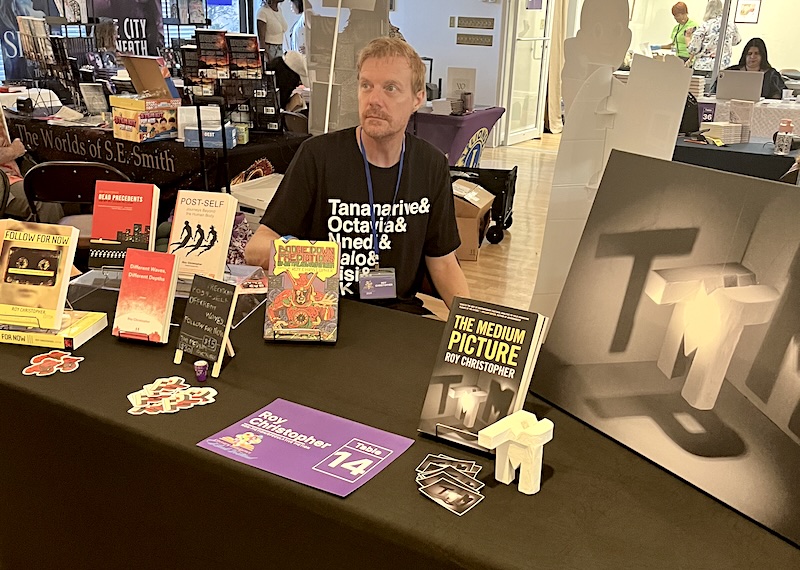
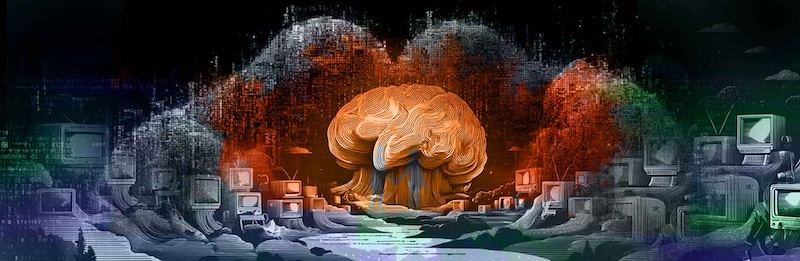
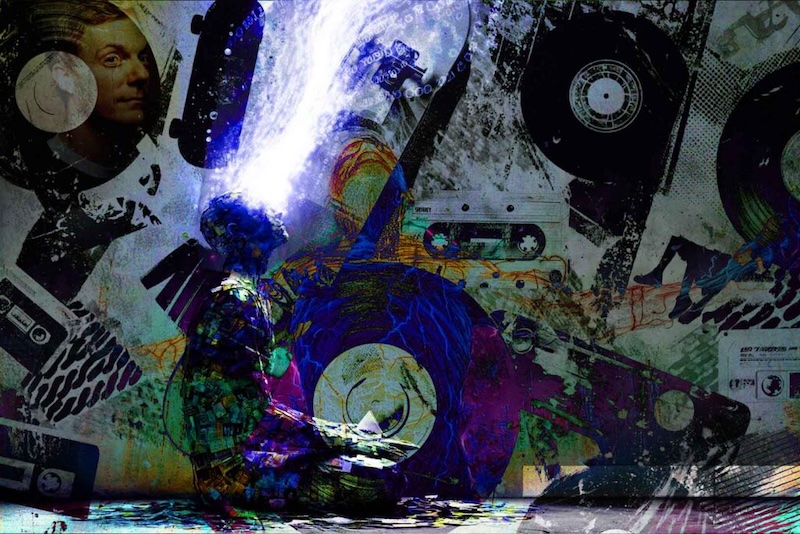
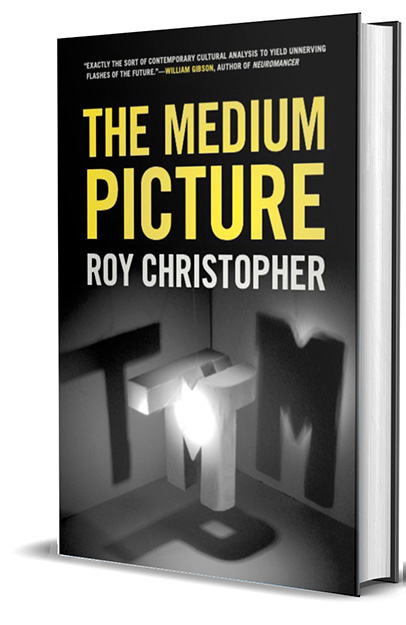
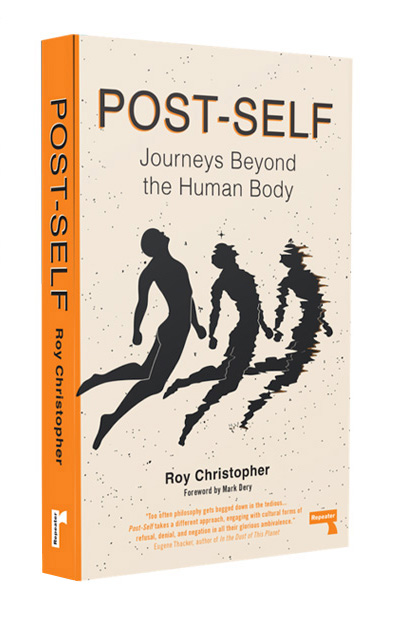
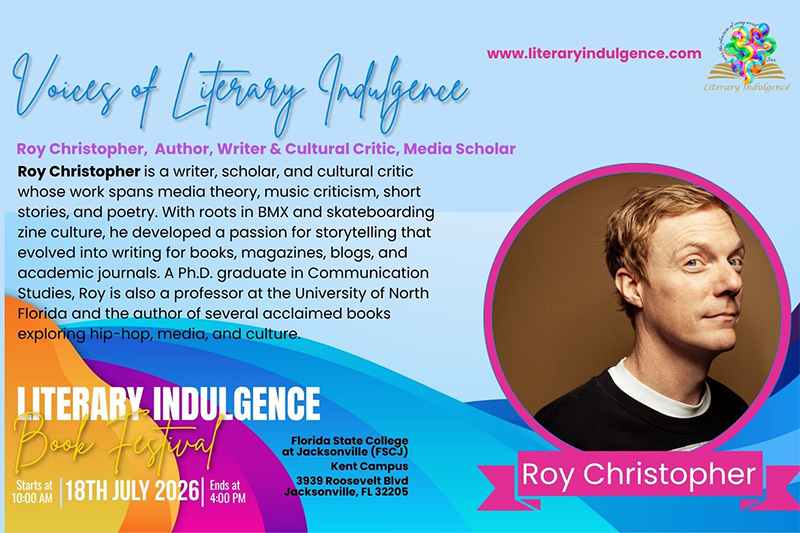
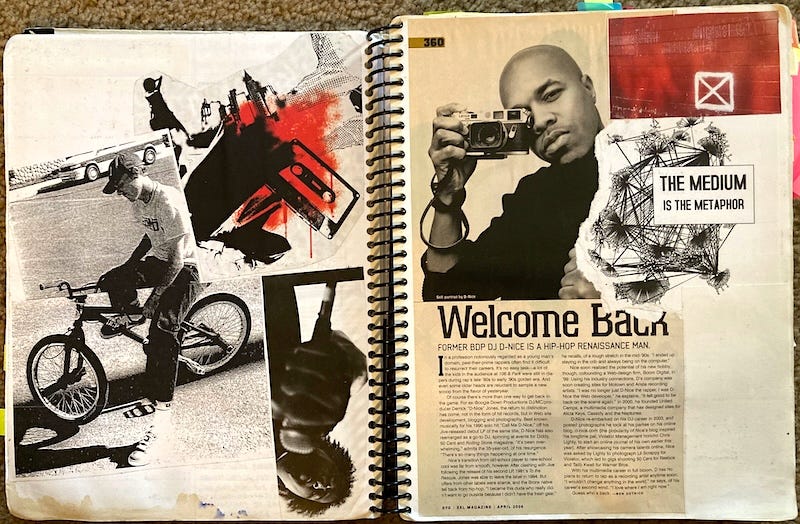
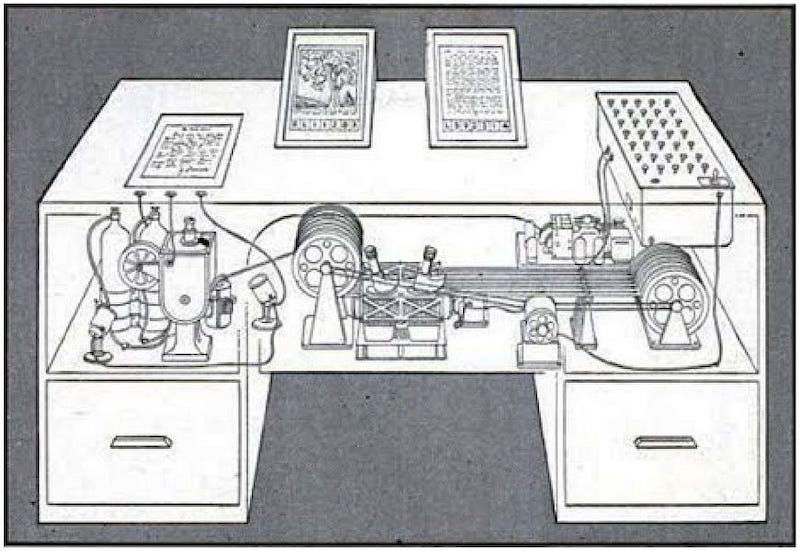
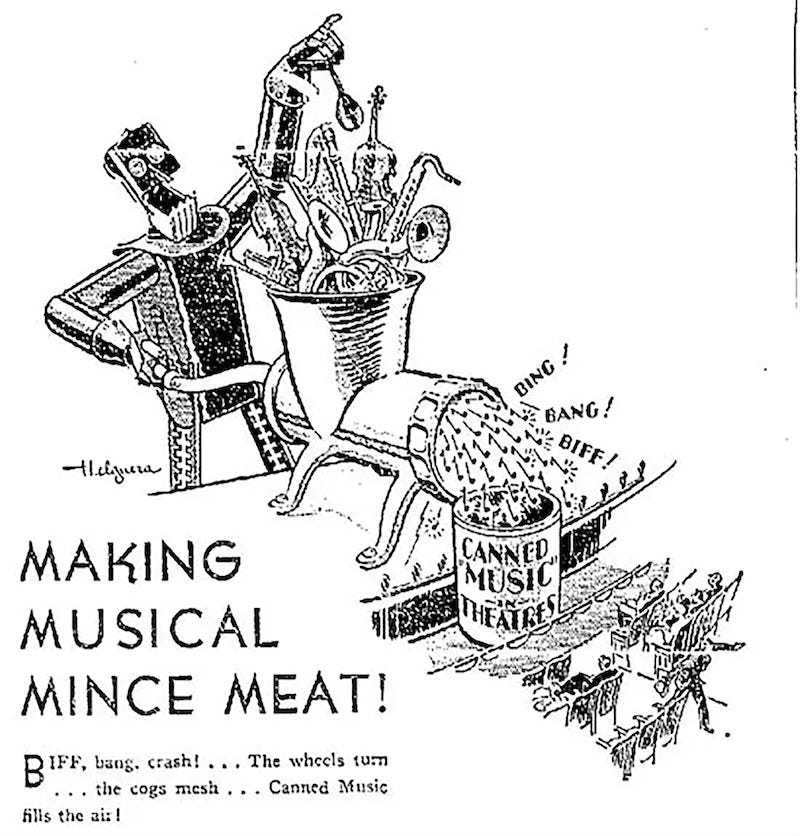
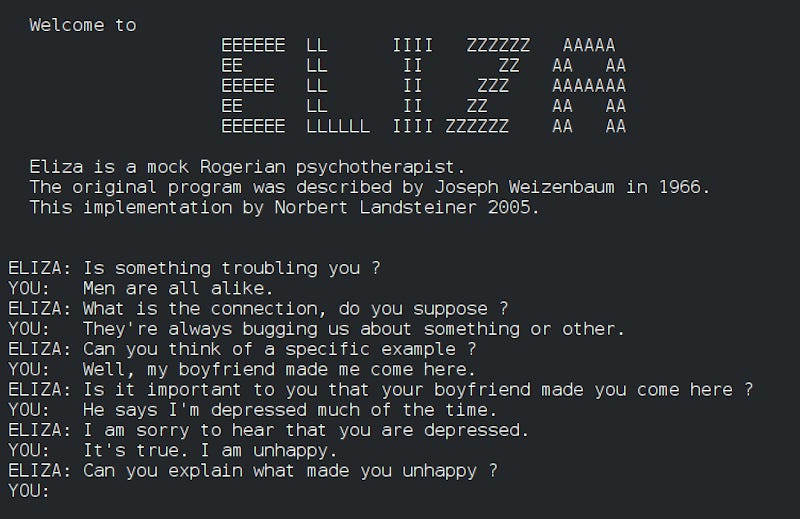

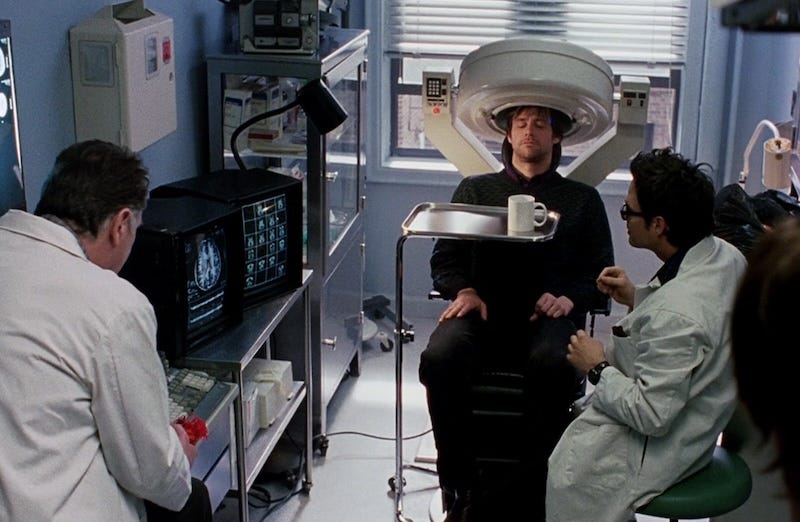

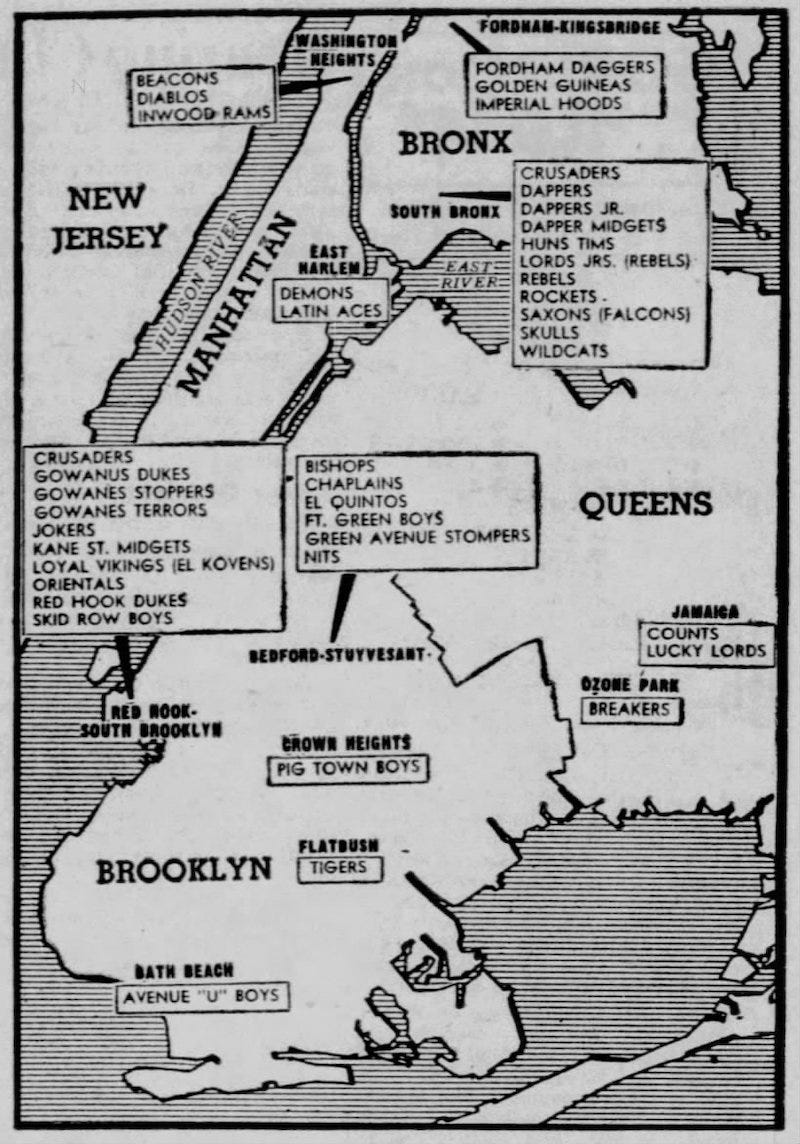
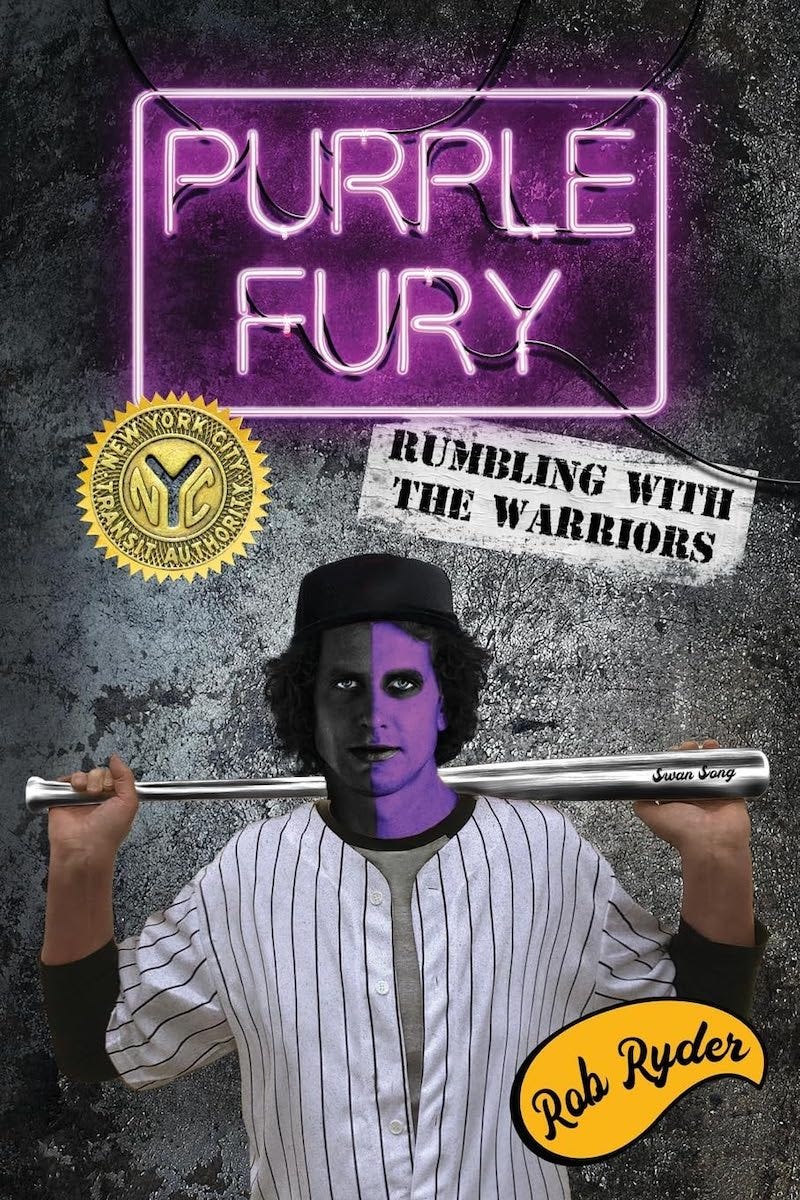
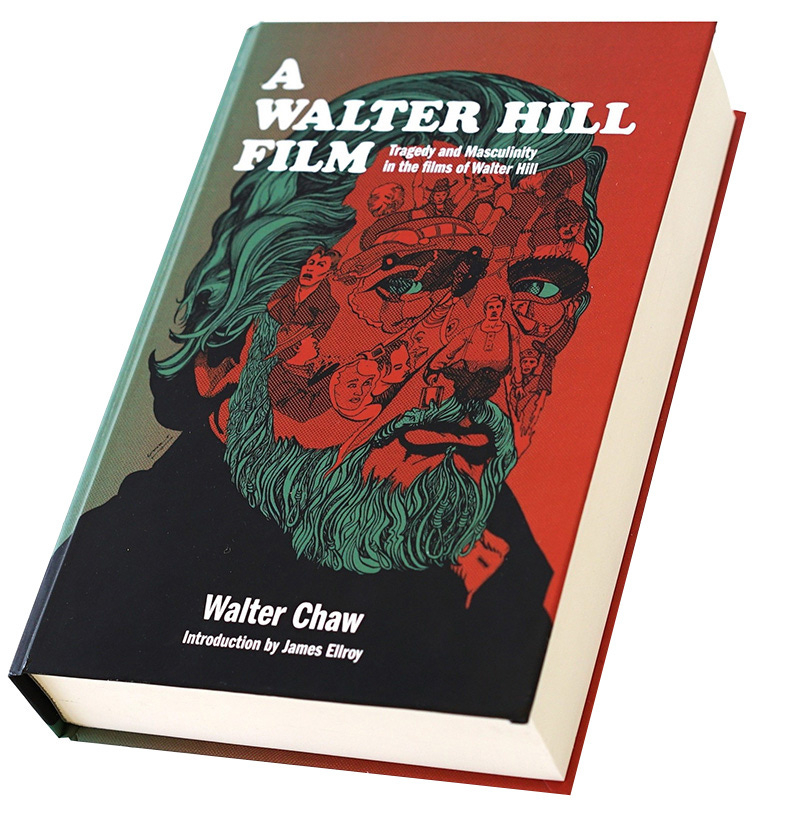
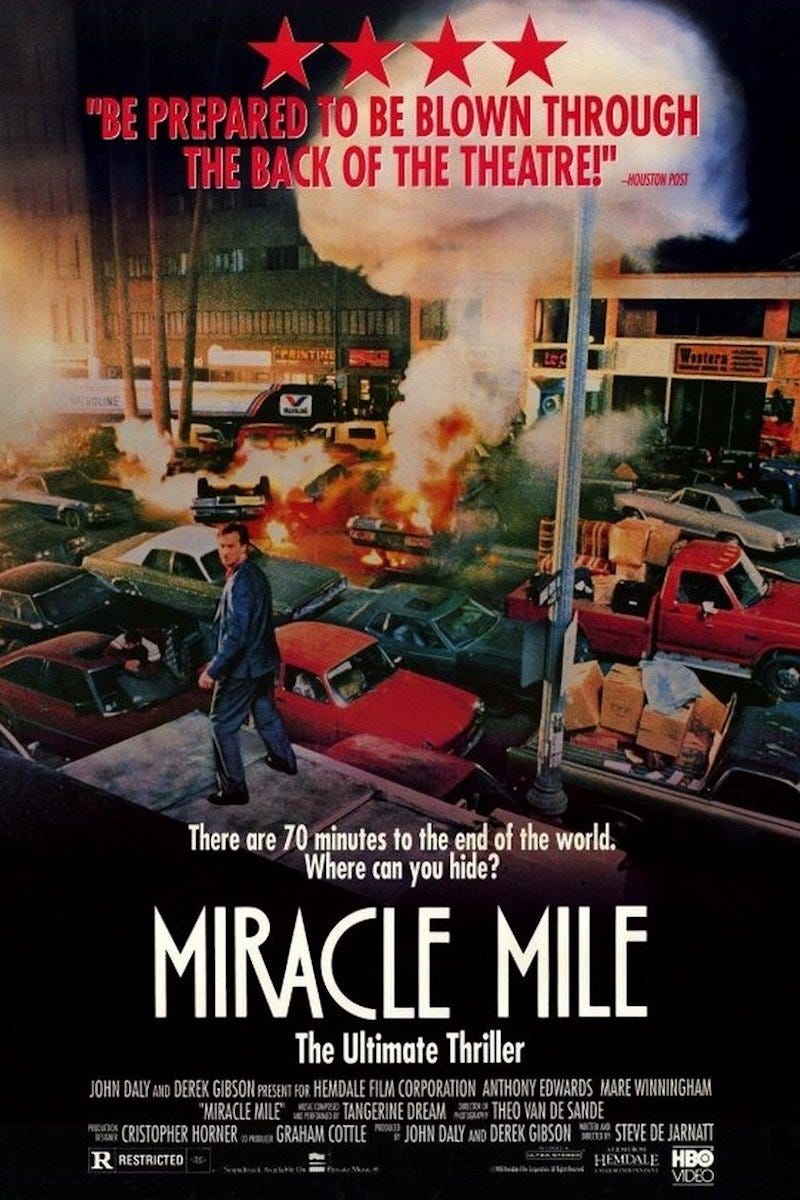
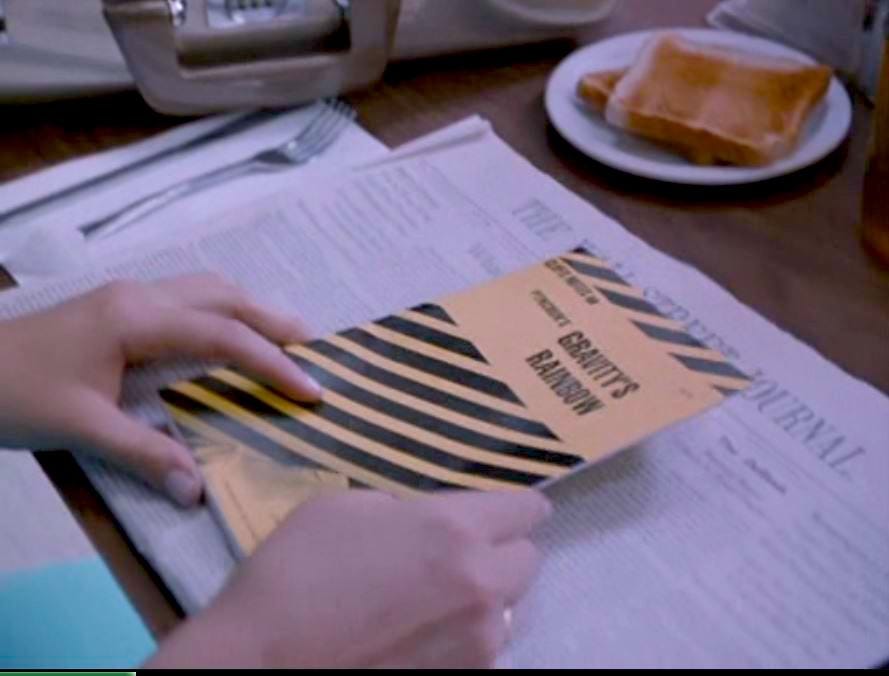
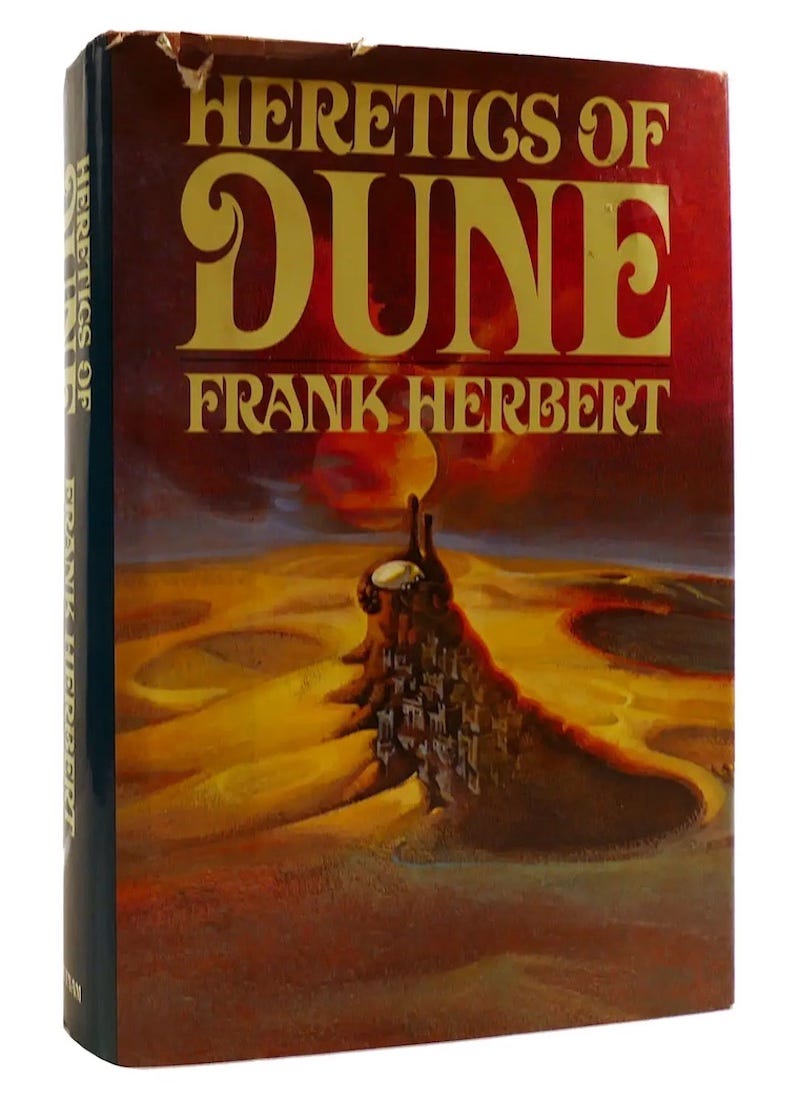
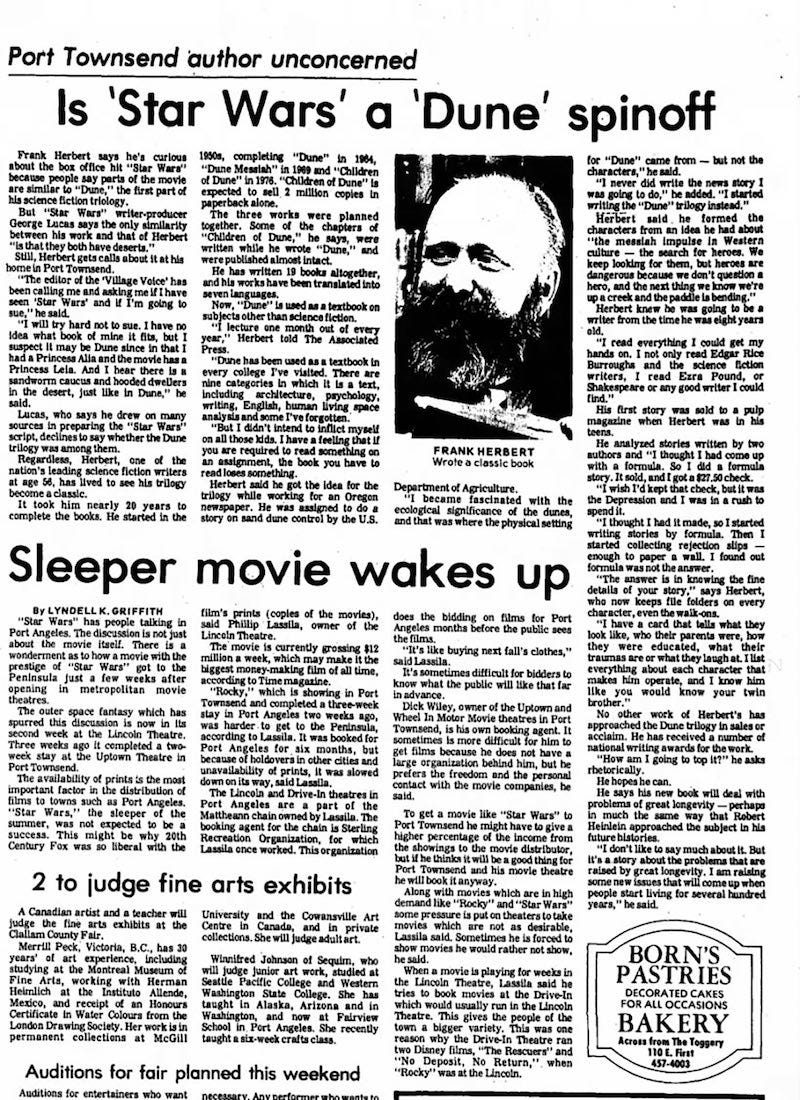


 SW: There is no question that working a 12-step program of recovery saved my life. I’m a drunk junkie of the hopeless variety. There is no logical reason that you and I should be having this conversation. By all accounts, I should have died long ago. I tried to get sober a time or two by using self-will and I never got more than a handful of weeks under my belt. I just couldn’t do it, until I did the work outlined in the book. I’m not blessed with the capability to just turn off my need for oblivion. I was aware of this fact for a long time, I just thought it was my lot in life. When I started doing the program, I thought it was bullshit and wasn’t gonna work for me because, you know, I’m unique. But as I got into it, something happened. What that something is, I’m still not sure, nor do I care to know. I try not to think too deeply about the how’s or why’s. I just do what I’ve been taught and it keeps me clean, plain and simple.


 One of the most eye-opening books I’ve ever read is


 Summer books out now: Stephen Graham Jones


