Scott Wozniak: Shadowboxing the Apocalypse [Interview by Mike Daily]

— Photo by Charlotte Wirks Wozniak

Two years ago, I moved from the Portland area to Southern Oregon’s Rogue Valley and met Scott Wozniak. Scott’s become a close friend. He writes poetry. He participates in readings and (yes, they still exist) slams. In 2014, during the first six months of his sobriety, Scott won $140 at a slam in Ashland. I told him he reminds me in some ways of Steve Richmond. He laughed. When we met, Scott hadn’t heard of Steve or read his poems. Familiar refrain in American Renegades poetry. Or Outlaw. Modern American Poetry. MAP. Whatever you want to call it. Why? Because there’s always someone you haven’t heard of or read in this realm. Realm meaning the underground scene or network worldwide. Which brings to mind Worldwide Pants, David Letterman‘s production company. Watch this video: On June 10, 1982, Allen Ginsberg appeared on NBC’s Late Night with David Letterman. Allen talked about singing mantras, poetry, rock and roll. He mentioned collaborating with The Clash, being friends with Bob Dylan, preparing to celebrate the 25th anniversary of Jack Kerouac’s On the Road (Viking Press, 1957) in Boulder, Colorado, and how he was inspired by William Blake. After the commercial break, Ginsberg performed a punk rock-paced poem backed by Paul Shaffer’s band.

— Allen Ginsberg on Late Night with David Letterman, June 10, 1982.

Scott Wozniak’s new book Crumbling Utopian Pipedream (Moran Press, 2017) features marvelous cover art by Marie Enger, a back cover blurb by poet and novelist Rob Plath, and 40 poems written by a “chaos enthusiast” who—when he isn’t “doin’ the blue-collar thing,” as he told Marcia Epstein on her Talk With Me podcast—spends his free time writing and “[s]hadowboxing the apocalypse,” opening lines from his poem “The Time for Doomsday Preparation is Over,” which goes:

Shadowboxing
the apocalypse
by throwing
punches
at the wind
seems more
productive
than banging
heads
against
bricks
in this
counterfeit
age
of reason.

Ladies and gentlemen, would you please welcome Scott Wozniak.

Mike Daily: The recent book review and interview by George Anderson in New South Wales, Australia, astounded me. Not many writers receive that kind of in-depth, insightful, “erudite” I think is the word, critical acclaim. You accomplished this with your second collection of poetry, Crumbling Utopian Pipedream, or CUP as I refer to it. Awestruck congratulations, my friend. What do you make of this?

Scott Wozniak: Quite honestly, I’m not completely sure there’s a whole lot to make of it. You know how things are in the small press world, especially poetry. You can rack up great reviews and remain unknown, except maybe by your peers. How far “acclaim” stretches is relative to how you perceive it.

The way I see it is this: George is one of those guys that writes great poetry himself, runs an awesome site dedicated to small press/underground lit, reviews books, basically shines a light on the scene, and has been doing it for a good amount of time now. The underground press survives thanks to guys like George, and there’s a ton of ‘em out there. You’re one of them, Mike. Guys who’ve been in the game a long time, writers who understand it’s up to us to keep the ball rolling.

Poetry, in particular, has been DIY for centuries. It’s a passion project. Ultimately, for me, if writers whose work I love, who I look up to, writers who’ve been doing this since before I was born, if those guys give me positive feedback, I’m stoked. I’m accomplishing more than I set out to accomplish. If I reach a wider audience thanks to these guys who have been grinding away for 10, 20, 30 years in the small press, because they just have to write, it’s in their bones, then I’m forever grateful. Because honestly, if not another soul on the planet read my words, I’d still be writing. So, I try to keep it in perspective. Sure, I like to hear that my writing connects with someone because I love that feeling of reading something that resonates with me. But, I’m a selfish fuck, a lot of times I’m writing for me. Clearing the trash out of the attic, you know? So, when I get a review like the one George did, I look at it more like he was very thorough and thoughtful, and paid my work huge respect on that level. I view it more as a reflection of his integrity and dedication to the small press than a reflection of how great my book is.

MD: The review drew attention to your choice to open CUP with an epigram by poet Doug Draime–

It’s then you see
the crushing odds
and you know
you have
beaten them.
Somehow. You know
with the certainty
of your continued
breath.

–and since I had been unfamiliar with Doug’s work, can you tell us more about him, the impact his poetry had on you, and your personal interactions with him?

— Doug Draime

SW: Doug Draime is a legend, in my eyes, and deserves to be recognized as such. He had been publishing in the underground since the late ’60s, up until he passed away last year. I only became familiar with his work maybe six or seven years ago. I started noticing him on quite a few different poetry websites I would frequent and he would floor me every time. Then I came across one of his chapbooks that was included in the first Punk Rock Chapbook Series by Epic Rites Press. After that, I was in full blown fan-boy mode and consumed as much of his work as I could find. His full-length collection, More than the Alley, published by Interior Noise Press (2012), is still one of my all-time favorite books of poetry out there.

Eventually, a couple of years down the line, after I’d started getting work published, I discovered that he lived right down the road from me. This was a revelation. There aren’t too many writers that I idolized like I did him and he was living in my backyard, in middle of nowhere, Southern Oregon.

One evening I tracked down his email. I shot him a message, and, surprisingly, he messaged me back. We corresponded semi-regularly for the last year of his life. I had no idea he was sick at the time and he would always shoot down my offers to get a cup of coffee because he wanted to spend time with his family. Regardless, he would take the time to give me advice on writing, periodically critique my work, push me to submit my stuff, and generally taught me about being a kind, selfless person. I was just this random, poetry freak who started harassing him and he took the time to encourage and talk to me, even while he was sick.

I had built him up as this giant of poetry and assumed that he somehow managed to make a living off his writing, even though I’d read many, many poems where he would talk about his experience at some shit, dead end job. When I breached this subject, he laughed at me and brought me back down to reality, telling me, “Make no mistake, poetry don’t pay the bills.”

For this experience alone, I’m continually grateful. It removed any visions of grandeur I may have possessed and instilled in me the importance to just write, fuck anything else. Doug wrote incredible stuff, and got published for 40-plus years without the drive for fame. He wrote top notch poetry that tore into me like few writers have. He did this because writing was in his bones. Pure, no-nonsense love of the form, without any expectations. I know he was unaware of the impact that realization had on me, but it’s massive. That’s why I try not to put too much stock in things like good reviews. If I can just write solid work and remain happy with the joy that comes from the act itself, then I will have accomplished something holy. Recently, another writer/illustrator whom I highly respect, Janne Karlsson, read the manuscript of a project he and I are working on together and told me he felt it read “like a cross between Doug Draime and Nietzsche.” I don’t think I will ever receive a higher compliment.

MD: George Anderson asked, “Have you recently stumbled upon some new authors you haven’t read before who have impressed you?” You answered, “Man, there’s a ton of ‘em out there right now. I think the underground, or as my friend Mike Daily likes to call it, post-outlaw poetry, is alive and well. But a few names that are newer to me and very impressive would be Ryan Quinn Flanagan, Katie Lewington, Mather Schneider, James Decay, Paul Tristram, Jenny Santellano, Jamie Thrasivoulou, Matthew Borczon, and Benjamin Blake, to name a few.” Go ahead and name some others, expanding from contemporary writers to list your lifelong influences. Speak on William S. Burroughs, pro and con from your experience and current perspective, if you will.

SW: I hate doing these lists. I always feel like it’s some sort of, “Oh, look how well-read I am” B.S. that’s a way of proving to the gatekeepers that I belong here, wherever here is. I’m not saying that feeling is grounded in reality, I’m just saying that’s how I feel. But, since I know you’re a complete bibliophile and have a heartfelt respect for authors, I will comply…

Obviously, Bukowski is at the head of the list, followed, in no particular order, by Czeslaw Milosz, d.a. levy, Lawrence Ferlinghetti, Bob Kaufman, Jack Micheline, Gregory Corso, David Lerner, Miguel Algarin, Kurt Vonnegut, Ken Kesey, Hunter S. Thompson, Jim Carroll, Gary Snyder, Jack Kerouac, Walt Whitman, Bob Flanagan, Iceberg Slim, Donald Goines, Dan Fante (thanks to you), Carlos Castaneda, Phillip K. Dick, Robert Hunter, John Prine, Richard Brautigan, Woody Guthrie,  Hubert Selby Jr., Harlan Ellison, Frank O’Hara, Bruce Springsteen, Joe Strummer, Tom Robbins, Tom Waits, Jack Black (author of, You Can’t Win, not the other guy), J.D. Salinger, everyone who ever wrote for Marvel Comics, a slew of other writers I’ve forgotten, and of course, Mr. William S. Burroughs, whom I tend to have a bit of a love/hate relationship with. Maybe hate is too strong of a word, it’s more of a love/ehh (shrugs shoulders) relationship.

The reason for this is that I love him for the madman he was, and how his work is a true representation of that. He lived hard and wild and that is obvious when you read him. His book, Junkie, is a hard one to top, and a clear, honest representation of a crazy-ass junkie. His cut-up period of work, I could do without. Naked Lunch is, in my opinion, the best of that style. I could do without the rest of the Nova Trilogy. Sure, it’s “experimental,” and “revolutionary” but it’s fucking hard to follow. That stuff is like learning a new language, it takes commitment to see it through.  But, in all honesty, he’s probably the only writer who got clumped into the whole “Beat” category that I never outgrew. I can hear the gasps of sacrilege pouring from your readers’ mouths due to that statement, but it’s true. I could explain my stance further but that would be a long exhaustive conversation better suited for another time.

Focusing on Burroughs, I love him because he was bat-shit-crazy and I can relate. But I also see the folly of his ways the more I reflect on my own mistakes. I mean, he did murder someone. It may have been a drug-fueled mistake, and who am I to say it didn’t torment him, but the fucker got away with it because he comes from a wealthy family. That rubs me wrong. Maybe it shouldn’t reflect on my opinion about his work, but if I’m being honest, it kind of does. I will spare you an expanded discourse, which would undoubtedly be filled with hypocrisy…for now.

MD: What do you think was meant by my allusion to “post-outlaw poetry”?

SW: I’ve milled this over a bit since I first heard you use the term, and to me it seems like just another label, like “post-punk,” that is lost on me. You did, however, clue me in to the fact that you view it along the lines of straight-edge, but less militant. So, with that taken into consideration, I’ve come up with this…

Where “outlaw” has a (suicidal?) tendency to glorify the over-consumption of drugs and alcohol, and the life led while in such a state of existence, “post-outlaw” visits these same themes from the standpoint of experiences lived, pointing out the destruction while also revealing the desire, struggle, and necessity of overcoming such behavior, with the hope that the reader may learn that it’s not all fun and games in the fast lane, and yes, there is a way out. Maybe the “post-outlaw” is one who miraculously survived the “outlaw” life and is now searching for higher meaning thanks to the destruction of their past? Or you could be saying that all the outlaws have come and gone, but I think we know better.

[soundcloud url=”https://api.soundcloud.com/tracks/322838918″ params=”color=ff5500″ width=”100%” height=”166″ iframe=”true” /]


MD: I saw on Facebook that poet Alan Kaufman, Editor of The Outlaw Bible of American Poetry (Thunder’s Mouth Press, 1999), is 27 years sober this week. Last question: How essential has working a program of recovery been in maintaining your sobriety? I had thought I was an anomaly in sobriety since I had for years used will power and determination to not try to change how I feel. Now I’m aware that others with the DIY (Do It Yourself) mindset seem to have quit using the same method. Individuals who have posted or interviewed to this effect include musician, writer, and anchor at MTV News Meredith Graves (1 year); BMX racer, dirt jumper, street rider, and writer Scott Towne (6 years); and rappers Evolve (Sergio Hernandez, 2 years) and Blueprint (Al Shepard, 7 years). I was surprised to hear while listening to “Super Duty Tough Work with Blueprint and Illogic: Podcast 67: The Benefits of Sobriety” that Blueprint and I share the same sobriety birthday, May 15th (Print’s got a year on me). He didn’t mention A.A. or any direct principles of the program during his podcast with Illogic. Likely because when he quit, he quit. Done deal for him. The Book of Drugs: A Memoir (Da Capo Press, 2012) by solo artist Mike Doughty (former singer-guitarist of Soul Coughing, 17 years sober as far as I know) is one of my favorite books. In “An Indie Superstar’s Slow Road to Sobriety,” Mike writes about how going to meetings and finding out how to work the program saved his life. Yours?

SW: There is no question that working a 12-step program of recovery saved my life. I’m a drunk junkie of the hopeless variety. There is no logical reason that you and I should be having this conversation. By all accounts, I should have died long ago. I tried to get sober a time or two by using self-will and I never got more than a handful of weeks under my belt. I just couldn’t do it, until I did the work outlined in the book. I’m not blessed with the capability to just turn off my need for oblivion. I was aware of this fact for a long time, I just thought it was my lot in life. When I started doing the program, I thought it was bullshit and wasn’t gonna work for me because, you know, I’m unique. But as I got into it, something happened. What that something is, I’m still not sure, nor do I care to know. I try not to think too deeply about the how’s or why’s. I just do what I’ve been taught and it keeps me clean, plain and simple.

———

Contributor Bio:

Mike Daily is a novelist, journalist, zinemaker, spoken words performer, and co-creator of the Plywood Hoods freestyle BMX trick team. He lives in Oregon. Daily is at work on his third novel, Moon Babes of Bicycle City. Excerpts from the book are being recorded with Joe Gruttola.

Chris Kraus: Wildly Contradictory

We have a tendency to want to keep the objects of our admiration in their boxes, like collectors. When one refuses to fit or stay there, we struggle with how to perceive them. It’s rare and getting moreso, but Chris Kraus is one of those un-box-able entities. Mixing theory, fiction, and biography, her writing confounds as it captivates. She’s mostly known for her art writing, but she’s also done performance art, film, and teaches at the European Graduate School.

Through their work with the imprint Semiotext(e), Kraus and her partners, Sylvère Lotringer and Hedi El Kholti, have facilitated works by Jean Baudrillard, The Invisible Committee, Eileen Myles, Kathy Acker, Jarrett Kobek, Franco “Bifo” Berardi, Gilles Deleuze, Félix Guattari, Guy Debord, Julia Kristeva, Gerald Raunig, and Michel Foucault, as well as themselves and many others. As Rick Moody puts it, “Semiotext(e) has for a generation been the leading edge of the most incendiary and exciting intellectual revolution in the West.”

Kraus’s debut novel, I Love Dick (Semiotext(e)/Native Agents, 1997), has been adapted into a TV series for Amazon by Jill Soloway and Sarah Gubbins starring Katherine Hahn, Griffin Dunne, and Kevin Bacon. If that weren’t enough, her biography of Kathy Acker, After Kathy Acker (Semiotext(e)/Native Agents, 2017), is also coming out later this year.

Roy Christopher: For the uninitiated, what would you say your field of work is? Where do you fit? [This question feels like it should have a “check as many as apply” clause.]

Chris Kraus: Writing. Sub-categories — literary fiction; criticism.

RC: Is having your debut novel turned into a TV show more validating or terrifying?

CK: Definitely not validating — The real validation came early on, when these girls would show up at bookstore readings with their copies with hundreds of post-its and cracked spines.

It was initially terrifying, but then I realized — who cares? And they’re doing a really good job.

RC: Do you ever feel like a stunt person for your fiction?

CK: No. More like, the director.

RC: Some of us have the tendency to get ourselves into situations that might make good stories. In another interview, you called infatuation a “gateway drug for writing,” which strikes me as a similar, if unplanned, tactic.

CK: Yeah, the point is that nothing is planned, and what seems like a small incident can become huge. It’s all what you read into it.

RC: You wrote in Video Green (Verso, 2004), “I think stupidity is the unwillingness to absorb new information” (p. 101). This sentiment seems all the more germane now.

CK: Yes, unfortunately so. And there’s so much new information, it’s almost impossible to absorb.

RC: I was thinking about that quotation in the context of the current administration, and, more relevantly, the supporters thereof.

CK: Yes, and that would extend to “ourselves,” especially — the ones who didn’t see it coming.

RC: Finally, why isn’t there already a biography of Kathy Acker? I’m glad you’re the one who wrote this one, but doesn’t it seem like it should’ve already happened?

CK: Yes and no. It takes a long time to research and write a biography. Douglas Martin finished his doctoral dissertation on Acker’s work, When She Does What She Does, ten years after her death in 2007. Now there’s another Acker biography in the works by the Canadian journalist Jason McBride. I think the smoke of Acker’s image needed to clear for her work and life to be freshly considered.

RC: Yeah, there was definitely no box for Kathy Acker.

CK: No, she was wildly contradictory!

RC: Do you feel a kinship with her?

CK: Of course.

RC: Is there anything else you’d like to bring up here?

CK: Not yet. But thank you.

M. Sayyid: The Other Side

Around the bend of the millennium, New York hip-hop collective Antipop Consortium emerged as a voice of possible futures. The spaced-out mix and match of M. Sayyid, Beans, High Priest, and Earl Blaize was a welcome beacon to the hip-hop of the new century. Emcee M. Sayyid’s flow is “forward-leaning” and abstract, but also as contagious as the flu. He’s also the storyteller of the crew, with an unmistakable Slick-Rick-from-the-Dark-Side vibe. Just listen to “9.99” from Tragic Epilogue (75 Ark, 2000) or “Z St.” from Arrhythmia (Warp, 2002).

As with any collection of volatile forces, APC’s work as a cohesive group has been sporadic at best, with seven years between their last two proper full-lengths. As I wrote about the gap in 2009,

When Antipop Consortium threw down the progressive hip-hop gauntlet on 2002’s Arrhythmia they didn’t expect to have to reunite several years later to pick it up—but they did. Their recent Fluorescent Black answers every challenge presented on Arrhythmia and then some. It’s weird, it’s word, and it’s war. The lyrics are abstract but tight and the beats are quirky but banging—and the whole package will stomp a mudhole in your ass.

Their separate ways are always active in the meantime though, working with everyone from DJ Vadim and DJ Krush to Matthew Shipp and Bill Laswell. As Mike Ladd, who worked with Sayyid on his latest, Error Tape 1, tells me,

Like the whole APC crew, always beyond forward. Sayyid is honestly one of my favorite people in to work with in music. He always finds a way to push you further constantly challenging himself and those around him in the most positive ways. I’ve known this brother for almost 20 years and never seen his energy slip. Very, very glad we’re in the same town and still get to work together from time to time.

When I first got into APC, I read that M.Sayyid used to work with Mark Pauline’s rabid robot-art crew, Survival Research Laboratories. A fact he confirms below. He also tells me about working with several other familiar, formative names, including Andy Jenkins, Mark Lewman, Spike Jonze, and Nick Philip.

I only recently came across last year’s Error Tape 1, and have had it in rotation nonstop. The “1” in the title ominously hints at future further installments. Sayyid tells me there will be two. “I’m working on tape 2 now,” he says.

Roy Christopher: How long have you been in Paris? That has to be mad different from working in New York.

M. Sayyid: Yeah I moved here in fall 2013 with my wife who’s Parisian. It was super hard to get in the zone, but it had less to do with Paris and more to do with my own personal journey and difficulty finding my sound. Like most things worthwhile it took time for me to find my sound then it took time for me to understand my vocal character and what my strong points were.

It was about a two-year quest. Once 2015 hit, I had a comfortable studio and engineer vibe.

The biggest achievement was my writing. I had no one around me who could understand what exactly I was saying so it forced me to write from a different place–a place of deep honesty woven in pattern.

H2V95NVM_Uk

RC: How did you end up working with Survival Research Laboratories?

MS: I used to read RE:Search Magazine when I moved to San Jose at 18 after high school. I was living in a house of art with Nick Philip and around a lot of Nor Cal skate culture.

One day I was in a gallery in Downtown San Jose, and the owners asked me to help them prepare an exhibition for Mark Pauline. I knew who he was from the magazine so I was pumped, and I worked that exhibition with him. Also my homey Chris Cotton was a technician for his Bay Bridge show (insane), so I was around that universe a bunch of times in 89-90.

RC: Did working with SRL inform your music at all?

MS: For sure, it was the “other side,” and I was a magnet for anything on the “other side,” and so were the [SRL] guys. So, when we met, we spoke a similar language.

RC: Your music always sounds like it’s beaming in from some alternate future. What else works its way in there?

MS: Hmmm… Definitely my obsession with Basquiat after his death in 89 changed what I thought was possible in the art-making process… I was in an art collective with Andy Jenkins, Spike Jonze, Mark Lewman, and a bunch of other BMX-related folks called The Basement. For literature it was all about Ralph Ellison, Richard Wright, Bukowski… Then musically it was rap and punk and people like Laurie Anderson.

Again, all of this was like a way to the “other side.”

RC: What else are you working on that you want to bring up here?

MS: Promos for Error Tape 1 (i.e., videos, short tracks, etc.). I provided musical direction and songs for a French television mini series that I’m also acting in called Aurore directed by Laetitia Masson coming out on Arté.tv in September… I’m also in the process of furthering my creative performance coaching work with a platform for artistic self improvement called “insyncro,” designed to combine a practice of meditation physical training and relaxation for working artist to improve process in art making.


Alexis Desolneux: Heresy for Hire

Once upon a buzz in the conquest of cool, there was a thing called brand hijacking. This was the phenomenon, sometimes frowned upon, of a brand being supposedly inadvertently associated with a certain subculture or movement. Think Pabst Blue Ribbon, Tommy Hilfiger, or Converse Chuck Taylors. It turns on the idea that the image of a brand belongs to the market, not to the company that cultivates that image.

Alexis ascending. [photo by Matt Coplon]
The only antidote is an image so strong that there’s no other way to take it. Over the past several years, Alexis Desolneux and his crew of flatland misfits (Sebastian Grubinger, Michael Husser, George Manos, and Matthieu Bonnécuelle) have built just that. Heresy is a BMX brand that operates like an underground record label. Think Dischord. To wit, in DIG‘s 99.5 issuePrint is Dead, Brian Tunney appropriately called them his “BMX Fugazi.” They’re dedicated to their craft, independent as fuck, and really, really good at what they do.

My journey to Heresy took much longer than it should have. In looking for a new flatland frame to build up last year, I found myself taking several steps backward. Even when I thought I’d found a proper solution, it was only a stopgap. BMX lends itself to nostalgia in weird ways, and nostalgia is a quicksand that’s difficult to avoid. I realized I was caught up in a bit of it when I found Heresy. As their slogan goes, “You are your path.”

After watching all of their videos and finding out everything I could about the brand and the riders behind it, I built up my own Heresy frame with as many of their parts as I could get. Given my fast fandom, I knew I needed to talk to their leader.

Roy Christopher: Let’s go all the way back, Alexis: What got you into BMX in the first place?

Alexis Desolneux: I would say the woods near home which had many dirt paths and a few small hills, watching motocross racing on TV as a kid in the 70s  or in dirt bike mags, finally seeing photos of early BMX racing in the US: It was mind-blowing and echoing what we were trying to do with our crappy little bikes in my small hometown next to Paris. I’ve  always loved riding my bike, ever since I was a 5-year-old kid.

RC: What was the catalyst for starting Heresy?

AD: I started Heresy from going through rough times (a serious riding accident, losing my main sponsors while my wife and I just had our second baby…) and just realizing that I had no choice but going for what made more sense even if that meant starting from zero. But the origin is the riding. I really needed that AscenD frame to exist. I was also at a point where I had already contributed to designing products for other brands. I also had my first go with a short-lived project named L’essence in the early 2000s. In that sense I had no choice but to go for an all-or-nothing kind of decision. I was 39, and it felt right and exciting to create something from scratch, or regret it forever.

RC: Music seems to be integral to the aesthetic of the brand. Was that intentional from the start, or does it just come from being a music fan?

AD: It definitely is integral to the aesthetic of the project. But I let things go as naturally as possible with Heresy. Music has been fueling my riding and my life in general ever since I was a kid, I was exposed to what was considered dangerous music early on, thanks to my brother. I remember playing his AC/DC Back in Black tape in 1980 or his Kinks album when no one was home, I was a 9-year-old kid and loved it. Later, in the 90’s, I was involved in the DIY hardcore scene playing in bands, trading records and driving to shows all over Europe. That and the whole ethos about making it happen when no one will do it for you (which was a common thing is that underground music world) are foundation for Heresy. It goes beyond being a music fan and grabbing elements of someone else’s aesthetics to re-create an identity, instead we hope to pay hommage to those who inspire(d) us by seeing Heresy as a unique filter for an essence, or just a feeling, something that is shared by many about riding, music, and life in general.

Obscured, 2011. [photo by Stephane Bar]
RC: The Heresy riders have styles that are not only different from riders in the sport but also different from each other. How did you go about assembling such a diverse team?

AD: I care about their passion, their fun, their free spirit, and their absolute commitment to make their ideas or vision reality. I sacralize the riding because in a time when BMX Flatland is growing, consequently its representation in the mainstream is spreading. It’s a predictable thing to happen in our society when a maturing sport is being developed and gaining recognition. I’m taking part in that process as a judge on some big events because I care to keep the progressive factor alive in flatland. But that’s a very different agenda from running a project like Heresy.

In that sense the riding is sacred because its nature is to exist before anyone else’s agenda affects it. Competition, advertising, television, show-business… flatland can be many things these days and these various systems will usually affect its presentation and push the riders to adapt, consciously or not.

Fine, but that’s just not what we emphasize with Heresy. We care to highlight the riding that remains unaffected, how an individual can self-express through flatland as a medium and expand his riding with no boundaries. Naturally, Heresy is also a representation but obviously miles away from another kind of representation like a flatland contest. There is a lot of light being put on the best contest riders these days, I just want to put light on other excellent riders as a contribution to make the picture more complete.

RC: What’s coming up for you and Heresy?

AD: Just riding as much as I can. It keeps me happy. It always did. For Heresy, new pedals, re-stock on pegs, BBs, headsets… AscenD frames coming out this year: V3 for the 19’’ & 19.5’’ sizes, V2 for the 20’’ & 20.5’’. We’ll also definitely have some projects with the team… Stay tuned.

Shabazz Palaces: A New Refutation

The history of hip-hop so far can be seen as split down the middle by the deaths of Biggie Smalls and Tupac Shakur. In the most oversimplified of terms, there was a reset when street sounds gave way to club bangers. Wu-Tang and Nas stepped aside for Missy and Puffy. Few survived.

Ishmael Butler has been on both sides of that divide. His old New York crew, Digable Planets, was all over the place in the early 1990s, and his new Seattle outfit, Shabazz Palaces, is firmly a part of the future, though he doesn’t necessarily see time and space like that. Time and space, like reality itself, are human constructs. “Every serious artist hopes not to be a success but to escape the gravity, the pull, the prison of their times,” Charles Mudede tells me. “Ish, I think, is the only rapper who achieved escape velocity and is now free in space.”

Of the 1993 Digable Planets song “Time & Space (A New Refutation of),” Butler told Brian Coleman in 2007, “That song title was part of the title of the album. It came from Jorge Luis Borges. I was reading a lot of his stuff at the time… Everything he wrote was metaphysical and circular, and things didn’t always happen for any reason. Time and space are conceptual and can only relate to you as an individual” (Check the Technique, p. 169-170).

— Shabazz Palaces: Ishmael Butler and Tendai Maraire
[photo by Victoria Kovios]
After having released one of the most slept-on records in the history of music, 1994’s Blowout Comb (Pendulum), Digable Planets split up in the mid-1990s. They haven’t recorded any new material since, but they’ve been performing live again since 2005. Don’t get it out of sync though, Shabazz Palaces is still Ish’s main focus. Their two (!!) new records, Quazarz: Born on a Gangster Star and Quazarz vs. The Jealous Machines (both for Sub Pop), come out in July.

Roy Christopher: Now that you’ve done Digable Planets and Shabazz Palaces simultaneously, how do you approach those two projects differently?

Ishmael Butler: I would equate it to how black families have family reunions like every two years. It’s like that: Getting back to a familiar situation that you don’t do that much, but when you do, it’s fun, it’s special, and it always reminds you of your home and where you came from. It also makes you think about how you behaved and how you relate to and how you seize the time in the present, you know? So, it’s like going back to that music is romantic and nostalgic combined, wrapped up in this present thing that you can touch, but it’s still coming from the past, from a past that was very formative. So, it’s hard to describe, but I don’t think of it like I’m doing them at the same time because I’m really not. The Shabazz thing is now, and Digable shows are shows of older music because we haven’t done any new music.

RC: Would you say that both projects are informed by science fiction?

IB: Yeah, the first book I ever really read cover to cover was this book called Z for Zachariah (Atheneum, 1974). I always liked science fiction movies. I always liked reading science fiction. Octavia Butler came to me in my twenties. I read a lot of that. Then of course there’s George Clinton. I don’t really call that science fiction, but I call it imaginative reality… Where you exist because you believe in different realms, different worlds, natural words, supernatural worlds. You look at a cat like Clinton, and you’re like, “oh, he’s wild,” but he’s living in these alternative realities different from ours but no less real. I came onto that early in life.

RC: The Afrofuturism movement connects the concept of alienation from science fiction with the history of the African diaspora being stolen from their homeland for slavery. Do you think this is a useful connection to make?

IB: I like the alien aspect of it only because white people were the first to construct this reality that was concrete, had reason, and had form and hierarchies and categories, and you could understand everything, you know? That just wasn’t something that African motherfuckers were concerned with. We didn’t need to lord over the land and the air and the space and ideas and people – not to that extent. So, when those that did came into contact with us and saw us, that was the birth of science fiction. This notion of a reality and that we had broken that reality therefore set into motion all these needs to put hierarchies and to control and to enslave and to have land and borders and all of this kind of stuff. I feel like we are the alien. We deal with this realm in a totally different way than anyone else. And I think that it’s shocking and disorienting and calls into question reality. Imagine seeing some niggas in West Africa back then! Who knows what they were capable of doing!?

4j6TcLiANW8

What we did and what we knew and the things we had connections with, it was mind-blowing. It blew people away, and it set into motion all of these things like science fiction and abstraction and cubism and surrealism and all that stuff. I feel like we were catalysts to all of that stuff just by our existence. I look at the Towers in Luxor or the Pyramids or different types of structures, and I’m like, yeah, there was some different type of shit going on. I don’t think anyone knows what it was, and there are all kinds of theories that are interesting and entertaining and brilliantly conceived, but no one really knows… Something else was happening! It appears obvious to me. I hear that when Clinton and those guys get down, when Prince gets down… There’s something else at work in these constructions that these people are making…

RC: How do we tell this story right?

IB: If you could somehow get this point across: Every culture–forget race–every culture invented and was the author of certain enlightenments and certain constructions. Now, inside of that culture there’s skin colors that come from this certain culture. You heard me say I’m not talking about skin: I don’t see race like that. White people came up with this code for everything: We got language, we got writing, we got history, which we’re going to give an accurate account of… How?! How you gonna give an accurate account of a battle?! All these men that died can’t read or write, and they’re operating at the behest of someone who’s in control who’s going to author this history! So, forget history altogether! I can’t even fuck with it! These are just serial tales that vaguely hint at reality and the truth of some days past as far as I’m concerned.

I think you’ve got to figure out how to tell a language-less, history-less story, that is all about expanding the now rather than conquering and controlling the future. That’s where all this quote-“Afrofuturism” comes from is sly motherfuckers who was loving the moment so much that they wanted to blow more air and blow more space into the moment and push it out and hold it as long as they could. That’s what grooves and loops and sustaining one groove and one rhythm does: it bends time and melts it and blows bubbles in it. That’s what this Afrofuturism stuff is about.

6TWNaMRlNj8

If you came here across the sea in the hull of a ship, and you land, and you start to live this new life in this new territory where it gets extremely cold, and there’s all these kinds of seasons and abuse and terrors is being pushed upon you. Every minute of every day you live in oppression and terror of the sort that no one can even imagine anymore, no movie can show you anything close to what actually happened. Simple survival, waking up, standing up, greeting the sun, breathing in and out… You’re a futurist. You’ve tapped into something that keeps you moving that’s stronger than really anything we’ve ever seen before from humankind. Imagine getting used to that on a cellular level–you’re breathing that now–what’s going to be the result of that? I think we all are futurists.

Clay Tarver: Gone Glimmering

I first came across Clay Tarver in the very early 1990s. His guitar playing drove two of my favorite bands back then: Bullet LaVolta and Chavez. The former was, like a lot of the bands of the time, a hybrid of punk, metal, and some third strain of rock that was brewing but had yet to boil. I noticed producer Dave Jerden’s name on the back of several CD jackets in and near my player: Mother’s Milk, Nothing’s Shocking, Facelift, Symbol of Salvation, and Swandive. Swandive (RCA), Bullet LaVolta’s last proper record, came out the same day as Nirvana’s Nevermind (DGC), September 24, 1991. They broke up not long after.

Clay Tarver

Tarver’s next band, Chavez, recorded two of the best records of the decade, both of which sound as firm and fresh now as they did then. Gone Glimmering (1995) and Ride the Fader (1996) helped Matador Records maintain a hand in the choke-hold on the decade-defining sound (The other hand belonged to Sub Pop). Along with Matt Sweeney’s lilting vocals, it was Tarver’s guitar that formed that sound. I’ve always considered him among players whose guitar sound is their band’s identity. Think John Haggerty, Bob Mould, J. Mascis, Steve Albini. Here, just listen to “Break Up Your Band” from Gone Glimmering (1995):

bKr45j6S_qQ

I saw Chavez play in Seattle in 1996, and after the show I went to say “hi” to Clay. I shook his hand and introduced myself, then noticed that I’d interrupted a three-way conversation-in-progress. There were mildly annoyed dudes standing on either side of me. I soon realized I was standing between Greg Dulli and Donal Logue, two of Tarver’s old friends and stars in their own right. Dulli is the lead singer of the legendary Afghan Whigs, and Logue, though he’s done tons of other things, was the dad on Fox’s Grounded for Life (2001-2005) and currently plays Harvey Bullock on Gotham.

I recently asked Donal about Clay, and he had the following to say:

Clay Tarver is smarter and more talented than anyone I’ve ever met, but the super-human thing about Clay is he’s never been an attention-seeker or used any of his insanely unfair talents in some kind of narcissistic pursuit. He was the last word in any conversation regarding art or politics, but (and this is hard to articulate), he was never a dick about it. He was always just right, and his thinking was always at another level. High school all-state basketball star? I wouldn’t have known it unless his family told me. One of the best guitarists of all time? His own kids didn’t know he played guitar. No one has influenced me more than Clay Tarver. It’s impossible to describe Clay Tarver in a sentence, Roy, so I don’t even want to try!

Donal reiterated that the thing he finds so amazing about Clay is his modesty. “What really blows me away,” Donal said, “is how he avoided any kind of self-serving behavior, despite his gifts and talents.”

Silicon Valley

Toward the turn of the millennium, Tarver made the switch from music to movies and put together some outstanding and memorable clips in a place where it’s difficult to stand out. He directed the “Jimmy the Cabdriver” spots for MTV, which featured Donal as a greasy, fast-talking cabdriver, directed the ubiquitous “Got Milk?” commercials, and co-wrote the feature film Joy Ride (2001) with J.J. Abrams. He now serves as a consulting producer and writer for HBO’s Silicon Valley. Tarver recently signed on to script the sequel to Dodgeball for Fox, but he says that’s not likely to happen. He also owes Greg Dulli a phone call.

Roy Christopher: You’ve been on stage as a guitarist and are now writing scripts and producing. How do the two roles—one out in front of the crowd and one behind the scenes—compare? Which do you like better?

Chavez : Gone GlimmeringClay Tarver: Well, the first question is easy. Being on stage is one hell of a lot more fun. And not because you’re the focus of the attention, of all the applause, etc. To me, it’s more about getting some kind of visceral gratification for what I’m doing as it happens. It’s tremendous.There’s nothing like performing with a group, in front of people, where you’re kind of all in this special moment together. Writing is the opposite. Writing is all about creating that moment for others. Sometimes fool proofing it. It’s about craft and discipline and serious self-editing. And I suppose I enjoy the challenge. I do. Even in music, you can’t get on stage without doing the hard work of writing. But writing’s not fun. Look, I feel very fortunate to be doing what I do. I’m creatively challenged to the hilt. But I’d be lying if I told you I don’t miss playing whenever I wanted to.

RC: Man, the 1990s were a weird time for music. Looking back, it seems like genres were bending and blending in such odd ways. What do you like these days?

CT: Huh. I don’t know if I agree with you. For me, my favorite time of music was the Creem magazine days. Genres were all over the place. Any issue could have Cheap Trick, Aerosmith, The Sex Pistols, Blondie, KISS, Nugent, Elton John, Rick Derringer, and Bowie.

The 90s were more a generational thing to me. I was glad to be a part of it. But it was much more sort of straightforward. What am I into today? Not much new… Tinariwen… Queens… Still listening to a lot of Dennis Wilson and Glen Campbell… Love the Master’s Apprentices… Saw John Prine for the first time recently and loved it.

RC: Fair enough… Donal Logue and Greg Dulli are two guys whose paths have crossed yours at various times over the past twenty-odd years. Tell me about the connection among you three.

Bullet LaVolta: SwandiveCT: Donal was my roommate in college. And he was Bullet LaVolta’s road manager and general best friend. He came on tour with us.

In Champagne, Illinois the day of the World Series Earthquake — 25 years ago last month — we met and have all been friends ever since. In fact, I owe Greg a call right now (he lives right near me), and he gets real pissy when I owe him one.

Donal and I later did the cab driver things. I’d gotten a job at MTV when I moved to New York to start Chavez. That’s actually how I became a writer. They wanted to turn it into a feature so I thought I’d give it a try. I figured if I ever wanted to direct more stuff it would be a good skill to have. The movie never got made. But it gave me my career.

It’s funny. I never wanted to be a writer. I was one of those guys who, when I finished college, was thrilled to never write another paper again. Now fucking look at me…

RC: Ha. Speaking of, you’re a writer and consulting producer on HBO’s Silicon Valley, which is hilarious and accurate as far as my experience in start-ups has been. Have you worked in that world at all?

CT: Nope. Never. But Mike Judge did a million years ago. He’s the creator of the show, and a guy I’ve done feature work with for something like 15 years. (A great musician, by the way. Sick stand-up bass player. A pro before he got into animation.) Also, Alec Berg (our show runner) has a brother who worked in that world. Between us we read, did research, went on trips up there. But we also have really serious advisers who help us. We’re in the midst of Season 2 right now… Really in the trenches.

RC: Awesome! I can’t wait to see where it goes next… Okay, having been successful in two different areas of entertainment, do you have any advice for those aspiring musicians or writers out there?

CT: Ya know, people always want to “break in” to music or film or whatever. But I always found that to be a weird phrase. I think you just do what you want and hope people like it. And now, more than ever, that’s possible. Music’s great because there’s no barrier to entry. You have instruments and guys and you just go do it. If people like it, there ya go. Film is obviously more expensive. But, Christ, there’s so many different ways to get stuff out there. People make shorts and bits and all kinds of stuff. And if it’s good, usually people will find it. I say just keep doing. Keep making stuff. Keep at it.

RC: I know you’re working on Dodgeball 2, but what else is coming up?

CT: I’ve got some stuff in the works. Dodgeball 2 doesn’t seem like it’s going to happen. But I’m hoping to keep at it with Silicon Valley. I have some pretty exciting feature things kicking around. And I’m even making a music-based TV show. But in truth, who the hell knows?

Gareth Branwyn: Borg Like Me

Gareth Branwyn

Over the past 30-odd years, writer Gareth Branwyn has been amassing an impressive body of work on the fringes of cyberculture. He wrote for bOING bOING when it was still a print zine, did his own zine called Going Gaga before that, was an editor at Mondo 2000, WIRED, MAKE, does book reviews for WINK, has edited over a dozen books, and is a regular contributor to my own Summer Reading Lists. He’s stayed as jacked-in to our current technoculture as one can be, for as long as there’s been a jack. His new book, Borg Like Me & Other Tales of Art, Eros, and Embedded Systems (Sparks of Fire Press, 2014), collects almost 300 pages of his pieces from all over the place. It’s like a cross between a very personal, edited collection on cyberpunk and a zine anthology.

The last time I interviewed Branwyn (in 2001), he told me,

One of the great things about being so bloody old is that I’ve had a chance to experience every flavor of fringe media from the mid-’70s on. I caught the tail end of ’70s hippie media, then the punk DIY movement of the ’80s, then the ’zine publishing scene of the ’90s, and then web publishing in the ’90s.

I finally met Gareth IRL at Maker Faire in Austin in 2008, and we haven’t had a genuine sit-down in over ten years. Once I got my hands on a copy of Borg Like Me, I knew it was time to catch up with him again.

Borg-Like Mail.

Roy Christopher: After all of these years, what finally prompted the collecting of all of these pieces?

Gareth Branwyn: This is a book I started putting together years ago, before I became the Editorial Director at MAKE. But that job was so all-consuming, I knew the book would never happen if I stayed there. So, I left early last year and immediately launched a Kickstarter campaign. I also thought I had a very fun and innovative idea for a collection of this kind, what I call a lazy man’s memoir. I collected content from my 30+ year career and then wove a new, personal narrative around it, via deep intros to the pieces and new essays that helped flesh out the “story.” These (hopefully) create a narrative arc and a point to this book that makes it more interesting (and far more personal) than just a collection of my best writing.

RC: The title of the collection has a very personal connotation that people don’t necessarily know about. Tell us about your very close relationship with the machine.

GB: Well, as I like to tell people: I have an artificial hip, a rebuilt heart, and I take a biological drug that’s bioengineered from mice proteins. So I am literally a chimera—part man, part machine, part mouse. But as I make the point in the book, we are all so heavily mediated by technology and cutting-edge medical science at this point that we are all now cyborgs–part human, part machine.

The book’s subtitle, “& Other Tales of Art, Eros, and Embedded Systems,” also reveals more than people may be aware about me. Over the course of my career, I’ve written about far more than technology. I’ve written a lot about art, music, relationships and love, the occult and spirituality, and various aspects of underground media and culture. I even wrote a column for a sex magazine many years ago. This book is something of a coming out for me, revealing more about the breadth of my interests than I ever have before to a widespread audience. I’m like an onion, man. Layers.

RC: You’re primarily known as a writer through your writings on technology and technology-influenced cyberculture, yet you claim not to be that into technology. What gives, man?

Borg Like Me stamp.GB: Well, that subtitle was a little bit of an exaggeration for effect. I’m not in love with technology for technology’s sake. I’m most fascinated by how people actually use technology, and how they bend (and even break it) for their own purposes. As I say in the book (referring to the William Gibson quote “The street finds its own uses for things”), I’m more interested in the street than the things.  Because I’ve written extensively on how-to technology, such as robot building, people think of me as a real hacker, a real geek. But I’m not. Most of my geek/hacker friends like to tinker and problem solve tech for its own sake, for the challenge. I don’t. I just want my tech to work. As I once said in a MAKE bio piece once: “I’m more of a puffy-sleeved romantic than a pocket-protected geek.”

RC: One of the images from Jamming the Media that has always stuck in my head is that of you and your then-four-year-old son Blake leaving the darkened room of blinking lights that was your media lab at the time. Tell us about his involvement in Borg Like Me.

GB: That’s from the introduction to Jamming the Media, a piece called “The Electronic Cottage: A Flash Forward.” I included that in Borg Like Me. Because of my work in cutting-edge tech and media, Blake grew up completely immersed in early personal technology tools. They all came completely natural to him. He’s a 27-year old digital artist and game designer now, living in the Bay Area, and I think that early immersion is a reason why. He and I used to do things like create animated cartoons in HyperCard by drawing animation frames by hand, scanning them into the computer, and then creating crude animations by flipping the hypercards really fast. I think we even put music on some of them. And one of the games I got for review, Creatures, had a huge impact on him and made him declare he wanted to be a game designer. Hell, he even did some kid reviews of games and early LEGO Mindstorms in Wired and The Baltimore Sun. 

When he was a kid, I actually used to fantasize about him growing up and being some sort of artist, writer, or other creative type, and us collaborating on stuff. So it was was a dream come true working together on this book. At one point, I joked that he was acting as my project manager. So we decided to make it official. He was very pro about it and really did help keep me on track. He also did a ton of incidental art, icons for the book and such, did animation elements for my Kickstarter video, and graphics for the KS campaign. He also co-designed the rubber stamps I created to accompany the book, which I use on all of the mailing envelopes and letters I send out. It really does feel like the book was a collaboration between us. There were so many deeply gratifying aspects of doing this book. Working with him was definitely a highlight.

Borg Like MeThe book was also something of a “getting the band back together.” I worked with 18 artists from my old zine and early cyberculture mag days, people like Mark Frauenfelder, Danny Hellman, John Bergin, Shannon Wheeler, William Braker. There are some 30 illustrations in all.

RC: The artwork was the next thing I was going to ask about. You beat me to it… Twenty years ago, you wrote that “hackers represent the scouts to a new territory that is just now beginning to be mapped out by others.” How would you adjust or amend your conception of the hacker since?

GB: Well, the territory has certainly been mapped, and settled, and over-developed, and large tracts of it sold to the highest bidder. I’ve told people at several of my talks recently that, in the 1990s when I was writing about the “frontier towns of cyberspace,” I never for a moment could have imagined that my parents would now spend almost as much time online as I do. They are the most un-techie people I could imagine and yet they have his and hers desktop computers, laptops, smart phones, and at least one tablet. 

But I think that “hacking the future” process is still happening. I was on a panel at SXSW this year, with Bruce Sterling, Cory Doctorow, and Chris Brown. The subject was basically: What happened to the cyberpunks? Sterling focused on the darker side of things (as he is wont to do): The Silk Road busts, Cody Wilson and 3D-printed guns, Eastern European cybercriminals, and the like. While I think that’s all relevant, I argued that I think lots of cyberpunks became makers. A lot of the people I worked with at MAKE were very involved in early-90s cyberculture. I think, for many of us, we got tired of the overemphasis on virtuality, hyper-mentality, and the denigration of “the meat,” and so there was something of a corrective swing back towards physicality, getting your hands dirty. Mark Frauenfelder (bOING bOING) has an interesting theory about this. In the 90s, when everyone was hacking software and the net, to share your work, all you had to do was send a file or link. But as soon as microcontrollers and other physical computing hardware became readily available and people started hacking with that, suddenly, you needed to show your work off in person. From this grew hardware meetups, hackerspaces, Maker Faires, and the like.

One of the frequent takeaways from Borg Like Me that I’ve heard from readers is that (in the essays about early cyberculture) there’s a palpable sense of frontier spirit, passion, and a sense of just how powerful and potentially revolutionary these democratizing tools can be. These days, when net neutrality is at stake, it’s good to be reminded of the promise and potential that all of this networked tech initially offered. Sure the techno-cultural changes have been deep, and in many ways profound (we take for granted the power of that globally-connected device that we carry, forgotten, in our pockets), but the drift towards mundanity and big media subsumption is insidious and steady. If the “You know, back when I was a cyberpunk…” stories in my book can inspire today’s mutant change agents in even the smallest ways, I’d be thrilled.

RC: Music is another deep interest we have in common. I love the “Immersive Media Notes” spread throughout the book. Diving into media headlong while writing is something I advocate regularly. Do you have specific “writing music,” or do you play whatever you’re into at the time?

GB: Music has always been so deeply interwoven into my life, even before I met my late-wife, a musician, and lived with her for 22 years. I can’t think of many things in my past without thinking of the music that soundtracked those experiences. As I was writing the book, I noticed how many pieces mentioned music, were about music, or had music attached to them in my mind. So I created those “Immersive Media Notes” so that readers could listen to the music associated with that piece before, during, or after. The idea was inspired by the essay “By This River” (and the Eno song from where it gets its name). That song is so hauntingly beautiful to me and completely encodes much of my relationship with my wife. I felt like people HAD to listen to that track to better appreciate the feelings I was trying to convey in that piece. It’s funny though – I actually added the “Immersive Media Notes” at the very last minute, even after the book was in first proofs, and it’s one of the things that always gets mentioned by readers/reviewers.

RC: What’s coming up next for a Borg like You?

GB: I’m working on a number of projects. For my imprint, Sparks of Fire Press, I’m working on two new chapbooks in the Borg Like Me series. The Eros Part is a collection of my writings on love, sex, and muses. I promised this as one of the premiums for my Kickstarter campaign. Then I’m working on a follow up to my popular Gareth’s Tips on Sucks-Less Writing. I’m excited about that. I think there is some great new material in there. I’m also working on a big project I’m not at liberty to talk about, but if it comes through, it’ll be amazing. Oh, and I’ve also been working on Café Gaga, which’ll be a periodic podcast of things that are currently holding my attention. And I continue to do regular reviews for WINK Books, a gig that I really love. So, I’m definitely keeping busy!

Johnny Ciggs: Gritty City Cesspool [by Mike Daily]

“Music is pretty much the only thing that has ever mattered in my life,” says Johnny Ciggs, a major member of the Gritty City Family. I was introduced to this creative crew of rappers and producers by my man Tim Baker over at SYFFAL. He sent me the clip for “Hunnid Dolla Bills” by Fan Ran, Skweeky Watahfawls, and the dude Johnny Ciggs [embedded below]. I’ve been following the fam ever since. Johnny’s “Write Like the First Day” (featuring Fan Ran) off of his 21 Tracks About Malt Liquor, Fat Asses, and Other Ill Shit mixtape has been my go-to hype song for a minute now. Vee Aye All Day.

The following interview was conducted by my close friend and colleague Mike Daily with photos by Sirus the Virus. — Roy C.

Johnny Ciggs

Johnny Ciggs and the Gritty City Family from Richmond, Virginia are killin’ it. That’s what I heard from my professor Roy Christopher, so I followed up on it. I liked much of what I heard and saw. They rock shows, throw backyard pool parties and close bars—literally, as key members of the crew serve alcohol to make a living. The rawness is real. All too real, at times. In Fall 2013, I picked up a few CDs direct from Johnny Ciggs as he was passing through Portland on a road trip and conducted the following interview with him.

Mike Daily: I like the video that shows you guys bootlegging power from your neighbors’ house with the extension cord.

Johnny Ciggs: [Laughs.] Yeah. That was funny. We didn’t have the money to pay our electric bill for like two months. I was sayin’ to Sirus [the Virus], “We gotta pay that bill, man.” And he was like, “Yeah, I know. We should do that.” We just kept sayin’ that like every other day for two months. I woke up that Monday and my clock was off and I was like, “Why is my clock off?” For a while there–me and Sirus livin’ together—we were both makin’ no money at all. I can’t remember what song it is—I think it’s on Toilet Wine—I talked about splittin’ ramen noodles on the kitchen floor because we didn’t have any furniture and all we had was a pack of ramen noodles. I think the thought of bills—now that we’re makin’ a little more money—scares us still. We act like we’re still broke like that.

alAJPTChfqU

MD: You said “makin’ a little more money.” Is that from music?

JC: No, I wish. We actually just got lucky and got a good bartending gig at a good bar in town. We were both servers for a while but we were barely scrapin’ by. We knew all the bartenders at a bar down the street and Sirus was lookin’ for a job. He got one up there and then got me a job up there. I don’t make much money off the music itself but I make money off the merchandise like t-shirts and hoodies. I don’t think it would be enough to live off of but it’s just nice to get a little bit, so we can buy supplies like the new mic we need, CD cases…stuff like that.

MD: Is that where it’s at now with music in general? Shows and merch over music sales?

JC: Yeah. Especially at the level we’re at right now. We’ve got a pretty decent local following. Instead of thinking that we’re owed something at the level we’re at now, we just want to get people to hear us, so we’ll go hand out CDs for free, hang out with people and find out what kind of stuff they’re into. We’re out around town all the time so we’re basically working on connecting our faces to the brand. We’d be foolish to try and sell our CDs for 15 bucks or something. That’s how you turn people away. We’re trying to bring people in. New music is everywhere. You have to give people a reason to care and separate you from the rest. Where music is at right now–where everything’s free and there’s so much stuff and the whole scene is watered down by the internet and everything–it’s really hard to ask—at least in my opinion—to ask for money, when you’re just tryin’ to promote yourself. I spent like 300 bucks gettin’ these CDs printed for the trip. I’d rather do that–that’s a few bar tabs. I’d rather just stay in a few nights here and there to get the CD out, you know, than spend 300 bucks for a headache.

MD: In that “Power Outage” video, there’s a BMX bike sitting there. Whose is that?

JC: That’s Pandemic’s. He rides that around town. It’s the worst bike in the world. I had to ride it to work one day. It’s terrible. The seat’s super low and the bike’s just tiny in general. It doesn’t ride like a normal BMX bike. It rides like no bike I’ve ever ridden before in my life.

MD: Does it have brakes on it?

JC: No.

MD: Do you guys skate?

JC: Not all of us. I came up as a big skateboarder. I’d ride skateboards ever since I was a little kid, and then startin’ when I was like 14, I really started gettin’ into it. I still skateboard here and there—mostly just mini-ramp. Not as much as I used to. My passion kinda died out a little bit probably like three, four years ago. A lot of my friends who skated left Richmond, and then the mini-ramp that I would go to all the time, a tree fell through it, and it was just kinda like, “What the hell now?”  Skweeky [Watahfawls] was a sick skateboarder in his day too, but he doesn’t skate much anymore either.

Johnny Ciggs in the studio.

MD: That’s right around the time you must have started rapping.

JC: Yeah, so it just kinda worked out. I still like to skate when I can–it’s just hard to do. I work like 12 hours a day and then the rest of the time is all spent recording, writing, rapping or whatever the hell we’re doing.

MD: The first raps you made, how did you know how to make bars and choruses?

JC: Well, I’ve been a drummer my whole life. I started drummin’ when I was a little kid. I just understood it. I didn’t even really understand how to write bars necessarily at the time, but just like I do these days, I basically used every syllable as a drum hit–that way I would stay on time. My first verses would just round out to 16 somehow by chance. Sixteen is the basic length of a rap verse. It just kinda worked. It changed my writing once I realized how to count out the words by bars though. With that, I was able to write more cohesive verses and build my own formula on how a basic Ciggs verse should be put together. What gave me more trouble was taming my voice and getting a smoother flow. When it comes to hooks, I hate them. I can write them, but I don’t enjoy it. That’s Sirus’ department. He loves writing hooks.

MD: You said you favor flow over lyricism, but you do have some lyrical lines.

JC: Oh, yeah. Well, I mean, I do have the ability to get lyrical. The fellas always make fun of me when I start makin’ mythology metaphors and stuff like that. I just don’t want it to sound like rappers trying to sound overly lyrical. That just bothers me. It didn’t always but now it just really bothers me. I like there to be a little style. A lot of rappers who are trying to be too lyrical will come out with some seriously intelligent shit, but it will have no personality and will be the most boring shit you’ve ever heard in your life. I feel like there’s certain rappers—who I won’t name names—that could be great rappers. They’re already great, but they could be even better if they just dumbed it down a little. Not even “dumb it down”—that’s a bad way to put it. But just not try so hard and make it a little more natural. I don’t want to hear what a rapper thinks he should spit or what he or she thinks will blow away their listener. I just want to hear rappers spit what they spit. That’s all I do. The lyrical ability comes naturally to me. I worry more about rockin’ on a track. And the only way to really rock in my book is to have a nasty flow. Peace to Treach.

MD: Do you do storytelling, would you say?

Johnny Ciggs: 21 Tracks...JC: That’s something I want to get back into. I used to do a lot of storytelling earlier on. On my first mixtape [21 Tracks About Malt Liquor, Fat Asses, and Other Ill Shit, May 2012], there’s a few stories. What I’ve heard is my greatest track ever is “Street Stories,” where I tell two stories with a middle verse from the homie Che Broadway. I really like storytelling. I’ve just kinda gotten away from it on what we’ve been workin’ on lately. I’m plannin’ on gettin’ back into that. The album I’ve been tryin’ to figure out how to put together, I think I finally got a feel for it. There’s gonna be a lot of storytelling on that one.

MD: When you say “tryin’ to figure out how to put together,” do you already have the beats in mind? Do you have the concept for the words?

JC: I’ve got so many beats for this album, it’s ridiculous, but I still need more. With Gritty City, the thing is there’s no politic’in’ your way into it: You gotta get down with us. We’re all really good friends. We all hang out all the time. It’s just been a rough year. We just lost another member of Gritty City, Joe Threat—Rest in Peace. And it’s just, you know, with stuff like that, it’s just been… This was supposed to be the year where we were gonna do 16 releases, and it hasn’t worked out. We’ve still been doin’ a lot, but there’s been other stuff gettin’ in the way. I just want to do an album that reflects on the lifestyle and things I’ve seen—more than just the punchline rap and stuff like that. Which is fun, but I feel like people wonder where exactly everything we talk about comes from. I just want to more blatantly go out there and put it out there and talk about the life we lead, and reflect on that—get into my head about thoughts I have, doubts I have, the whole bipolar nature of my existence. I want this album to have more to offer and be more personal than my past releases. I feel a lot right now, I just gotta figure out how to say it. Don’t worry though. There will still be plenty of the classic Johnny Ciggs rawness on there, too.

MD: What do you mean by “lifestyle”?

JC: I don’t even know how to explain it without sounding like we’re totally out of our minds. We’re just fuckin’ crazy. [Laughs.] I’ll put it like my homie Seap One (R.I.P.) used to say before he passed: “Lemme tell you bout this life…” If anyone ever asked him what he meant, he would laugh and shake his head and repeat himself. Let’s just say we have a good time.

MD: You guys work full-time jobs and you’re prolific, making music every chance you get. That’s “lifestyle”, right?

JC: Yeah, that’s lifestyle. It’s just what goes on. We talk about the way things have happened in our lives and everything. We took the harder route, maybe you could say. We all have had our problems with just bein’ stupid kids and gettin’ in trouble. We’ve seen friends pass from drugs. Some people have recovered from drugs and now they’re doin’ this. We all drink too much and stuff like that. And just everything that goes along with that—the crazy women that come around. Just…whatever. I mean, I can’t even really explain it in a sentence. That’s why I’m trying to figure out how I’m supposed to do it—back to the original question—I can’t figure out how to say it. Fan Ran said it the best. He’s like, “What you gotta understand is 99% of people ain’t as crazy as we are.”

MD: How many guys are in Gritty City?

JC: There’s eight of us total, including Seap and Joe. Delta Automatik, Skweeky Watahfawls, Pandemic, Fan Ran, Sirus the Virus and myself. Those are the artists, but we’ve got friends all over the town like the Divine Prophets guys. Fan Ran is in Divine Prophets as well, which is an old Richmond group. I don’t know if you all have heard of them, but that was like the big Richmond hip-hop group, forever. And they actually just lost their producer this year as well: R.I.P. Chadrach. We hang out with those guys all the time. I don’t know if you heard in the songs, we talk about Main Street Mafia. There’s a strip in Richmond where it’s like the dive bar scene, and we all just hang out around there and get smashed and make rap music. That’s basically it. Then we also got extended fam like the homie Devious Kanevil, Oktober 9, The Fugitive 9 crew, which is family ties right there. We got members married to the same mob and shit: RT, BC Music First, Sleaze. There are a few rappers that show their face around the Gritty City house pretty regularly. We love all of them.

MD: How old are you?

JC: I’m 29.

MD: I first heard about you guys in a text that Roy Christopher sent me: “Check out Adam Zombie and The Gritty City Family (especially Skweeky Watahfawls and Johnny Ciggs): Richmond, VA is killing it.”

JC: [Laughs.] Skweeky Watahfawls is my favorite rapper. That dude is hilarious. What you gotta understand about Skweeky Watahfawls is: Skweeky Watahfawls is the biggest asshole on the face of the earth. He’s a douchebag, asshole, drunk piece of shit, and I love him. But he’s a fuckin’ dick. That’s what’s so funny…I feel like people appreciate him for his lyrics, but if you know that guy personally and you listen to some of the stuff he says, it is just the funniest shit you ever heard in your fuckin’ life. This is another one that’s just unexplainable in words. He is hilarious, his wit is incredible, he’s super smart and then on top of that, he’s just a fuckin’ dirtbag so it’s just like a perfect mix. He’s like a comedic rapper, in my mind. When me and him write together—we work on a lot of songs together—we’ll go line for line, just tryin’ to make each other laugh. And if we laugh the whole time we’re writin’ it, then it’s gonna be a good song.  But back to the original question, yeah, Richmond, VA is killin’ it. There is a lot of good hip-hop happening and I’m honored to be able to say that I work closely with most of my favorite rappers in town. This city will be on the map here soon. Just wait.

MD: Does Skweeky have a solo album?

JC: He’s workin’ on it. We’re about halfway through. He was livin’ at my house before Seap was livin’ there and we were workin’ on his stuff pretty heavily, but then he moved and got a different job and things just changed. There’s been a lot of shiftin’ around lately. It kind of got put on hold but it’s gonna be real sweet. It’s good. He’s almost got more of like a Beastie Boys sound on it. Where other guys do more like hardcore and soulful hip-hop, his has got a few rock samples on there and things like that, but it just really works with the way he raps, so it’s good.  It’s called Cocaine ‘n Demons.  Keep your eyes peeled for that one.

[Note: As I was wrapping up the article, Johnny Ciggs said in a voicemail message: “I know your boy Roy Christopher and you had been askin’ about me and Skweeky Watahfawls and everything. I don’t know if y’all care but me and him in the past couple weeks started an album together. We’re about halfway done with it and just wanted to give y’all a heads up on that. It was actually kind of influenced by y’all though so we thank you for the compliments. We decided to run with it, do somethin’ together, so hopefully y’all will like that when it comes out here in the next couple of months.”]

MD: A friend of mine said that he considers himself one of a thousand rappers out there. I was really surprised to hear that because I think he’s a great artist. Do you think like that?

JC: You mean sayin’ that I’m just one of a thousand guys all tryin’ to do it?

MD: Yeah.

Johnny Ciggs: Toilet WineJC: I don’t really consider myself that way and I don’t consider really anybody in my group that way. I had trouble explainin’ the whole lifestyle thing, but it’s like…what we bring to the table is more than just like, you know, “Yo, I’m an MC, look how dope I am at rappin’.” It’s more than that. A huge part of it is really just personality. We’re not gangsta rappers and definitely not anything like all those club rappers out these days. We’re not doin’ that. We’re not really followin’ any sort of mold. We’re just touchin’ on what feels right, and I really do feel like it’ll help us stand out in time. There are thousands of other rappers out but a lot of them dudes are just boring. Even a lot of those “real hip-hop” rappers out these days are wack as fuck, even more wack than the music that they supposedly hate. We can rhyme, man. That’s one thing I know for sure. I’d put my team up against anyone. We are hip-hop, even when we’re drinkin’ bottles of Bud and listenin’ to hair metal. We’re original and anyone who crosses paths with us realizes it. We’re about to release some “day in the life” videos and cribs episodes and shit. We feel like we’ve done enough music–now we’re tryin’ to show people who we are. We don’t just make this shit up. People ask us, “Where do you come up with this shit?” I’m like, “I live it at my house. I just sit back and watch, if I’m lucky enough that night to not be directly involved. Some total fuckin’ weirdos come through there. And what happens next… It makes for some good rap music.”

MD: What’s it take to stand out now?

JC: I don’t know. Just somethin’ original. I don’t even know if what I do is actually original, but it’s fun and I never stray from being myself. Because of that, the product is what it is. I feel like our music is good on its own but I really do want to start puttin’ more faces to the names—gettin’ some more videos out there. Not just music videos. We’ve got video footage from the past three years of us just hangin’ out. I’ve got a video comin’ out that’s a day in the life of Joe Threat and Johnny Ciggs. Every day that we were able to hang out—like probably three days a week—he and I would get up, get some food, maybe go check out the swap or whatever, and then do a track, and then we’d go out to the bar and close the bar. It was just these crazy, super eventful days that we were doin’ every time he and I kicked it, for months. We were like, “We should videotape this.” So we did a day where we just basically videotaped ourselves all day on just a standard day that me and him would have. Just little things like that. I’m tryin’ to find ways to make us stand out as a crew of characters–not just another group of drunken rappers. Everybody’s funny, everybody’s got their own works, everybody’s got their own style. Everybody’s a general in their own way. The world must know about it.

fHDRQjnLlec

MD: How long has Sirus been writing?

JC: I don’t know…two years; three years? He started rapping because he was staying on my couch for a while and I was recording myself all the time. Next thing we knew we had some songs together. I’ve been rappin’ three-and-a-half years, so no longer than that. Sirus is like my best friend. I’ve known him for like 10 years. We used to beef over graffiti way back when we were livin’ a couple neighborhoods apart from one another. I like his stuff a lot. He’s got some real funny verses, which fits his style perfectly. When he first started rappin’, he didn’t even understand how to ride a beat. I’ve got Sirus verses that are just all over the place. He just stuck with it and now his shit’s nasty. I love seein’ that progression. He didn’t even ever really wanna be a rapper—-he just did it for fun–and he’s still havin’ fun with it. He’s made incredible progress. He’s dope now. He’s among the Virginia elite.

MD: What’s the story behind your track “Hunnid Dolla Bills”?

JC: It’s a beat that Fan Ran originally gave to somebody else and they never did anything with it. We were just sittin’ around my house—me, Skweeky and Ran—not really doin’ shit, and Ran was like, “You guys wanna write to this beat? I really like this beat. I wish that somebody would do somethin’ with it.” So we wrote to it. It was funny because Skweeky…that was when he first started workin’ with us, and that’s totally not his type of beat. He was like, “I can’t write to this shit.” He’s more into faster boom bap-type beats. He did it anyway. That was the second verse he did with us. He had just moved to Richmond. He killed it, too. Me and Ran came real correct on it and it just became a monster of a track. That track was a total accident and it’s our most popular joint. It blows my mind.

ObimF2v_aSI

MD: How popular is it? Did it get a lot of downloads?

JC: We don’t even have it up for download. I need to do that. We did that video just for fun. It was this hot-ass day. We were all hungover as hell and we went out and shot a video for it–just havin’ fun. That video… I haven’t checked it for a while, but it’s got 1500 views, which is probably the most views we have on any of our videos. Which I know is nothin’ in the grand scheme of things, but you know, I’ll take it. That video was the one that those guys at SYFFAL did a write-up on, and that was the first time we saw anybody from out of town talkin’ about our shit except for some people that we had met personally, but that’s different. They said they got it through that dude Roy Christopher. I don’t know, I guess people just like it. Alaska and Blockhead did a write-up of the pool party video, which had us all crackin’ up. Blockhead called us “suburban whigs,” and we were dyin’! It was funny as hell. That video was actually shot in our backyard in the city, where we live. I know who Blockhead is—that’s cool. He didn’t give us the best review, but at least he said somethin’… Even though his facts were mad twisted. Shout to SYFFAL.

Bf2fXAO45yA

MD: Blockhead? The producer of Aesop Rock’s early stuff?

JC: I guess.

MD: I wrote to Roy Christopher and said that I wanted to get some Gritty City stuff on CD, but it seems that isn’t how you’re rolling for distro, unless it’s local. Roy wrote back, “Those guys don’t have money to make CDs!”

JC: [Laughs.] We have ways of making CDs but yeah, a lot of times it’ll be like just a few. And then we’ll get money together and do like a hundred copies of whatever’s newest. We got our little hustle for how we can get that cheap, so it works. But the only one we’ve ever done professionally was the Delta [Automatik] CD, the first one [The Resume]. We saved up for that for like two years, and then we realized gettin’ it professionally printed was expensive as hell and not worth it. So we’ve just been doin’ our own packaging now. Because like you said, it’s just a local thing. There’s no reason for our shit to be shrinkwrapped. Half the time when we’re givin’ out CDs, I’m givin’ ‘em to someone at a bar. They say, “I’m gonna listen to this on the ride home!” And hopefully they do. Drunk people don’t need to be unwrapping shrinkwrap while driving. But yeah, it doesn’t need to be like that anymore, because it’s all digital now, which I hate to see because I’m a collector of music myself. I don’t download anything, except I’ll download my own stuff just to have on my iPod or whatever–if I even remember to do that. I’ve got like one or two of our CDs on my iPod. It is really sad to see that that’s goin’ out, but nobody really seems to care except for me and I guess you and maybe like five other people I know, tops. But no, it really is too bad. I like hard copies. Like I said, I’m a collector. I’ve got thousands of CDs and records that I’ve just been collectin’ my whole life. I refuse to not release hard copies.

MD: Can you name some stuff that you’re stoked that you have in your collection that you revisit and listen to for inspiration?

JC: Wu-Tang Clan’s like my favorite group ever. Them or Mobb Deep were both like neck-and-neck. I think Wu-Tang’s got the upper hand. I could go on forever, man. LL Cool J is the greatest rapper of all time. AZ, Nas, guys like that are right up there too. Cam’ron is my shit. I got so many hip-hop CDs, it’s out of control. I recently revisited Motley Crue stuff. It had been a couple years since I really got into them. I love Motley Crue–up until the late ‘80s. I lost interest, let’s say, after probably their fourth or fifth CD, if it even goes that far. The stuff that people don’t realize I liked, which kind of makes people laugh, is I absolutely love Luther Vandross and R Kelly. I just can’t help it. Bobby Womack, Poet 1 and 2. Awesome. Barry White. Marvin Gaye. He’s great. Dokken, Van Halen, ZZ Top. It doesn’t stop. Music is pretty much the only thing that has ever mattered in my life.

MD: What stuff do you currently have your eye out for?

JC: Fred the Godson. He’s the nastiest rapper out right now–new rapper. That guy… I slept on him forever. My roommate would play his stuff and I just didn’t even really listen–I don’t know why. And then the other day when I was in L.A., they had a Fred the Godson and the Heatmakers CD. The Heatmakers I’ve always loved—-beats they made over the past probably like 10 years now. And I was like, “Alright, I’ll buy it. It’s only six bucks. Whatever.” And I just loved it. And then I went and revisited the mix tape that Sirus had been playin’, and it’s just nasty. That guy’s just real clever. He’s got good concepts, good flow… He’s a good rapper. That’s who I’m checkin’ for these days. I just got the new Alchemist and Prodigy CD—-Prodigy and Mobb Deep–and that’s a great CD. Besides that, when it comes to new hip-hop, I’m not really checkin’ for too many besides Raekwon. Raekwon is the king of rap music and no one notices for some reason. No one is doin’ what Rae does. He’s everywhere and he’s not showing any sign of slowing down. But yeah, rap ain’t offerin’ me much else these days. I’m not tryin’ to hate on anybody. I’m just listenin’ more for old soul and hair metal. [Laughs.]

—————

The Sickness of SeapBonus Track: The Sickness of Seap by Seap One:  “Seap One’s one and only album, the album that released a couple weeks before he passed—The Sickness of Seap–is on there and that album is fuckin’ bananas. It’s a look into his life, his problems, his shortcomings. It’s a pretty sad album but it is beautiful at the same time. It’s an album about depression, drug use, jail, wishing he could do certain things and stuff like that. It was an honor to be a part of that one. I didn’t know we were gonna lose him right after that but the whole process was great and it was awesome workin’ with him.”—Johnny Ciggs

—————-

Contributor Bio:

Mike Daily is a novelist, journalist, zinemaker, spoken words performer and co-creator of the Plywood Hoods freestyle BMX team. He lives in Oregon. Daily is at work on his third novel, Moon Babes of Bicycle City, which will be published by Portland’s Lazy Fascist Press.
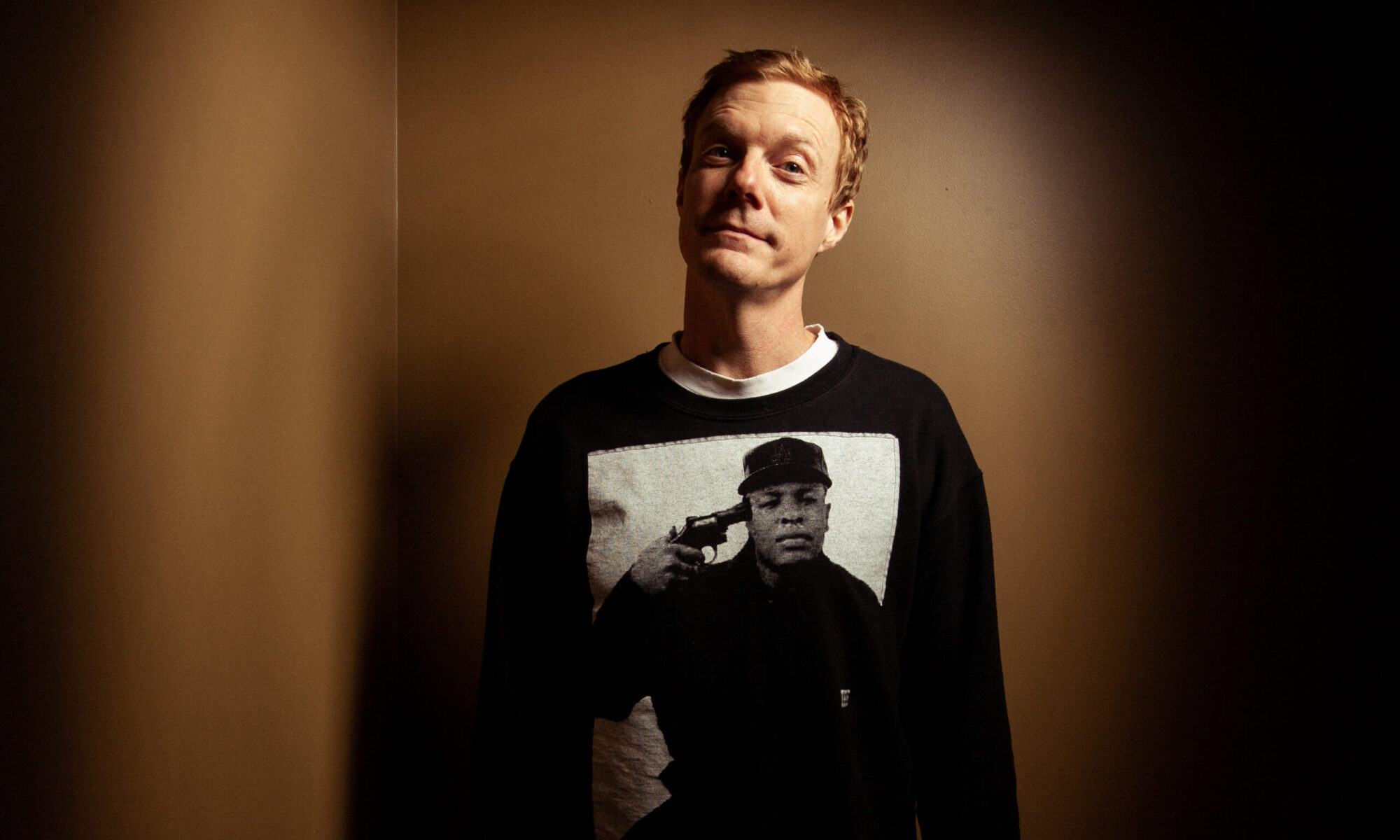

Mouth of the Architect: New Day Rising

When it comes to my musical interests, I find myself very prone to phases. Someone will ask me what’s good, and I’ll always have to qualify that I’m in the middle of some phase or another. I can spend months listening to nothing but prog rock (e.g., Yes, Rush, The Mars Volta, etc.), weeks researching post-punk (e.g., Joy Division, Talking Heads, etc.), post-rock (e.g., Mogwai, Jesu, God is an Astronaut, etc.), or a year digging the depths of black metal (e.g., Wolves in the Throne Room, Fall of Efrafa, etc.). Two genres seem to remain stable through all of this: Hip-hop and some strain of metal, and Mouth of the Architect has been in regular rotation since The Ties That Blind (Translation Loss, 2006). Along with Cult of Luna‘s Vertikal (Density Records) and Deafheaven’s Sunbather (Deathwish, Inc.), their forthcoming Dawning is one of my most anticipated records of 2013.

Mouth of the Architect

One night in the summer of 2010, I was driving to my parents’ house in Alabama listening to The Violence Beneath (Translation Loss, 2010). I was zoning out on the back roads, marveling at the many stars and massive moon in the sky. When the last song came on, I was surprised to know all of the words. It took half the track for me to realize it was Peter Gabriel’s “In Your Eyes.” Like any good cover song, it was true to the original version while being wholly its own.

While they get lumped in with the usual suspects of post-metal (e.g., Neurosis, Isis, Pelican, etc.), Mouth of the Architect’s sound is subtly different in distinctive ways. It’s metal and majestic, heavy and heavenly, gruesome and graceful, and difficult to describe in detail, but you’d be hard pressed to confuse them with anyone else. In what follows, I asked guitarist and vocalist Steve Brooks about the new record, cover songs, and their place in the loose subgenre they find themselves in. With families and the subsequent responsibilities, Dawning set for release from Translation Loss on June 25th, a tour imminent, and ten years honing their sound, it’s a new day and high time for Mouth of the Architect to rise and shine.

Roy Christopher: What did you guys do differently on Dawning from on previous records?

Mouth of the Architect: DawningMouth of the Architect: The process of writing and recording this new record was drastically different from any other record we have ever done. I guess the biggest difference would be that we recorded it all ourselves at our guitar player Steve’s studio, so a lot of it was worked out during the recording process. Also, we are almost never all in the same spot at the same time so a lot of it was written in short bursts, when we could get together, and then revise over the internet. We all have jobs, wives, other commitments, and now kids… so we can’t sit around whenever we feel like it and jam all day like we used to. So, we resorted to recording bits and pieces and emailing things back and forth… and it actually worked out pretty well! From the standpoint of songwriting, we did the same thing we always do but with a little different perspective. We are a little older now and while we still appreciate the heavy, doomy genre that we have always been classified in, we don’t necessarily feel that way all the time now, so we made the songs a little more laid back… a little more accessible… added some cool singing harmonies and whatnot. Surprisingly enough for us we found it more fun to play and sing these new songs, even if it is more difficult than screaming our bloody heads off on every song.

RC: Mouth of the Architect has been together for 10 years. Has the world changed or have you changed?

MotA: Yes and yes… I would say the band as a whole, us as individuals, and the world have all changed a lot over the last 10 years. Mouth of the Architect has continuously undergone member changes like it’s our job. Not to say that we like to change members all the time, but that is just the way it goes down. So, Jason and Dave are the only two original members left in the band now, though Steve and Kevin have been in for six or seven years now, too. As individuals there has been a marriage, a military deployment, serious injuries/surgeries, new businesses started, new bands started, and a new child born… So lots of big changes going on with us that has changed our attitude about life in general a bit. The world still sucks as much as it always has. We have just gotten a little older and more accepting of the suck.

RC: It seems like there’s more of a space for what you guys do now than there was early on.

MotA: I don’t know if I would say that there is more of a space for “post-metal” now or if there are just an abundance of bands doing it. We’ve been tagged with the “sounds like Neurosis and Isis” thing forever, and it’s just stupid. While I do see how Mouth of the Architect and other bands like Neurosis, Isis, Pelican, etc. would be considered to be in the same genre, I don’t make the connection that any of them are trying to sound the same or to be categorized. Every band is influenced by the music they like and there has been a lot of good stuff coming out in the last 15 years in this genre. So there have been more bands coming out that are influenced by all that good music, thus creating more of a “space” for it in the scene. You could say the same thing about “nu-metal” as well–even though everyone knows it’s garbage. I think our kind of doom/prog/post/rock/metal whatever has been relevant to the way a lot of people in our generation feel about life, and that is why it has become so prevalent and successful in the last 15 years ar so.

RC: What prompted the Peter Gabriel cover on The Violence Beneath?

The Violence BeneathMotA: We just like to do cover songs for fun. We had been going back and forth for a while about what song to do and couldn’t make a decision, so Jason and Steve kind of just decided to do a version of “In Your Eyes” to see how it would translate. Everyone was into it after they heard the rough draft so we just made the decision to do it and started jamming it at practice a little. That track was more of a studio project, like the new record. I think we only played it out twice. We have been trying to find another good one to do for a possible split release later on this year too. It’s just a lot of fun to do covers of songs we grew up with and make them our own.

RC: What else are you guys working on?

MotA: Musically, Steve has a solo project called This is What I Believe that you can find on Facebook, and Jason has a solo project called Rusted Hammer that you can find on Facebook as well. They merged those 2 projects into an audio visual show a couple of times that was pretty cool. Kevin Schindel is the frontman for Neon Warship and they have been doing really well lately. You can find them pretty much anywhere online. Right now we are just getting ready to hit the road with Mouth of the Architect for two months solid. Check out our Facebook page or our website for tour dates and any other updates. We are really excited to be going out with our good buddies in Intronaut again this year and getting back to Europe again.

RC: Anything else you’d like to bring up here?

MotA: We are really happy to be working with Translation Loss Records again on this new record, and I’d like to give a shout out to John Lakes, who will be filling on for Kevin Schindel on the upcoming tours. Check out our guitar player Steve’s recording studio, Sound Architect Studio, in Detroit on Facebook. Dave Mann also blows glass: Check out DaveMannGlass on Facebook as well. Really looking forward to seeing all of our friends from the road again this year. Thanks for the interview as well It’s been a while since we have done any touring, album release, interviews, and the like. It’s good to be back!

Mike Daily: Writing is the Solvent

I remember the first Aggro Rag I ever got. It was the thickest zine I’d ever seen. Its sixty pages weren’t folded as much as they were just curved in the middle, struggling against their own bulk. The product of one Mike Daily, Aggro Rag was the premier BMX zine. Heavy on the goings-on of The Plywood Hoods out of York, Pennsylvania, their tricks and travels, and the national BMX scene of the time, Daily’s rag rivaled the national glossies for writing and relevance.

Mike Daily [photo by Jared Souney]
For life. [reppin’ at Nemo HQ; photo by Jared Souney]
Daily came to visit me a couple of times when I lived in San Diego the first time. This was early in the millennium and he lived just up the 5 in L.A. At the time, Daily was easing out of the BMX scene having worked at both Go: The Rider’s Manual and BMX Plus! during the 1990s. All of this is significant because I’ve been in touch with Daily since the mid 1980s through Aggro Rag and The Plywood Hoods’ Dorkin’ in York videos. For those spinning outside the orbit of freestyle BMX for the past thirty years, more background will be needed here.

The Plywood Hoods were like an indie-BMX Bones Brigade, like the Bulls with Jordan: a tight-knit crew of innovators who fidged high-tech, flatland maneuvers that it took the rest of the sport years to catch up to. It’s no hyperbole to say that  Kevin Jones, Mark Eaton, Brett Downs, Mike Daily, Dale Mitzel, Jamie McKulick, John Huddleston, John Doenut, Jym Dellavalle, and various others utterly revolutionized flatland BMX. The rest of us only knew about this because two members of the crew were also budding media-heads. Mark Eaton made the legendary Dorkin’ in York videos that made the Hoods legends themselves, and Mike Daily made Aggro Rag Freestyle Mag. In the pre-web underground BMX network, those were the go-to sites.

Aggro Rag Freestyle Mag! The Complete CollectionAggro Rag documented Hood hijinks from 1984 to 1989 the went on hiatus until last year’s reunion Hip-hop issue (to which I was proud to have contributed an interview with Aesop Rock). Now, like Garry Scot Davis’s Skate Fate, all the old ones have been collected into one, bright pink anthology of underground 1980s BMX freestyle history. As Mark Lewman put it to me: “If you want to know how it felt to be a 16-year-old freestyle fanatic in the mid-1980s, this is your manual re: how to roll. Those who recognize the name Aggro Rag, this book is already on your want list.” Oh, and it’s not just the zines bound up all pretty, there’s a bunch of new content as well, including exclusive new interviews with Kevin Jones and Dave Mirra, a foreword by Andy Jenkins, and an introduction by Mark Lewman.

As if that weren’t enough, Daily teamed up with Sub Rosa to put together a limited edition, Aggro Rag frame. It’s a new version of their already limited Pandora DTT (double top-tubes, holmes) frame, an updated version of the very one I currently ride. Along with Daily, Chip Riggs (whom some of you might know from later issues of Aggro Rag) did the graphics on this thing, and he had this to say:

The main goal with the project from Sub Rosa’s end was to pay tribute to what Mike had done with Aggro Rag and the Plywood Hoods to contribute to the sport and culture of Freestyle. We certainly wouldn’t be where we are today if it wasn’t for what Mike and the rest of the Hoods did. In regards to the frame we were trying to put together something that had a direct connection with the zine and that time period while still making something that was modern and ridable by today’s standards. I feel like we achieved everything we set out to do with the project and I hope people are as stoked with the outcome as we all are.

In keeping with other zine-like ephemera, Sub Rosa only made 43 of these things.

The Sub Rosa x Aggro Rag Pandora DTT frame

More than just a highly motivated, well connected, BMX media-maker, Mike Daily is a man of letters, a one-man creative spigot constantly spewing out inspiring solvents. During our time in Southern California, Daily released a collection of poetry and artwork (Stovepiper with contributions from Charles Bukowski, Bill Shields, Hugh Gallagher, Andy Jenkins, Greg Higgins, and many others) and wrote not one but two novels (Valley and Alarm). I used the release of the Aggro Rag collection as an opportunity to get dirty with Daily.

Roy Christopher: Let’s go all the way back: What prompted you to start Aggro Rag in the first place? I didn’t start a zine until I saw them in Freestylin’. What gave you the initiative to get one going?

Mike Daily: You’re talking with a guy who had Max Leg Gaters. Remember when some Pro BMX racers sported “gaiters” on the lower legs of their leathers? I know Clint Miller wore them when he was sponsored by Torker. So did Mike Miranda and Billy Griggs when they were on CW. Gaiters kind of made sense for motorcycle motocross racers because they kept high-velocity mud splatter out of the insides of their MX boots. The fad didn’t last long in BMX, though. How could it? Leg Gaiters were basically ventilated-mesh/nylon bell bottoms. (And the ‘70s were over.) The extra space to display company logos wasn’t worth the hazard of getting your pant-legs caught in the chain/sprocket. Pro Guard plastic chain covers failed for the same reason. However, Toby Henderson did make Pro Guards look cool when he was on Hutch.

Terry Cables

Terrycables were a different story. I loved Terrycables: the dual rubber hoods for both the brake lever and the barrel adjuster on the caliper, the rectangular checkerboard logo silver foil stickers, the black and white patches for the jerseys. Terrycables were expensive, but I thought they were worth it because of how totally trick they looked. I took my first Terrycable (which I had mail-ordered direct from the California manufacturer) to Brian Peters’ house and asked Brian’s dad if he could install it for me. Terrycables were an MX-influenced aftermarket BMX product, and Brian’s dad Rich was handy with motorcycles. Mr. Peters removed the Terrycable from the bag, selected a wire-cutter from his wall of tools, and in one fluid motion–with absolutely no wasted energy–he clipped the metal cylinder off the end. I knew enough to know that the part he’d just cut off was the cylinder head made to fit inside the brake lever. Mr. Peters read the directions from the cardboard packaging, and confirmed. He apologized and began setting up soldering equipment. Two hours later, installation was complete. Brake-pull was crunchier than a rusted-out hand-grip exerciser, but damn did that Terrycable look trick on my Supergoose. T-rick…

Accessories. I went all-out on the BMX accessories: Haro lightning bolt number plate, SST Dirt Skirt, JT Racing wet weather gloves and Flite donuts to protect your thumbs from the grip flanges. Taking cues from Deric Garcia and “Chicken George” Seevers, I stacked multiple donuts on my grips to get maximum power-pull from the ends of the handlebars. My friend Dan Ahearn took donut-stacking to the next-level: his MXL-gloved hands barely fit onto his Oakley B-1B grips that were mounted on Galindo bars that already had bar end extenders inserted in them. I lived and breathed BMX, as they say—as so many of us did. My zeal for BMX accessorizing carried over into freestyle when I got more into “trick riding” in 1984. The GT that I’m riding in the photo taken at the first performance of the Plywood Hoods—one of the photos introducing Aggro Rag #4 (March ’85) in Aggro Rag Freestyle Mag: Plywood Hoods Zines ’84-’89: The Complete Collection—had been my dialed-to-the-max race bike. I’d added grip tape to the top tube and installed Skyway Tuff Wheels with Tioga Comp ST (stadium) tires, Skyway thread-on “axle extenders,” GT bolt-on fork standers, a front brake with Potts Mod and, of course, a Dyno D2 brake guard. I’d also replaced the three-digit number on my Haro number plate with “PLYWOOD HOODS” and added an abundance of stickers including Michigan J. Frog, which I got for a quarter from a gumball machine. I was 16 years old in that photo.

Aggro Rag Freestyle Mag!

Printed matter, I found—ZINES–could be “tricked out” very much like a bicycle. It was such great fun accessorizing the pages with photos, stories, drawings, random clip art and ransom note-style lettering techniques, then immediately photocopying them “on the cheap” in an array of colors. Not too many different colors, though: Zines needed to be reproduced with enough black and white inside to give them the proper lo-fi look, and readability.

RC: I totally agree. There was a while there where you purposefully drifted away from BMX. What caused your turning more toward the cultural marginalia?

ValleyMD: “Purposefully”—I like that. The astounding heat of the San Fernando Valley where I lived from 1992-2001 would seem to be the main contributing factor in my drifting away from BMX over the years. Reluctance to put myself in more danger than I might’ve been able to handle at the time. In ’96, I broke my ribs on a shopping carts-railing at a Safeway on Reseda, for instance. I focused on writing a sustained work, which became my first novel, Valley. Andy Jenkins helped me edit the work-in-progress and later accepted Valley for publication. Andy designed the book and released it on his imprint Bend Press, “The Smallest Book Company,” in November 1998. Andy organized a book release party for me at L.A.’s The Garage, and Flogging Molly played at the event. When he was Editor and Art Director of Freestylin’, Andy had occasionally taken time to correspond with me by mail—often enclosing stickers. He’d always encouraged me since I was a teenager living in York, PA. Here’s the summary that Andy wrote about Valley:

Valley is a humorously visual story narrated by main character, writer/student, Mick O’Grady, as he ambles through his days in a sort of haze attempting to make sense of the numerous mysteries unraveling before him—from the odd-ball people he meets and associates with (a giant poet, drunken ex-linebacker, lost master journalist [Earl Parker], wired meth-head, etc.), to the margin scribblings, receipts and photos he happens upon in used books by his favorite authors. O’Grady’s literary inclinations result in curious overanalyzation—a practically itemized account of everything around him, the ordinary included. At one point he notes that a vending machine in the lobby has no “Q” button on it. Not 26, but 25 letters. Lost in his wonderment after buying the drink, he forgets it on top of the machine…

A.J. and Mark “Lew” Lewman are endless inspirations. Everyone who grew up reading their stories and enjoying their unique contributions to Freestylin’, Homeboy, GO: The Rider’s Manual, DIRT and Grand Royal shares the same feeling: gratitude.

I got more into poetry, fiction and music while I was finishing college at California State University of Northridge from 1993-1998, that’s for sure. Poetry: Kenneth Patchen, Jack Kerouac, Lew Welch, Steve Richmond. Fiction: Ronald Sukenick, Richard Brautigan, Kevin Sampsell, Mark Leyner. Music: Jawbreaker, Giants Chair, Mudhoney, Screaming Trees/Mark Lanegan, Elliott Smith. I know that reading an article you wrote and published in your zine Front Wheel Drive, Roy Christopher, got me to go out and find CDs by Shiner, a Kansas City band I listened to and liked. Thanks for that blue and white Shiner sticker you sent me in 1995. I still haven’t stuck it.

RC: Nice! Tell me more about your spoken performances. I only caught one of them in 2007 when we both lived in Portland. I remember someone making fun of me because I knew all the words.

MD: You knew all the words to “Drum Machines,” I remember that! Thanks, Roy. The words to “Drum Machines” (recited from my second novel, Alarm) are:

I wish there was a radio station that just played drum machines. Twenty-four hours a day, seven days a week. Eureka! Eureka. I just thought of something. I seem to have just thought of something. It’s like a comic. A four-panel comic. In the first frame one guy says to another guy, ‘Who’s your drummer?’ In the second frame it’s just a close-up of the other guy and he says, ‘Electricity. He goes by electricity.’ In the third frame the first guy says to the other guy, ‘Where’s he live?’ In the last frame is another close-up of the second guy and he says, ‘In a hole in the wall.’ And he’s looking at the reader. Whoa. I’m not paying attention. I’m swervedriving. I feel like crying. It’s raining. I exit the freeway and pull into a Krispy Kreme. I drive up to the window. I find my lucky two-dollar bill that I got in tips when I got on the mike at open mike and didn’t care if I messed up. And I didn’t mess up. A guy in a red, white and blue tracksuit said I tore shit up. I’m not making this up. I unwedge a nickel from the dash for the difference. ‘Two-oh-five out of two-oh-five. Here’s your three glazed originals and one extra one just for coming to Krispy Kreme! Have a nice night, sir!’ I drive off. I wish there was a radio station that just played drum machines. Twenty-four hours a day, seven days a week.

Here’s a clip of that very piece [runtime: 6:59]:

RpE5dIpC0PM

The spoken-word performances resulted from wanting to “talk” my writing without having to read it from a book or printed-out pages. I got my start doing spoken words in the late ‘90s when I worked behind the counter at an all-ages coffee house called Cobalt Café. Rick Lupert still runs an open mike night there. After I moved up to Portland, OR, at the beginning of 2002, I sought out local venues offering open mike and I participated. I ended up meeting Alarmindividuals who remain some of my closest friends to this day, like Pecos B. Portland author and friend Kevin Sampsell inspired me the most to move here. After I bought his great book How to Lose Your Mind with the Lights On (Future Tense, 1994) at a Tower Records in Northridge, CA, I read the short story/poems collection cover to cover in one sitting. Since the early ‘90s, Kevin had been publishing chapbooks of his work and writing by others. Chapbooks are cheaply printed publications that are often self-produced by the author or poet. These “cheap penny books” originated in Great Britain in the 19th Century and were geared more toward the lower end of the market (the masses). In almost all cases, chapbooks were read for recreation and then discarded. I documented my deep appreciation for Kevin Sampsell’s work in Alarm, the novel and double CD that I put out myself in 2007.

RC: So what brought you back to BMX so fervently?

MD: I’ve always owned at least one 20” bike. I haven’t always ridden the bikes, but I’ve never been without one. In 2009, I decided that I wanted to rebuild the ’85 CW California Freestyle set-up that I had ridden in 1987, when I was most into flatland. My inclination to complete The Build was the best thing I could have done for myself. It was a tremendous feeling cruising that ride down the street after Shad Johnson at Goods BMX dialed everything in for me. With friend and fellow zineguy (Jargon of Delinquents) Luke Strahota, I went to an old school BMX get-together that year to check out the vintage show bikes. By chance at the gathering, I met Lisa Grossman, who raced BMX for factory JMC in the early ‘80s. I’d forgotten that Lisa and I had been pen pals when we were both 13 years old (she lived in OR, I lived in PA). The following year, Luke and I attended some jams and began meeting new friends from our scene and others. “Full circle” may be a cliché, but it’s an apt description for the fervency. Luke, by the way, is a talented drummer (currently bandleader for The Satin Chaps). A handful of times I’ve had the opportunity to perform my fiction to his live beats.

RC: Tell me more about Moon Babes of Bicycle City. We riffed a bit in 2010 on all the different types of bicycles being ridden these days, but I know nothing of the book’s premise.

MD: The first sentence of Moon Babes of Bicycle City is:

South of Roswell, north of Hope, east of an Apache reservation, west of Dexter and Lake Arthur lies Bicycle City, New Mexico.

Since I started working on the novel in 2010, I’ve filled numerous sketchbooks with research and riffs in anticipation. It doesn’t matter if it’s a Mead composition notebook, a perfect-bound blank book from Michael’s or a ‘70s-era Wonder Woman personal journal survivor with a 3D cover…my approach is to let myself get a little sketchy with the work—have fun with it–so “sketchbooks” is how I refer to them. Glue sticks and collages are involved, and so is acrylic paint. I prefer writing with pencils and using typewriters. After publishing Aggro Rag Freestyle Mag! “The Hip-Hop Issue” Number 13 zine in August 2012, I received a generous gift of files via U.S. mail from a fellow rider and enthusiast on the east coast. The shared digital library grants me full access to all the BMX and freestyle magazines I’d read so many times in my youth, I had memorized parts of them—including many issues I’d missed. I’ve been hesitant to insert the discs and see what’s on them. I can say this: I’m looking forward to it.

Sketchbooks

I had to shelve work on the novel in 2011 because I needed to get the Aggro Rag book done first. I couldn’t have completed Aggro Rag Freestyle Mag! Plywood Hoods Zines ’84-’89: The Complete Collection if it wasn’t for Bizarro novelist and friend Cameron Pierce, who initially had helped lay out most of the original 12 zines for the collection, and my friend Chip Riggs, whose contributions in graphic design and website development were extensive, to say the least. Cameron Pierce is my Tour Guide for Moon Babes—he’s my Editor and eventual publisher on his small press, Lazy Fascist. Read any one of his mad, inventive novels for insight to why Cameron has my utmost respect. Can I recommend one? Abortion Arcade. It’s a collection of three novellas published by Eraserhead Press (my favorite of the three is titled “The Roadkill Quarterback of Heavy Metal High”).

Moon Babes of Bicycle City is a book about the demented Moon family—Rodderick, Chatauqua and daughters named Suzue, Araya and Ukai—living in a bike clubs-ravaged New Mexico town where cars have been outlawed and the terrain is a world like no other. The family members struggle in a run-down environment to survive deceit and loss, is more along the lines of what happens in the book.

One thing I learned from my own struggles is this: Problems are funny.

Conflicts, hardships, disappointments: They arise.

They’re funny in that regard.

RC: True. Anything else you want to mention here?

MD: I worked hard on Aggro Rag Freestyle Mag! Plywood Hoods Zines ’84-’89: The Complete Collection for over two-and-a-half years. I have a daughter and I work 40+ hours a week. It was my after-hours goal to get this collection done and get it done right so I can move on this year to finish my new book. Thanks Tons to everyone choosing to pre-order a signed book direct from me with the package deals offered on aggrorag.com until Wednesday, March 13th, at 11:59pm PST. I’m expecting to ship all preorders worldwide from Oregon before the book’s official date of publication, 4.3.13.

Thank you, Roy Christopher, for the opportunity to give A’s to Q’s I hadn’t yet been asked. There’s sound reasoning behind why I chose to become one of your students by studying your work both in print and online. I knew there was some reason I hung out with you.

——-

Thanks to Mike Daily, Jared Souney, Mark Lewman, Ronnie Bonner, and Chip Riggs for helping me get this piece together.