The third annual Literary Indulgence Book Festival was a blast and a blessing! I participated in a “Voices from the Classroom” panel with with Sherna Spearman-Lott and PeTika Tave. We talked about teaching and technology and read bits from our books. Below is a short clip of me reading a bit called “Nomads and Monads” about the affordances of different screens from Chapter 4: Time of the Signs.
Thanks to Sherna, PeTika, Marie Morton, and everyone who came out to share and support reading, writing, and learning.
There are some cultural products that are based on the human experience. Some others draw inspiration from beyond the human experience. And then, there are some who are against the human itself.
The music of industrial metal band Godflesh is such an example. And when Roy Christopher began to write a book on the band’s seminal album Streetcleaner, his project gradually over time became Post-Self, a philosophical treatise on the non-human.
In this episode, Roy Christopher, cultural critic, Instructor at the University of North Florida and author of the book Post-Self: Journeys Beyond the Human Body, talks about the music of Godflesh, the philosophy of that which is not human and the great legacy of Marshall McLuhan.
Many thanks to Yannis, the Archipelago, and Stegi.Radio for having me. Listen to the full discussion below or on the Stegi.Radio site.
An interview with me by R.U. Sirius for Mindplex Magazine.
Originally published on Mindplex Magazine, this wide-ranging interview starts with my two newest books and then goes much deeper into their origins, my research, and my writing in general. Many thanks to R.U. Sirius, luminary of the liminal and co-founder of Mondo 2000 Magazine, for the thorough read and thoughtful questions and to Mindplex Magazine for publishing the results.
Read on!
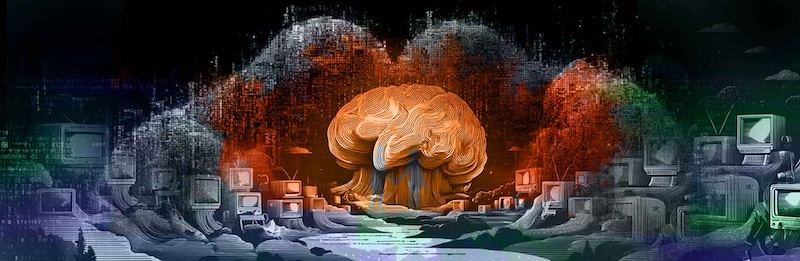
Image by Tesfu Assefa for Mindplex Magazine.
Roy Christopher is, in his own words , “an aging BMX and skateboarding zine kid,” with a history of writing and publishing about life, music, film, and everything else from a perspective that might be best labeled post-punk, although no label quite captures his restless textual extravagances and insights. Christopher has two books currently in circulation and both of them chart the post-everything mad bad dangerous and intriguing zeitgeist we’re all experiencing in the delirious 21st century.
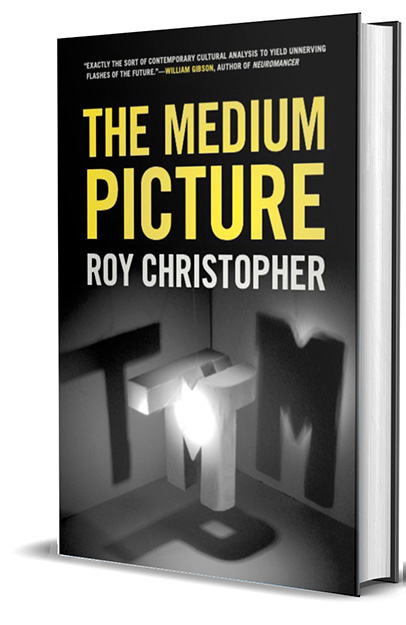
Book one: The Medium Picture is a cogent Post-McLuhan romp through the mediums of the late 20th and early 21st centuries and the speedy subcultures that emerge, conjugate and mutate as young people find the others using style, tools (well… skateboards) and (dare we mention?) content. In the words of technoculture writer Howard Rheingold, “Roy Christopher is old enough to recall vinyl, punk, and zines — social media before TikTok and smartphones. The Medium Picture deftly illuminates the connections between post-punk music critique, the increasing virtualization of culture, the history of formal media theory, the liminal zones of analog vs digital, pop vs high culture, capitalism vs anarchy.” Yes, all that.
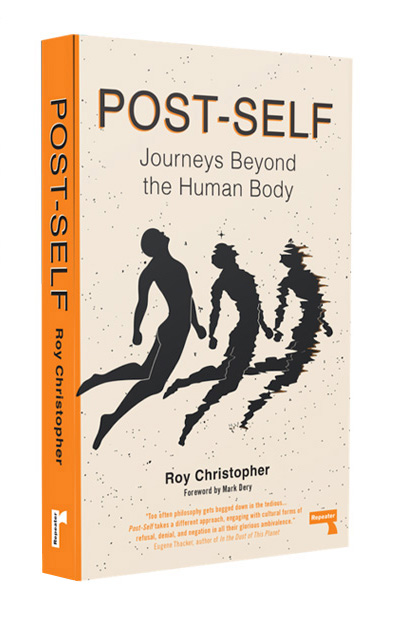
Book two is a stranger animal. The title — Post-Self: Journeys Beyond the Human Body — might lead my Mindplex readers to assume that this will be another exploration of the obsession manifested amongst various stripes of transhumanism and singularitarianism with escaping or transcending “the meat” and, surely, about the cyberpunk genre’s dark-but-fascinated critique of this same pursuit. And yes, that’s part of it. But the main title here is post-self not post-body — so where does that take us?
You might be thinking of AI — the project fantasized by some fanatics that would have us giving up the human self — giving up consciousness of selfhood by sacrificing it to our technological betters. That’s not what’s driving the book. There are stranger and more original multivalent narrative impulses at work here.
And I’m not herein referring to the pursuit of transcendence of the self via drugs, technology and mind tricks as practiced by the likes of John Lilly, although that too is part of the rumination.
But here’s where we finally land — the book at first and at last takes up the desire to end the self by the only method known to work… by dying. And, as it transpires, possibly by taking all the other humans along. It’s a dark trip for our dark moment, navigated partly via references to that master of understated deadpan text revealing 20th century western human perversity, J.G. Ballard. It doesn’t stop there. Christoper brings the pain with an emotive exploration of black metal. Here, aside from Christopher himself, our guide in this trek through the darkness of black metal leading you to varied visions of absolute pain and annihilation is Justin Broadrick, founding member of Godflesh and a central figure in extreme metal and hardcore industrial music.
I interviewed Christopher via email and began by discussing The Medium Picture.
Image by Tesfu Assefa for Mindplex Magazine.
R.U. Sirius:The Medium Picture doesn’t just present a coherent narrative of how the mediums have been the message — how they’ve altered how we share and receive mediated communication and creative work — it indicates a kind of firehose or changing medias — all piling up upon each other, all pretty much remaining present in some form however diluted in popularity. And this got me thinking about Napster which happened just after the magazine’s dissolution and seemed the final proving point that digitalization was changing everything.
But the other weird thing is that Apple, with the iPod, engineered a kind of retrenchment. The salability of recorded music seemed broken, and the convenience and reliability of Apple Music brought it partly back from the dead… but just barely. In any case, what would you say about the not-so-straight line of alleged progress in medias and how we relate to them?
Roy Christopher: By analogy, I have been taking an evolutionary view of media technology. Darwin saw genes as waves of possibilities, passing from species to species in random configurations. The species themselves weren’t the point, they were mere collections of genes interacting with each other in their environment, assemblages of traits and trivia. Species are organizing principles, much in the way that media platforms are. An LP is around 45 minutes long—23 minutes per side. A CD is over an hour (80 minutes). That’s why a release by a band in the 1960s is typically shorter than one from the 1990s. The technological limits not only determine the shape, size, and duration of the artifact but also our expectations of it.
RU: I did a search for artificial intelligence in the book. It’s scarce. So, what’s the addendum to The Medium Picture. Is AI … or what they’re calling AI… becoming the all-in-one app? Or will it be a great diversifier?… or just some clusterfuck where anything useful, artful or fun goes to turn into slop?
RC: I’d like to think one can apply the archaeological and ecological approaches to media in The Medium Picture to emerging media as well. What passes for AI will be like the other epochal changes we’ve seen in media. Remember in the 1960s when television was going to kill movie theaters? Remember in the 1990s when the internet was going to kill the book? None of these changes happen as fast as we think they will. Theaters are still around, and books are doing fine. MP3 trading and streaming haven’t prevented vinyl records from selling more now than when they were the primary format for music—even at four times the price! So, yeah, AI will eventually change almost everything, but it will take longer than we think.
RU: I was pleased to see Malcolm McLaren’s subversive take on new media possibilities (audio taping particularly) acknowledged in The Medium Picture. Reading the book, it almost feels like punk as a culture literally had to happen. So much of the semiotics (skateboarding particularly) around the use or misuse of new technology feels like punk.
Is there an inevitability of young people finding their own use for technology… with attitude? (Hip hop/rap included) Or did punk save us from an intolerable dullness by some acts of will?
RC: There’s something inherently punk about youth, and young people are always at least two steps ahead of the co-opting capitalist marketing machine. Taking what’s there and making it your own is the very spirit of punk, from the repurposing of turntables in hip-hop to the affordance mining of skateboarding to any other intentional coloring outside the lines.
RU: You spoke to, read and studied a lot of writers and thinkers about mediation and the impact it’s had on humans recently and in the past. Of all the people you came across or spoke to in your research, is there one that really blew up or illuminated your sense of the medium picture?
RC: In the Preface to TMP, I write that if I were to follow through with the book’s cover image, inspired by Douglas Hofstadter’s Pulitzer Prize-winning first book, Gödel, Escher, Bach, and name TMP after the three people who shaped it, it would be called Gibson, Eno, McLuhan. William Gibson’s thought hangs heavy over a lot of my work. Nearly every time I come up with a way to theorize and think about the process of technological mediation or cultural evolution, I find Gibson got there first. Brian Eno’s thinking on music and media is both vast and deep, and I’ve been yammering about his idea of edge culture for years. He kindly granted me permission to explore and expand on it further in TMP. I can only hope I did his thought and gesture justice. And anyone who tries to do what I attempt to do has to contend with Marshall McLuhan, whose name and thought are evident in all of my work. If you want to study media and mediation, he’s the starting point.
But to answer your question more directly, it was talking to Ian MacKaye that not only helped make some of the connections stronger but provided new ones as well. MacKaye is the cofounder of Dischord Records and the bands Minor Threat and Fugazi, two of my all-time favorites, among others. His views on the importance of independence, keeping personal archives, punk’s reliance on paper, and more aligned with and realigned the arguments in the book. I am proud that he became a larger part of it than I’d imagined at the beginning.
RU: The coming of “AI” accounts for some of the apocalypticism of the current zeitgeist. But you apparently believe AI as a media is still part of the continuum of mediated formats. So how would you relate the issues and questions and possibilities raised by The Medium Picture to what I read as the apocalyptic spirit of the newer book? Is there a “medium picture” connection to Post-Self?
RC: They are definitely connected beyond by my being the author of both. There was even a time when I tried to put them together as one book. That exercise convinced me definitively that they were separate statements.
If The Medium Picture is about how we mediate our worlds with our technologies, then Post-Self is about all the ways in which we wish we could leave our frail human bodies behind for the mediated world we’ve created. If one is about mediated ontology, the other is about escaping into it.
RU: Moving into your book Post-Self, there seem to be two peculiar narratives running through here. One is the posthumanity that was, in some ways, popular during the cyberpunk/transhumanoid 90s, and then this very dark exploration of what Mark Dery in his intro calls the Misanthropocene. This kind of captures dual au current moods, given that the earlier version of posthumanity — transcending the meat via technology lingers and even accelerates with the enthusiasms of billionaires and tech bros — and then, by the end of the book, it seems as though Post-Self suggests a satisfactory solution might be to end embodied existence by classical means … by killing everyone in a giant black metal apocalypse. Have I got that right?
RC: That’s a blunt summary, yes.
Post-Self is a survey of the escape routes out of our human bodies, an exploration of all the ways we attempt to expand or evade the limits of our corporeal cages (e.g., machines, drugs, rapture, death). By ending with death and extinction, it concludes that we can’t. There is no escape. This is not an exit.
In the Afterword, I tried to bring it all back to a positive note, pointing out that though we can’t escape, at least we have each other. We’re all in this together.
RU: It’s a wild ride.
Let’s start with the meat as it was understood by both dystopian cyberpunk novelists and by cyber-transhumanist enthusiasts. There are various states of rapture we can experience — from the intellectual pleasures of abstract thinking to the pleasures of psychedelic or meditative altered states. The body, in this context, can be a drag. Pain, incapacitation, ad infinitum interrupts or stops the rapture. Softening or ending the tribulations involved in embodiment seems like a reasonable pursuit.
So where do we draw the line? Do we not cure diseases? Not triage an ER visitor?
RC: Some people wanting to escape their body via any means doesn’t mean some others don’t mind taking their chances. Every day someone makes decisions in answer to your questions. The line is drawn by a multitude of contingencies—legal, ethical, economic, religious—and they’re all sliding scales.
RU: Okay, what do you think are the boundaries regarding offering relief or escape from aspects of messy embodiment?
RC: We all do what we can with what we have, right? Isn’t that the burden of the body in one tidy cliché? The same goes for the augmentation, which means the rich always have more. And that’s where the contingencies come back in. Augment to each their own unto their economic status.
I think everyone should do whatever they want with their own bodies as long as it doesn’t impinge on the limits of the next body over.
RU: You jump fairly quickly into a discussion of Ballard’s Crash and Cronenberg’s film version of the book. What are the resonances with the current moment?
RC: Ballard’s brilliant satire of our technological death-drive mixed with our sex-drive—the “drive” part being literal as the car is a special case—can be mapped onto most technologies since. Look at the contemporary conversations around smartphones, social media, and AI. If you invented something that killed as many people daily as the car, you wouldn’t be able to manufacture and sell it, yet the impact of these technologies is still a net loss for us. Ballard (and Cronenberg) illustrated this using the simplest analogy and most widespread technology.
RU: Also, in terms of Cronenbergian body horror, many narratives revolve around pursuing enhancements and alterations. Horror and fascination seem intertwined with a kind of ambiguous desire for a less prosaic future. It’s all in some ways experienced by many contemporary people as aesthetically pleasing.
RC: The cyberpunks looked to prosthetics as inspiration for future elective extensions to the body—extensions as a matter of want instead of need. Benjamin Bratton points out that insurance companies are the real designers of cars. It’s a spectrum that runs from augmentation for its own sake to risk assessment as speculative design, from risking it for the hell of it to “designing the risk away,” as Bruce Sterling puts it. The only available path to the future is through a loophole.
RU: So, black metal. It seems to be made almost exclusively by white people. One guy quoted in the book rants about wanting to see not just mass death but maximum misery and suffering. Of course, the first dumped off steerage in civilization collapse are the poorest people with the darkest skin. They already see a lot of misery and suffering. Do you think apocalypse desiring coming from, for example, Norway has an intrinsically racist component? The rants do rather remind me of some of the misanthropy associated with Boyd Rice and other American freaks who play along the edges of naziism.
RC: You don’t have to look very far to find a racist component in so-called True Norwegian Black Metal. One of the genre’s founders, Varg Vikernes (Count Grishnackh) of the bands Burzum and Mayhem, is proudly racist, homophobic, and boasts of familial ties to nazis.
The destruction of all of humankind is one of the aspects of black metal that I apply in Post-Self—not the destruction of some of us or certain kinds of us—all of us. The withdrawing into oneself and the return to simpler times closer to the earth are two others, discussed primarily via the American black metal of Deafheaven and Wolves in the Throne Room. I do not condone the racist aspects of black metal, but I also don’t give them any attention in the book. The “giant black metal apocalypse” you mention doesn’t care about race.
RU: When you conceived of Post-Self, did you start by thinking about the various ways that people profess or plan to transcend the meat while preserving consciousness or did you start by thinking about the wish for annihilation or was it the congruence between those two pursuits that made you want to explore the topic?
RC: I started by wanting to write a book about Godflesh’s first full-length record, Streetcleaner. I had been penciled in a couple of times to write entries in the 33 1/3 Series, where each book is about a record. After typing out a straight-forward proposal, I tried to approach the record from an angle that would give me more to work with creatively. I thought of it as an ancient artifact, unearthed by some future civilization. As I tried to interpret the record through those eyes from the future, connections started to emerge.
For one, the cover art is a screen-cap from a hallucination sequence from Ken Russell’s 1980 movie Altered States. The story is about psychedelic drugs and sensory deprivation tanks and a scientist trying to escape their body through their mind. It’s loosely based on Dr. John C. Lilly who did a lot of experiments with ketamine and sensory deprivation tanks and trying to trying to explore the universe through his mind and through these drugs. So, the novel and screenplay—both written by Paddy Chayevsky—is loosely based on him. Anyway, there’s one string of connections: escaping the human body through the mind via drugs.
At the beginning of the title track, “Streetcleaner,” there’s a sample of an interview with the serial killer Henry Lee Lucas discussing his motivations: “I didn’t hear voices. It was a conscious decision on my part. It was a power thing. I simply acted on my fantasies.” In addition, there’s a serial killer from England known as the Yorkshire Ripper, Peter Sutcliffe. When he was active, he sent poems to local papers, signed “The Streetcleaner.” Sutcliffe and Lucas killed sex workers, believing they were cleaning up the streets. So, there’s another connection: destroying the human body for higher purposes.
The rest followed from there, and eventually I had a whole book of escape routes beyond the limits of the human body.
RU: It seems that young people creating identities out of musical genres might have been a late-20th Century thing (in a way, starting in the 1970s at least in the west) and that this sort-of musical tribalism has passed. Would you agree? And if you do, is there something you would say about that as relates to The Medium Picture?
RC: I don’t think the tribalism has diminished, but the musical genres, like their attendant technologies, have splintered to a point where we share fewer and fewer of them. That is, the tribes align along different interstices. “The media,” which once was “the mass media,” has trickled down from a one-to-many broadcast model to more of a one-to-one, individualized state. If we’re all watching a channel on broadcast television, we’re all seeing the same shows. If we’re all on the same social network, no two of us are seeing the same thing. The limited access to content via broadcast media used to unite us. Now we’re only loosely united via the platform, and the platform itself doesn’t matter. The same goes for genre.
We still need to connect, but less of it happens by dint of genre distinctions. That is, less of the work is done for us simply by categorization. In 1994 Megatrends author John Naisbitt asked which of the cultural movements of the 1990s would become universal and which would remain tribal. I would say far more of them became tribal, but the tribes are smaller and more numerous. It’s the long tail of cliques.
RU: Do you have a final thought in terms of what you hope readers will take away from your books? A throughline or whatever?
RC: I hope my work shows readers that they can do whatever they want to do—in the most punk-rock, DIY sense. I am privileged to write about whatever I want because I don’t rely on my writing for anything else. Dan Hancox at The Guardian described my book, Dead Precedents, as “written with the passion of a zine-publishing fan and the acuity of an academic.” That’s the kind of compliment you hope for, and it comes from pursuing a certain kind of goal.
The desire to tell others about something cool is the core reason I do just about everything I do. It’s the reason I make zines. It’s the reason I make websites. It’s the reason I’m a writer. It’s the reason I’m a teacher. It’s the reason I write books. It’s the reason I’m writing this right now. I don’t do it for my income. I don’t do it in the academic pursuit of tenure. I do it because I want to tell people about this stuff. In content and form, I write about underground enterprises, and I write with that spirit.
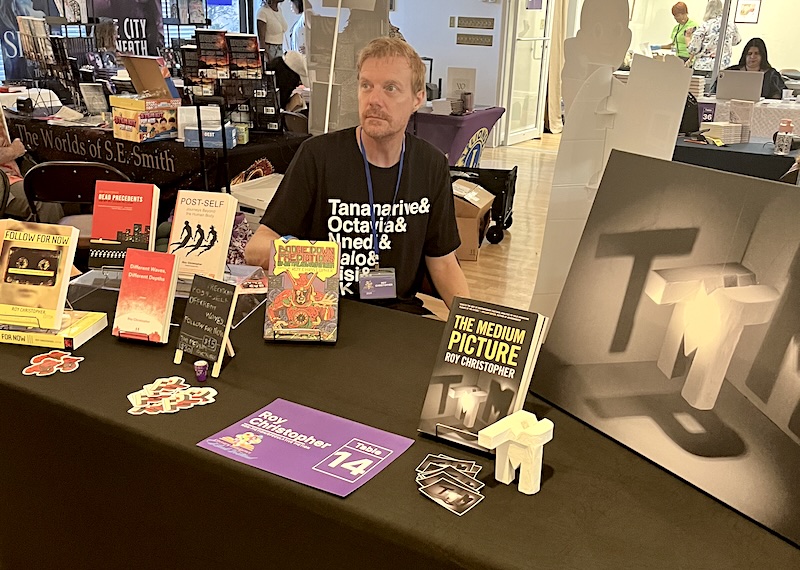
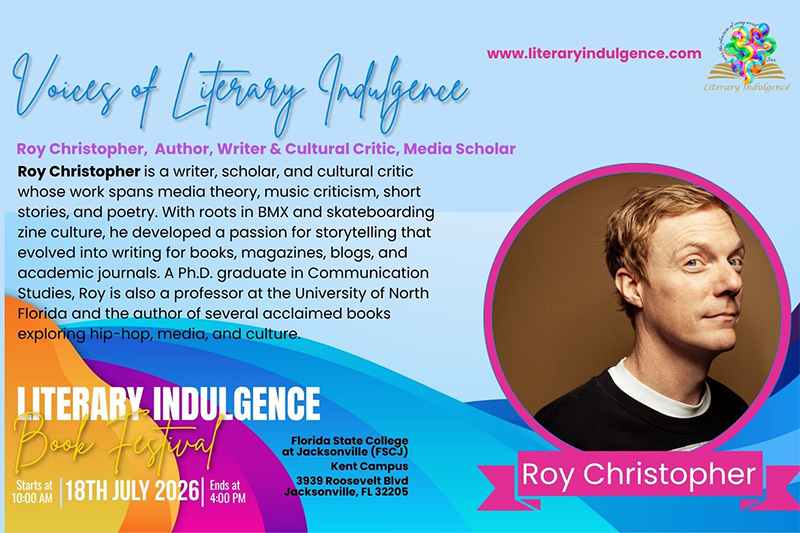
On July 18th I’ll be at the Literary Indulgence Book Festival here in Jacksonville! My books and I will be hanging out at Table #14 all day. Come through and get a book, some stickers, and my horrible hand style in one of your books! Indulge yourself!
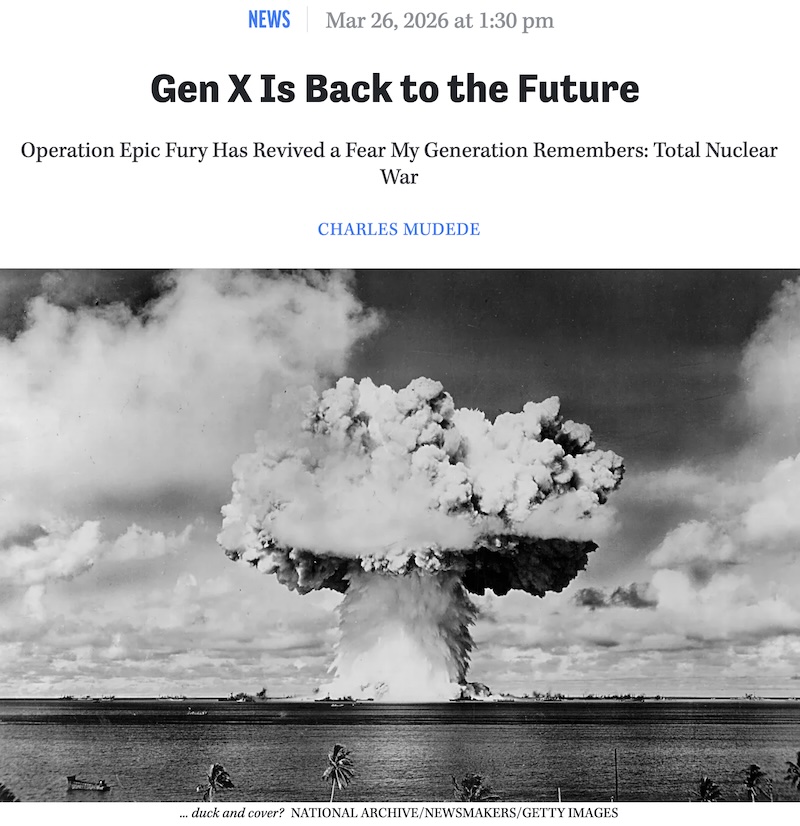
Describing the emergence of personal computers, cyberpunk, and the Cold War, he writes in part,
Many of these monumental transformations in consumer products are described by music and culture critic Roy Christopher in his new book Post-Self. So considerable and novel were the new receivers, distributors, and processors of data that cyberpunk, a movement at the heart of Post-Self, imagined a future where we could download our self-awareness into the electronic ether of cyberspace and live for as long as no one in the real world pulled the plug.
My generation was also the last to live, as young adults, within a social reality described as the Cold War. We saw the bomb shelters, and were taught in school to “duck and cover” if a nuclear weapon, launched by the Soviets or its allies, hit our city.
Indeed, In Post-Self, Roy Christopher recalls watching an episode of the The Twilight Zone called “Time Enough at Last,” which was about a bespectacled and bibliophilic bank teller who survives the detonation of an H-bomb because he happened to be in the bank’s vault. He then roams the ruins of a world that has no other people, but lots of books to read.The bank teller, however, accidently breaks his glasses and is left practically blind. “The trepidation of that tragic moment,” writes Christopher, “recombinant with worries of the apocalypse, was a seed planted in my head. And more than any other Cold War-era image of imminent destruction splashed on the television during my childhood…”
Many thanks to Charles for the time and attention.
Read the whole piece here and more about Post-Selfhere.
“How easily we forget how bright the moonlight can be when we spend our nights in the wan glow of artificial light.”
I found the above quotation on page 40 of a book. I don’t know what book. I’m usually more diligent than that about such pertinent details in my notes, but in this case all I have is the quotation and a page number. I’ve done countless searches and asked several librarians, to no avail.
Appropriate, perhaps.
It matters where such quotations were found, and it matters who wrote them—for now. In late 2000, during an especially impoverished period of my adult life, I was going to the Seattle Public Library almost every day. I was reading bits and pieces of so many books. I remember digging deeper into the work of Walter Benjamin, discovering Paul Virilio, and the row of volumes I had lined up against the wall in an almost unfurnished apartment, their spines and call numbers pointed at the ceiling. Due dates and new arrivals kept the books rotating, and at some point, I started having a difficult time keeping up with where I’d read what. So, I started a research journal.
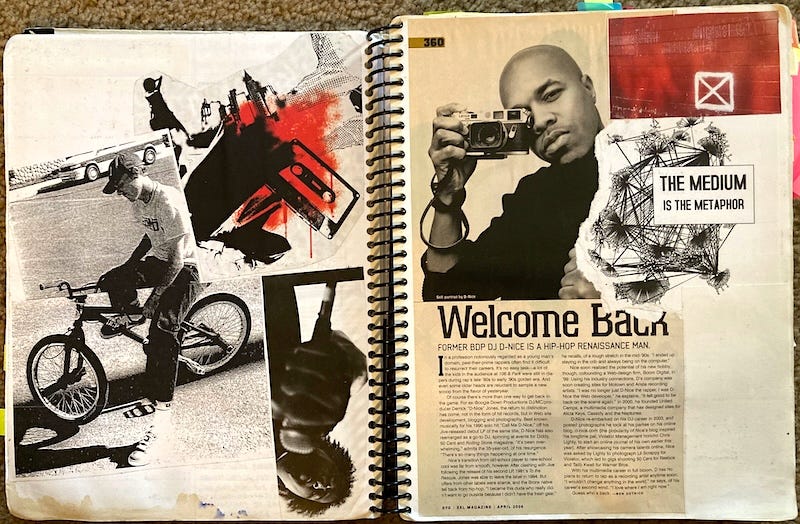
A spread from one of my research journals.
My research journal has always been a sort of commonplace book, an idiosyncratic mix of journal and scrapbook, collecting drawings, diagrams, clips from magazines, lists, and quotes from dreams, friends, films, and books. With the emergence of printed text, its recycling of and relation to other texts were taken as a given. Commonplace books have been used as personal repositories of wit, wisdom, and knowledge at least as far back as the 15th century. As Walter Ong wrote in his 1982 book, Orality and Literacy: The Technologizing of the Word,
Manuscript culture had taken intertextuality for granted. Still tied to the commonplace tradition of the old oral world, it deliberately created texts out of other texts, borrowing, adapting, sharing the common, originally oral, formulas and themes, even though it worked them up into fresh literary forms impossible without writing.1
“We read to inherit the words, but something is always between us and the words.” — Victoria Chang, “Language,” Obit
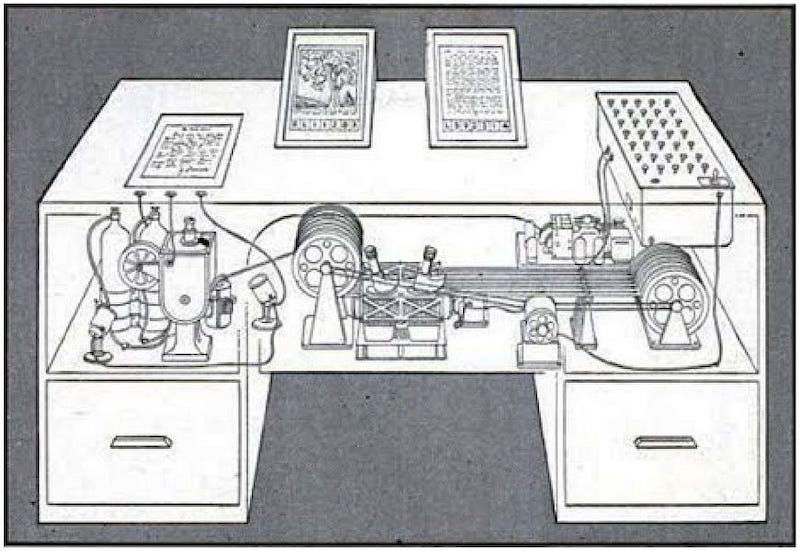
A memex, as described in Vannevar Bush’s 1945 article “As We May Think.”
Proposed in his 1945 article “As We May Think” published in The Atlantic, Vannevar Bush’s memex (itself a portmanteau of “memory” and “expansion”) was a kind of proto-personal computer, expanding the commonplace idea to a desk-bound apparatus for research. The memex was a dream machine for navigating and researching with the vast stores of information of the time using cameras, microfilm, and print—an annotated analog hypertext system. Bush wrote, “Wholly new forms of encyclopedias will appear, ready-made with a mesh of associative trails running through them, ready to be dropped into the memex and there amplified.”3 Though commonplace books and Paul Otlet’s 1934 Traité de Documentation prefigured Bush’s memex and its “associative trails,” it is a closer analog to our current personal archiving devices (e.g., cloud-storage services, smartphone-camera rolls, social-media posts, and blogs), “a sort of mechanized private file and library,” as he put it.4 We all have just such an archive in our pockets now.
“The fields are cultivated by horse-ploughs while books are written by machinery.” — from George Orwell’s Nineteen Eighty-Four
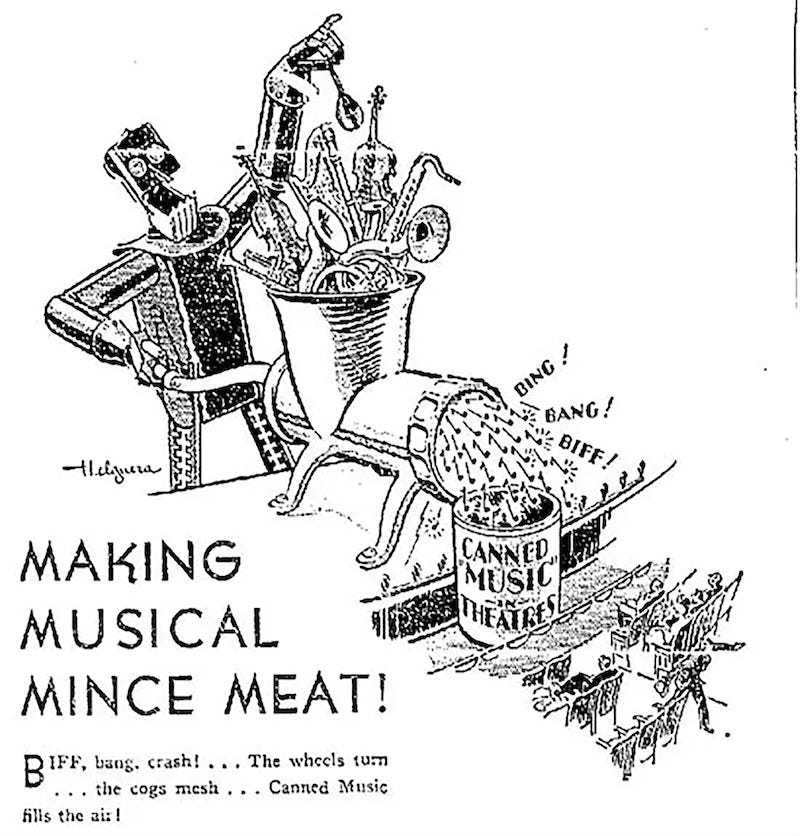
A robot grinds musical instruments to make canned music. Syracuse Herald, 1930.
As we saw happen to music: As soon as music was replicated as digital information seared onto compact discs, MP3s, peer-to-peer trading, and streaming were inevitable as bandwidth increased to accommodate them. As soon as sampling went digital, music was poised to be parsed into smaller and smaller reassemblable bits, and we’ve taken full advantage of its malleability. As the historian Carla Nappi told me in 2019,
Several years ago, I took a digital DJing course and my first baby steps in learning the craft. I was immediately struck by how similar the art of a DJ was, at least as I was learning and experiencing it, to that of a historian. We amass archives, we tell stories that have a kind of narrative arc, we work with time as a material. Sampling is a kind of quotation. Distortion and other effects are ways of reading a musical text. There are just so many resonances, and I felt that thinking about these crafts together could be a way of informing and inspiring both of them.5
The most original DJ is still playing pieces of other people’s past songs. The most original writer is still using the same linguistic tools to reassemble pieces of the past into a form resembling something new.
“Thou shall not make a machine in the likeness of a human mind.” — Rayna Butler, Orange Catholic Bible (from Frank Herbert’s Dune)
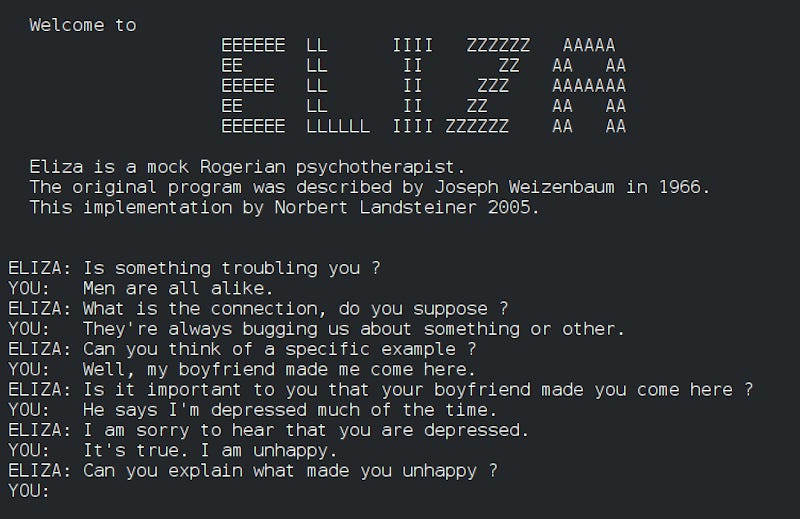
The cognitive scientist Douglas Hofstadter writes of what’s been called the ELIZA effect, after Joseph Weizenbaum’s 1966 therapist chatbot ELIZA, “the most superficial of syntactic tricks convinced some people who interacted with ELIZA that the program actually understood everything that they were saying, sympathized with them, even empathized with them.” Warren Ellis once observed, “If you believe that your thoughts originate inside your brain, do you also believe that television shows are made inside your television set?” You don’t believe that the DJ is playing any of the instruments they sample, so why do you believe the AI is thinking or comprehending any of its responses? It’s a version of the ELIZA effect, but much bigger, deeper, all-encompassing, and disturbing.
A conversation with Joseph Weizenbaum’s 1966 program ELIZA.
As soon as word processing was available, providing the literary fodder for machines, chatbots and large language models were not far to follow. In his book Language Machines, Leif Weatherby writes,“Language models capture language as a cultural system, not as intelligence.”6 That’s a crucial distinction. What passes for AI these days can compose a poem, summarize a novel, or draft an email, but it doesn’t know why. The why is the whole thing. At the risk of oversimplifying a very complex situation, the why is the intelligence. We’ve been steadily removing the human—what Weatherby calls “remainder humanity”—from creative processes, offloading and outsourcing more and more of them to machines and computers. That’s fine, but we’re devaluing, defunding, or demonetizing a lot of the fun part(s).
“It’s much harder to neglect words when they are coming out of your mouth.” — Owen King, The New Yorker
What happens when writing is just prompting? When a library is just a giant generative machine that turns texts into another medium of your choice? Just as musicians became “recording artists,” writers will become something else, perhaps “prompt engineers,” until the machines no longer need prompts, until they no longer need human input at all. Until the wan glow of their artificial light is all the light that’s left.
“I’m just sitting here Watching the past dim And the future disappear.” — WNGWLKR
Though I don’t mention allusions anywhere in it, this piece is a rough extension of the research for my book The Grand Allusion. If anyone has any ideas about who might publish it, let me know.
NOTES:
1 Walter J. Ong, Orality and Literacy, New York: Routledge, 1982, 131.
“One day you might find cause to ask yourself what the limit is to some pain you’re experiencing, and you’ll find out there is no limit at all. Pain is inexhaustible. It’s only people that get exhausted.” — Detective Ray Velcoro, True Detective1
“You’re just generating more pain, more penance for the one sin you couldn’t help commit. The sin of being born.” — Jerry Stahl, Permanent Midnight2
“Pain’s a secret no one keeps.” — Publicist UK, “Levitate the Pentagon”3
“Pain looks great on other people. That’s what they’re for.” — The Sisters of Mercy, “Wrong”4
If there’s anything that will bring you hurtling back to your body, it’s physical pain, a ready reminder that your physical form is inescapable. Even so, pain is intoxicating. We seek it out. We can’t live without it. It makes us feel alive in a way that nothing else does. Happiness, elation, ecstasy, excitement, contentment—these feelings are elusive and fleeting. Pain is certain and ready at hand whenever we need it.
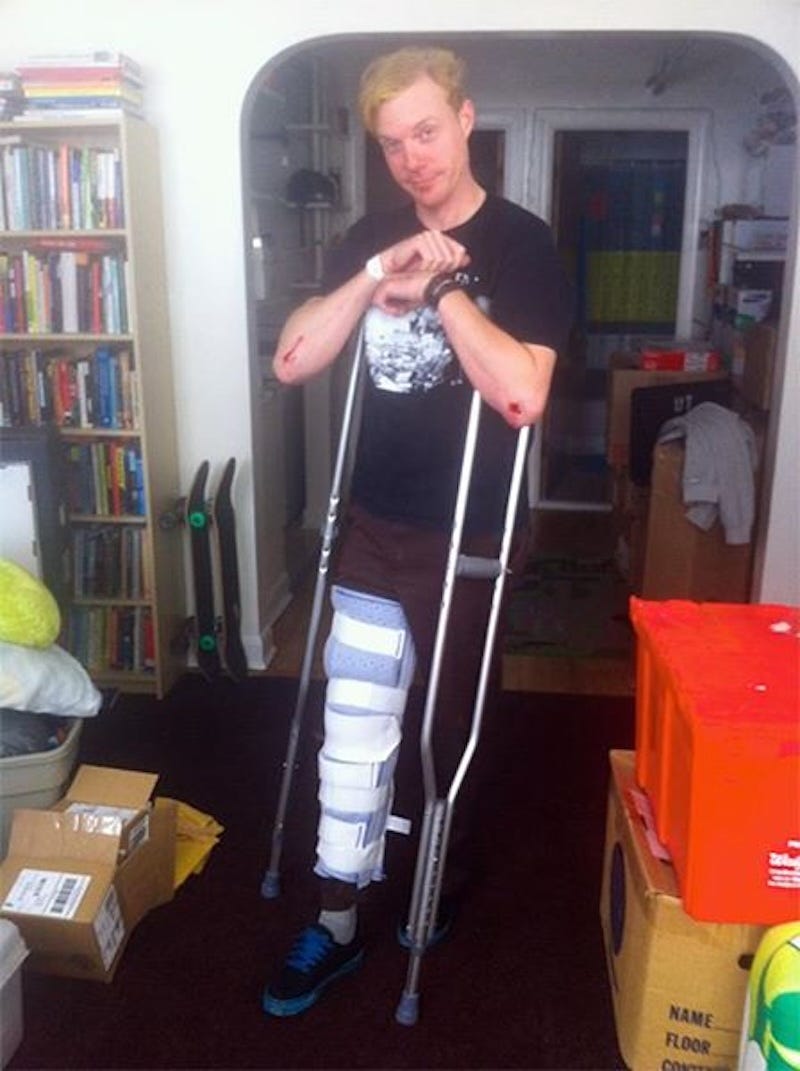
After a bicycle wreck in the busy streets of Chicago years ago, I spent several weeks in a leg brace and the first two weeks of those on crutches. The experience slowed me down in many ways, not all of which were bad. I’m not recommending cracking a kneecap to get reacquainted with the everyday, but a good jarring of the sensorium might help us all once in a while. Nothing brings reality crashing back in like crashing back into reality.
Gas face for the leg brace.
In addition to my patella, I also broke my phone. The cracking of its screen left it useless for texting or taking pictures. Ironically, the only thing it would do was send (provided I knew or could find the number) and receive calls. I also stopped wearing headphones as my injury already made me an easy mark. These two things—no texting and no headphones—reconnected me with aspects of my days I’d been avoiding or ignoring.
Also, I had to change up my commute. For one thing, I obviously wasn’t able to ride my bike to work, which is what I was doing when I crashed. I wasn’t able to take the train because I lived almost a mile from the closest station, and I couldn’t walk that far on crutches. It should also be noted that there are only a few Chicago Transit Authority train stations with elevators. Stairs were out of the question for a few weeks. This put me on a multiple bus-route commute that took me through parts of Chicago I’d never seen.
Possibly the most important factor that made breaking my kneecap an enlightening experience was sociological rather than technological. Collectively we tend to other the impaired among us. That is, there seems to be a clear delineation between the impaired and the normal; however, if one of us is only temporarily injured, we sympathize, empathize, or pity them.
In the month that I wasn’t texting or listening to music and had a bum leg, I had countless uplifting and informative conversations with people whom I wouldn’t have spoken to otherwise and who wouldn’t have spoken to me for one reason or the other. All of the above made me feel far more connected to my fellow humans than any technology or so-called “social” media.
My smashing my knee into the pavement at the origami triangle fold of traffic that is the intersection of Elston, Fullerton, and Damen in Chicago shoved me out of my comfort zone in several ways. One thing I noticed one day on my temporarily revised, much-longer commute to campus was a lot of needless anger: a man walking by the bus stop, angry at his dog for being a dog; a lady with her children, angry at them for being children; people on the bus, angry about being on the bus; the bus driver, angry about the people on the bus; and on and on. I wasn’t exactly happy that my right patella was fractured in two places, I certainly had good and bad days recovering, and I’m not better than any of those mentioned above, but I tried to smile at everyone, laugh at my fumbling around on crutches, do my work, and generally let others carry the anger. Getting out of your comfort zone doesn’t have to be quite so uncomfortable, but sometimes being forced is the only way for it to happen. It felt like I needed it.
With that said, a physical therapist saw me out hobbling down the sidewalk in Logan Square with my leg brace on one day. He stopped and asked me about my injury with genuine and professional interest. He then informed me that a broken patella is the most painful kind of injury, which, he added, is supposedly why it is the chosen punishment for those late on their loan or gambling payments. I don’t recommend getting behind.
Pain is an early warning system, a physical sign of something larger gone awry.
Illicit Metabolism
“I’ve had minimal drug experiences because of fear,” says the artist Peter Gabriel. “I can trust machines, yet I can’t trust pills… A machine you can always switch off or get out of… whereas when a pill gets hold of your metabolism, you have to ride through.”5 Pain is the counterpoint. You either ride out the pain, or you ride out a drug to relieve the pain. But David Cronenberg reminds us, “We absorb all technologies into our bodies.” Drugs aside, we have to metabolize more and more of our gadgets and gear.
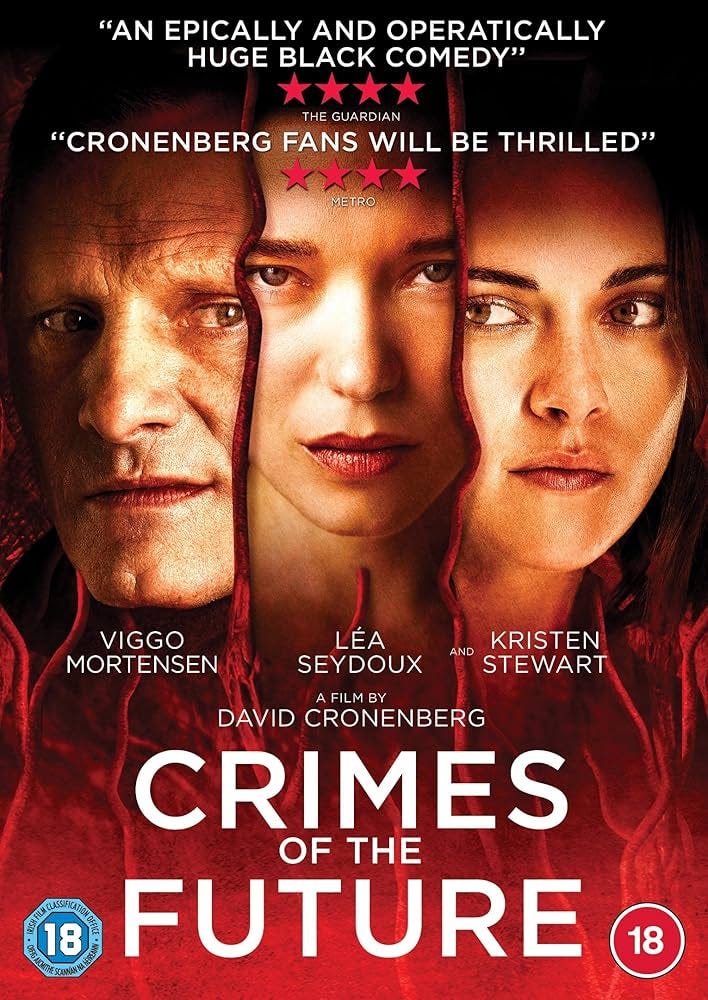
David Cronenberg’s Crimes of the Future (2022)
“Body is reality,” reads the catchphrase for Cronenberg’s Crimes of the Future. The writer and director says that the film “is about the crimes committed by the human body against itself.” He says it’s “a meditation on human evolution […] the ways in which we have had to take control of the process because we have created such powerful environments that did not exist previously.”6 He goes on to ponder, “At this critical junction in human history, one wonders — can the human body evolve to solve problems we have created? Can the human body evolve a process to digest plastics and artificial materials not only as part of a solution to the climate crisis, but also, to grow, thrive, and survive?”7
Channeling his former teacher Marshall McLuhan, Cronenberg reminds us, “Technology is always an extension of the human body, even when it seems to be very mechanical and non-human. A fist becomes enhanced by a club or a stone that you throw — but ultimately, that club or stone is an extension of some potency that the human body already has.”8 As Douglas Rushkoff puts it, “Our technologies change from being the tools humans use into the environments in which humans function.”9 Erik Davis adds, “Because the self is partly a product of its communications, new media technologies remold the boundaries of being. As they do so, the shadows, doppelgängers, and dark intuitions that haunt human identity begin to leak outside the self as well — and some of them take up residence in the emerging virtual spaces suggested by the new technologies.”10 I belabor the point here because we don’t tend to think of our technologies as an environment. We don’t tend to think that we’re reshaping ourselves—and our bodies—with every new contrivance. In his introduction to Crash, J. G. Ballard wrote that “what our children have to fear is not the cars on the highways of tomorrow but our own pleasure in calculating the most elegant parameters of their deaths.”11 Warning labels and warding spells: a future defined by risk assessment models and worst-case scenarios.
In The Idiot, Fydor Dostoyevsky wrote,
Now with the rack and tortures and so on—you suffer terrible pain of course; but then your torture is bodily pain only (although no doubt you have plenty of that) until you die. But here I should imagine the most terrible part of the whole punishment is, not the bodily pain at all—but the certain knowledge that in an hour—then in ten minutes, then in half a minute, then now—this very instant—your soul must quit your body and that you will no longer be a man—and that this is certain, certain!
While pain connects us to our own flesh, it isolates us from others. In her book, The Body in Pain, Professor Elaine Scarry writes that to have pain is to be certain.12 To have pain is to be certain of your physical existence, to be certain of your living and being, and to be certain of your mortality. To have pain is to be alone in your body. Scarry writes, “Whatever pain achieves, it achieves in part through its unsharability, and it ensures this unsharability through its resistance to language.”13 She also points out that to hear of another’s pain is to doubt them, thus exacerbating their pain and isolating us, each from another. J. Robbins adds that part of Jawbox’s song “Motorist” was about “imagining being stranded and injured in a place where you suppose nobody will help you.”14
Others might not hurt you on purpose, but they will let you.
“He thought with a kind of astonishment of the biological uselessness of pain and fear, the treachery of the human body which always freezes into inertia at exactly the moment when a special effort is needed.” — from George Orwell’s Nineteen Eighty-Four
Mythology of Self
“I’m here to express the pain I feel,” Godflesh’s Justin Broadrick says in a 2023 interview with Decibel Magazine, “and I don’t take much pleasure in that at all.”15 There is a pain inherent to life, the pain of existence. “Pain is also a vehicle of knowledge,” says the poet Ocean Vuong. “It may very well be knowledge itself.”16 To many of us, to be alive is to suffer.
Godflesh has always induced a furious form of suffering on their listeners, and a lot of Broadrick’s music comes from some severe shade of anxiety. After years of self-medicating with drugs and alcohol, which only made it worse, he was diagnosed with autism and PTSD at 52-years old. With that revelation, he was finally able to properly deal with his mental health, decades of compounded pain eased with new tools for coping and care.
“I’ve spent a lifetime trying to please everyone, to make myself feel comfortable,” he says, “a lifetime of not doing things because I’m uncomfortable. Now I’m not masking it so much anymore.”17 On “Nero” from 2023’s hip-hop beat-infused Purge, he barks, “Restrain yourself/ Betray/ Your needs,” and on “Land Lord” he says, “Bad seeds/ Own you/ Shape you/ Slay you/ Control/ Divide/ Enslave/ Destroy.”18 If ever his lyrics were masking his discomfort, they certainly aren’t anymore. Bassist Benny Green adds, “Our general abhorrence at the monstrous injustices humans have always inflicted on each other still impacts us to this day. We’d both quite happily hide away in a remote forest or cave in order not to have to deal with the horrors of mankind.”19 He finds solace in the sonorous: “For me, music, sound, tone, whatever you want to call it,” he continues, echoing Robert Fludd’s idea of a celestial monochord, “is the single most powerful and liberating thing there is, and the whole universe exists through vibrations and waves, music included.”20 Call it Godflesh, an all-encompassing energy that connects us all, each to another and beyond.
Notes:
1 Nic Pizzalatto [writer], TrueDetective (New York: HBO, 2014).
2 Jerry Stahl, PermanentMidnight (Port Townsend, WA: Process, 1995).
3 Publicist UK, “Elevate the Pentagon,” from ForgiveYourself [LP] (Los Angeles: Relapse, 2015).
4 The Sisters of Mercy, “Wrong,” from VisionThing [LP] (Los Angeles: Elektra, 1990).
5 Quoted in Daryl Easlea, Without Frontiers: The Life and Music of Peter Gabriel (London: Overlook Omnibus, 2014), 152.
9 Douglas Rushkoff, Team Human, New York: W. W. Norton & Co., 2019, 52.
10 Erik Davis, “Recording Angels: The Esoteric Origins of the Phonograph,” in Rob Young (ed.), Undercurrents: The Hidden Wiring of Modern Music (pp. 15-24), London: Continuum, 2002, 17-18.
A quick reading of the first two paragraphs from Post-Self on Radio Panik episode #516, “Adrift Reentry Norther,” December 14, 2025.
It goes as follows:
We are all perpetually holding ourselves together. Our breath, our blood, our food, our spit, our shit, our thoughts, our attention—all tightly held, all the time. Then at death, we let it all out, oozing at once into the earth and gasping at last into the ether.
What if we let it slip before then? What if we were able to let ourselves loose and be as free as we can be? What if we got lost somewhere out there beyond ourselves? If it’s all going down, why aren’t we trying to push ourselves as far out as we can? If we try to hold ourselves together as we watch our world fall apart, we’re holding ourselves back for nothing.
In a mode appealing to members of any subculture, Roy Christopher’s dense but slim The Medium Picture charts the changes in culture as dictated by technology on both a personal and intellectual level. Like the history of our media itself, he first references large monolithic examples — radio/music and television shows — that have become embedded in our culture, then complicates and fragments our relationship to them. One example focuses on how the change from record to tape in the music industry helped to alter our cultural expressions and how we synthesize information. He moves through post-modern history and shows how more technology can create corrosive representations and information, like a copy of a copy of a copy.
A sort of punk rock luddite — Christopher has never owned a TV and hasn’t had a car since the 1990s — he draws from subculture crossover icons like Gang of Four, Laurie Anderson, and Ian MacKaye as well as well-researched academic theories from people like Marshall McLuhan to show how things like zines and mixtapes led to the tiny screens of today. The theory is sprinkled in references; I personally was drawn in with the often-cited works of William Gibson, a robust establishing of skateboarding’s relationship to his topic, and the dozens of chapter-opening quotations from films, poems, music, or authors like Kim Stanley Robinson.
Spike Jonze making marks in The Medium Picture. Photo by Rodger Bridges.
This vast collection of references is supported by well-referenced theory and research that mesh with the book’s easily readable format. Christopher’s claim of lifelong journaling seems very likely given the easy, conversational manner in which he delivers so much information. It is our insights into his own relationships to the theories at hand that make this book most compelling, and Christopher exudes a real love for the things he talks about. I maintained interest through loftier, hard-to-grasp ideas with clearly illustrated connections between seemingly disparate topics like metaphor and technology, while receiving new insight into everyday things such as walking.
The Medium Picture probes many of the questions and desires that we feel as people and may not have words for. The extremely clever title gives a very accurate idea of what the book is about — a play on words that folds in on itself from multiple angles. There is even a nicely designed title page logo calling attention to these interlocking angles, not to mention the pleasing chapter and section headers. Importantly, at only 162 pages, Christopher makes a seemingly intimidating topic appear tackleable and packs a lot into his punch. Perhaps the best thing The Medium Picture does, though, is recognize that it is a piece of a larger whole — a very important and often forgotten thing for cultural theory to do. For that and much more, it is worth your read.
Post-Self is a grim survey of all the ways we attempt to escape the limitations of our physical forms—technology, rapture, drugs, death—with a Foreword by the cultural critic Mark Dery titled “Welcome to the Misanthropocene.”
“We are all perpetually holding ourselves together. Our breath, our blood, our food, our spit, our shit, our thoughts, our attention—all tightly held, all the time. Then at death we let it all out, oozing at once into the earth and gasping at last into the ether.” — from POST-SELF
The back cover copy reads as follows:
In the 21st century, the body has become a prison—a problem to solve, a boundary to break. Post-Self plunges into the dark urge to escape flesh and mortality by any means necessary: technology, cybernetics, drugs, death, or pure rapture.
From horror movies to heavy metal, from radical philosophy to science fiction, this book explores how artists, writers, and visionaries have imagined transcending the human form. What drives our desire to shed our bodies? What lies beyond the self?
Bold, unsettling, and fiercely intelligent, Post-Self journeys through the shadowlands of the modern imagination—where dissatisfaction becomes inspiration, and escape is the ultimate creative act.
“Once the soul looked contemptuously on the body, and then that contempt was the supreme thing — the soul wished the body meagre, ghastly, and famished. Thus it thought to escape from the body and the earth.” — Friedrich Nietzsche, Thus Spake Zarathustra
What other people are saying about it:
“Too often philosophy gets bogged down in the tedious ‘working-through’ of contingency and finitude. Post-Self takes a different approach, engaging with cultural forms of refusal, denial, and negation in all their glorious ambivalence.” — Eugene Thacker, author, In the Dust of This Planet
“Using Godflesh—the arch-wizards of industrial metal—as a framework for a deep philosophical inspection of the permeable human form reveals that all our critical theory should begin on the street where wasted teen musicians pummel their mind and instruments into culture-shifting fault lines. Godflesh are not just a ‘mirror’ of all the horrors and glories we can inflict on our bodies, but a blasted soundscape of our moans. Roy Christopher’s book is a thought-provoking and delightful crucible of film, music, and the best kind of speculative thought.” — Peter Bebergal, author, Season of the Witch
“In his trademark breezy yet precise style, Christopher discusses everything from stimoceivers to Southland Tales, everyone from Henry Lee Lucas to Brummbear, and all without ever losing sight of his central points of reference: our all too malleable somatic limits and Godflesh’s Streetcleaner. And the combination here could not be more apposite, for however much we stretch and augment the reaches of our physicality, imagining ourselves the theophanies of some as yet speculative deities, we get no closer to getting away from ourselves, becoming Godly it seems only in the sense of becoming increasingly empty.” — Gary J. Shipley, author, Stratagem of the Corpse
“Through the lenses of Godflesh, J.G. Ballard, UFO phenomena, psychedelics, serial killings, and so much else, Christopher investigates humanity’s growing inclination to escape our bodies, to escape our species, to escape life itself.” — B.R. Yeager, author, Negative Space
“A peculiar hybrid of Thomas Ligotti and Marshall McLuhan.” — Robert Guffey, author, Operation Mindfuck
“An interesting read indeed!” — Aaron Weaver, Wolves in the Throne Room