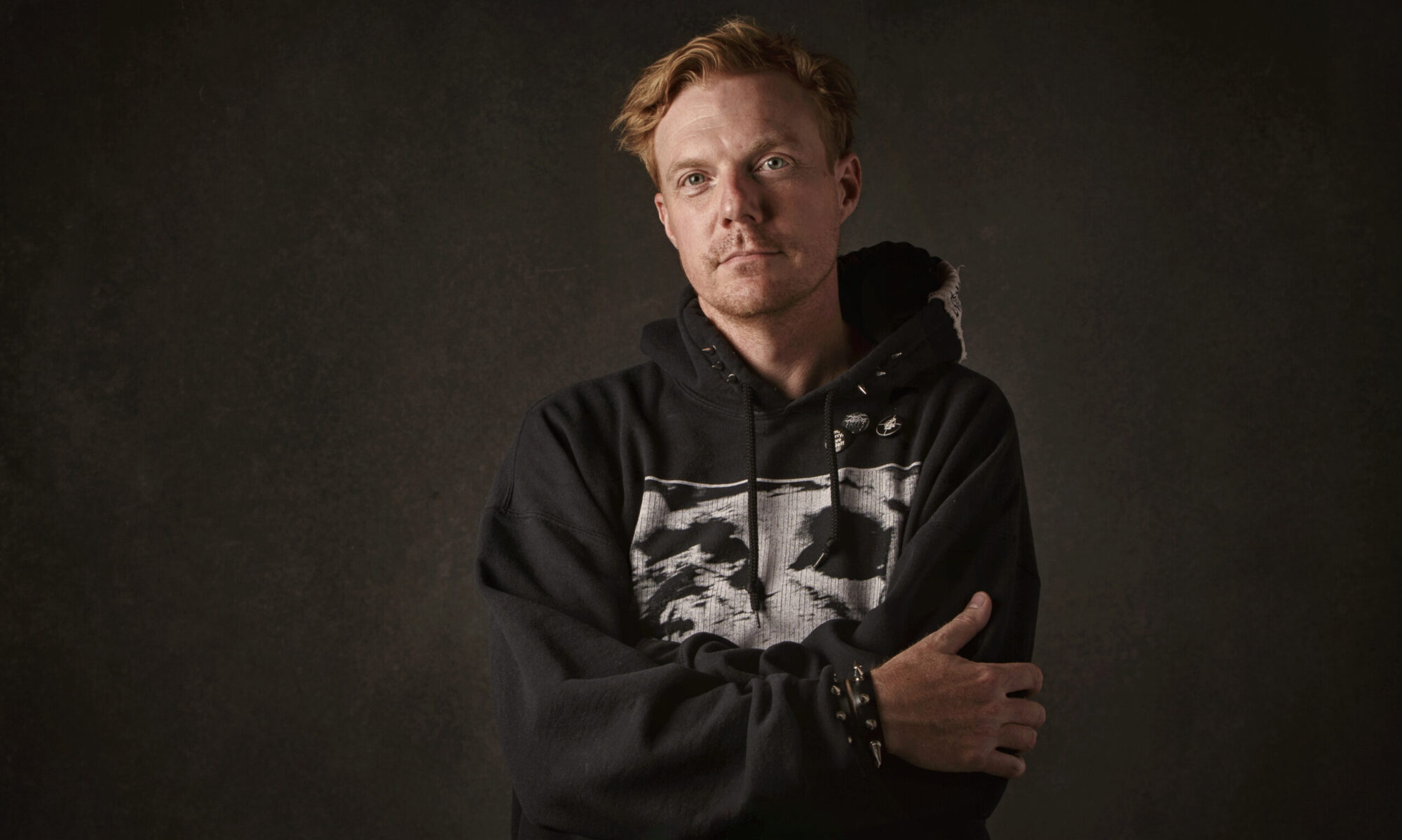

My friend Mark Lewman sent me this video clip a few years ago. It’s sort of a video zine called “UNCONSUB” that he made with a digital camera. At the time, one couldn’t share such things as freely as we do now (he sent it to me on a CDR via the regular mail), but now that we have the bandwidth, I thought I’d share it. Continue reading “UNCONSUB by Mark Lewman”
Recurring Themes, Part Six: Sleeper Artifacts
“The essence of culture is found in all its artifacts.”
— Pete Robinson in Donald Antrim’s Elect Mr. Robinson for a Better World
During one of our mid-session chats at the skatepark recently, my friend Greg mentioned that a lot of the older guys he skated with at various parks, guys who’d skated back in the late 70s and early 80s, started skateboarding again after seeing the Dogtown and Z-Boys documentary. I don’t know why, but this struck me as an odd phenomenon. I guess because it was a halo effect I hadn’t thought about.
Similarly, in Doug Pray’s 2001 movie Scratch, in interviews with a lot of today’s prominent turntablists, one of the questions was, “What made you want to be a DJ?” A large majority of the interviewees named Herbie Hancock’s 1983 hit “Rockit” as the defining impetus for their becoming DJs. This also struck me as odd since the main thing that stuck with me about that song was the video’s disturbing robotic mannequins (see below). “Rockit” is also a total anomaly in the Herbie Hancock canon, but it brought scratching to the mainstream with its infectious hook, based on the frenetic but rhythmic scratches of GrandMixer DST alongside Hancock’s catchy keyboards and mechanized vocals. Unbeknownst to me, it also had a major role in setting off what would become the turntablism movement — the DJ as musician.
 I read a similar series of interviews with professional BMX riders a few years ago, and the same question was posed to the day’s top pros. Again, a large majority cited one cultural artifact as their starting point. This time, it was the 1986 Hal Needham movie Rad. Given my age, and the fact that I was already deep into BMX when Rad came out (I clearly remember going to see it the night it opened in my town in Alabama), I never thought that it would affect the sport the way it obviously did.
Along the same lines, Duane Pitre claimed Back to the Future (1985) was the reason he started skateboarding, and I’m guessing he’s not the only one.
These few examples demonstrate clearly to me that culture is about our relationships to cultural artifacts, and not necessarily their intended purposes. It’s about the effects of artifacts, and not the artifacts themselves. It’s about the ripple, not the rock.
I always cite James Gleick‘s Chaos as a turning point in my adult life. Reading that book turned me back into a reader and set me on my way to graduate school.
What cultural artifacts changed your path or had a deep impact on you?
Here is the aforementioned video for Herbie Hancock’s “Rockit” (runtime: 3:25):
Security Cam Footage
Quick clip of me skateboarding in the Nemo Design studio. Continue reading “Security Cam Footage”
Avoiding Affordances: Unusability Engineering
With all of the semi-recent focus on usability, I’ve noticed a growing countermovement that doesn’t get near as much attention: unusability. I’m talking here about deliberately designing something so that it’s not usable, not the much-maligned negligence of design that renders things unusable.
 For example, there are several bus bench designs that allow sitting while waiting for the arrival of mass transit, yet prevent the bench from being used as a bed. Most of these designs involve armrests or ridges in the seat to prevent one from lying prone across the bench, but my favorite is the backless, round-top bench: The seat is shaped like half of a cylinder and allows one to sit (albeit not a luxuriously comfortable place to park yourself). Without your feet on the ground though, you’re not likely to stay on top. Therefore, there’s no napping on this bench. In one of his books on L.A. (City of Quartz, Vintage, 1990), Mike Davis calls them “bum-proof benches.”
The manipulation of the perceived affordances of objects and surfaces is another great example. Donald Norman discusses a few of these in his book Turn Signals are the Facial Expressions of Automobiles (Addison-Wesley, 1992). Chairs and tables offer surfaces that are affordances for the support of weight. That is, a table affords support. If you have a glass counter on which you don’t want anything placed, it should be slanted. If it’s flat, it gives the perception of affording weight placed on top (and often ends up cracked).
The handrails around hotel balconies are typically rounded or beveled in such a way as to prevent the setting down of a beverage. This is to keep one from setting a beer bottle on the rail then drunkenly or excitedly knocking it off onto passers-by, cars, or just the ground below. This is not a design flaw. It is an engineered unusability.
 In the past ten years or so architects and urban landscapers have made or retrofitted handrails and ledges to make them unusable for skateboarding. Large knobs welded onto metal handrails or blocks bolted to ledges keep skateboarders from using these surfaces as props or obstacles for their maneuvers. Again, these are not mistakes, but designed — if even often clumsily or not exactly aesthetically — for preventing a certain use.
There are many other examples, but it just struck me that the flipside of usability (in its deliberate form) doesn’t get much attention. Be on the lookout for things designed to prevent their use.
Lori Damiano: Getting Nowhere Faster
 Lori Damiano has been skateboarding and making stuff for so long that I can’t even remember when or where I was first introduced to her work. Somewhere among her involvement in the zine Villa Villa Cola, her animation (she did the menus for the Spike Jones DVD, for one example), and skateboarding like a madwoman, she recently earned a master’s degree in experimental animation from The California Institute of the Arts and helped VVC get the Getting Nowhere Faster DVD out. Continue reading “Lori Damiano: Getting Nowhere Faster”
Tod Swank: Foundation’s Edge
 Tod Swank started Foundation Skateboard Company (the name comes from the Isaac Asimov sci-fi series of the same name) fifteen years ago. That’s no small feat in the cutthroat skateboard industry. Skateboard brands come and go as often as the tides of the Pacific lap the shores of San Diego. He’s since built a small empire, launching such brands as Pig, Toy Machine, Zero, Dekline, and Deathbox, among many others. Continue reading “Tod Swank: Foundation’s Edge”
Duane Pitre: Skateboarding’s Butterfly Effect
 Even in the midst of today’s mega-media all-at-onceness (to quote Marshall McLuhan), Skateboarding culture remains as dynamic and engaging as it ever has been. For anyone who’s ever stepped on a skateboard — and stayed on it for that first run — the culture surrounding that act leaves a dent in you. It’s often a butterfly effect the results of which aren’t recognized until years later. Continue reading “Duane Pitre: Skateboarding’s Butterfly Effect”